

Benötigen Sie wasserdichte Steckverbinder?Angebot anfordern →
IP68 quick-disconnect weatherproof plugs, base handhole disconnect switches, and secondary SPD harnesses delivered in 2024 for roadway luminaires and integrated communication poles. Client type disclosed, bureau name withheld by agreement.
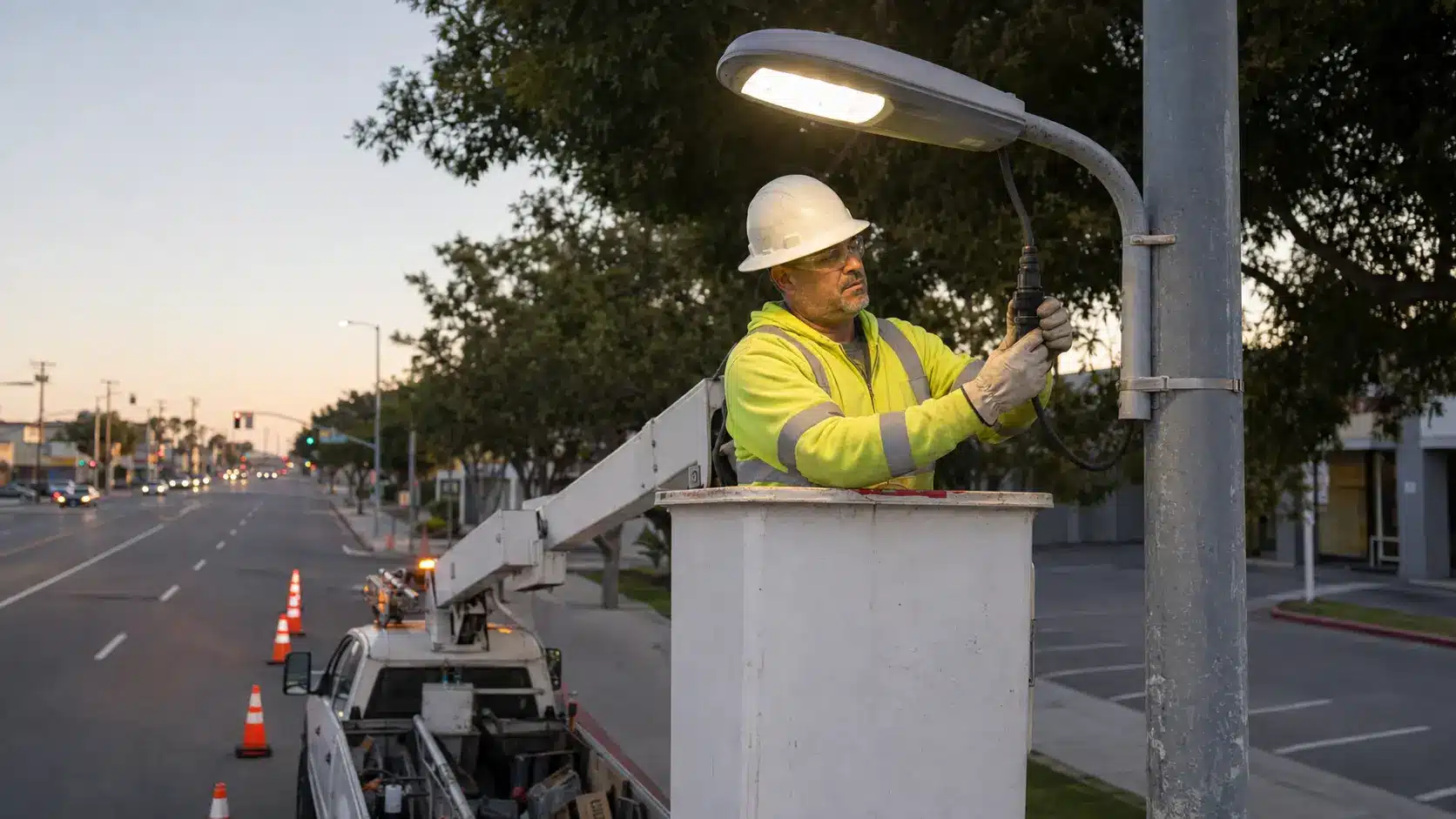
This is a smart pole connector case study from a municipal program in Los Angeles, California. In 2024, PVLinkTech delivered custom-engineered IP68 quick-disconnect weatherproof plugs, base handhole disconnect switches, and secondary surge protection harnesses for the city’s roadway luminaires and integrated communication poles. The buyer was a municipal street lighting bureau and its regional infrastructure integrator. The bureau is public record in California; we keep its name off this page because the working details of the order belong to the program, not to a marketing page.
The citywide LED and smart pole upgrade spans more than 200,000 luminaire and communication pole points. PVLinkTech supplied part of a 100,000-unit program phase. Delivered quantities stay under agreement. What we can show is the engineering logic behind the connector configuration, because the same logic decides most municipal smart pole connector specifications: how fast a crew can swap a luminaire, how dry a flooded handhole stays, and whether moisture can climb the cable into the fixture.
| Market | United States, Los Angeles, California |
| Client type | Municipal street lighting bureau and regional infrastructure integrator (name withheld by agreement) |
| Program context | Citywide LED and smart pole infrastructure upgrade, 200,000+ luminaire and communication pole points |
| Scope in our records | 2024 deliveries within a 100,000-unit program phase; delivered quantities under agreement |
| Products deployed | IP68 quick-disconnect weatherproof plugs, base handhole disconnect switches, secondary SPD harnesses (custom-engineered, series details under agreement) |
| Product listing | UL 1977 listed per delivered part number |
| Program specification references | UL 498, UL 1449 Type 4CA architecture, ANSI C136.37, state DOT standard specifications |
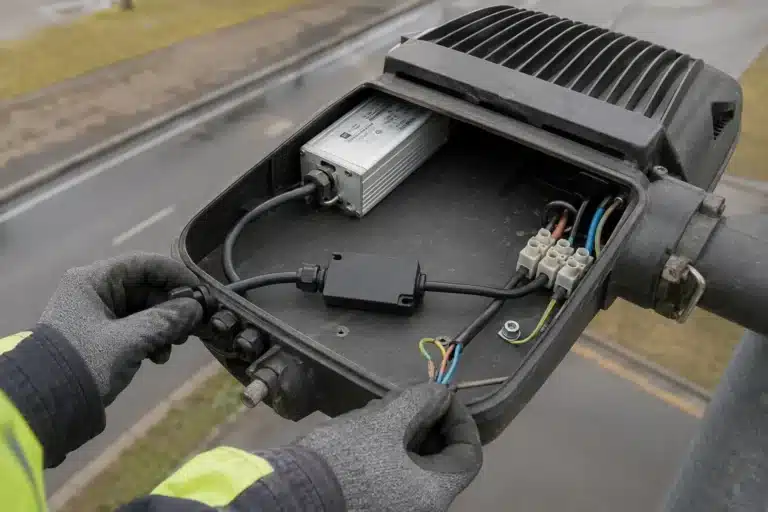
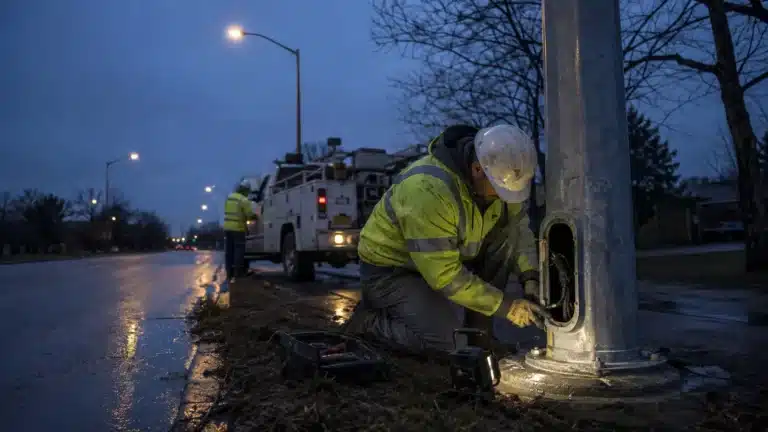
Roadway luminaire maintenance happens in a lane closure with cones out and traffic backing up behind the truck. Every minute the bucket crew spends unscrewing covers, pulling wires, and re-terminating is a minute of exposure. The old workflow asked a gloved worker at height to manage small screws and loose conductors, then hope the seal went back together exactly as it came apart. Municipal maintenance teams measure this work in lane closure hours and in the number of crews they need on the street at night. A luminaire connection that separates without tools and re-seats with a positive click changes that math.
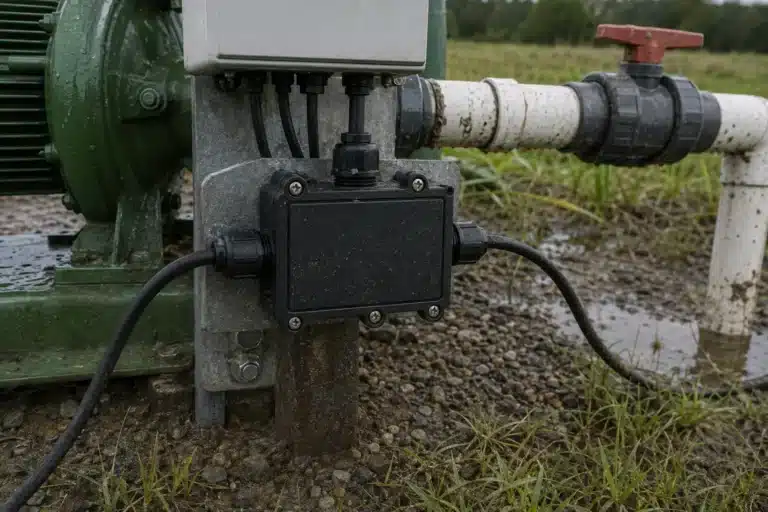
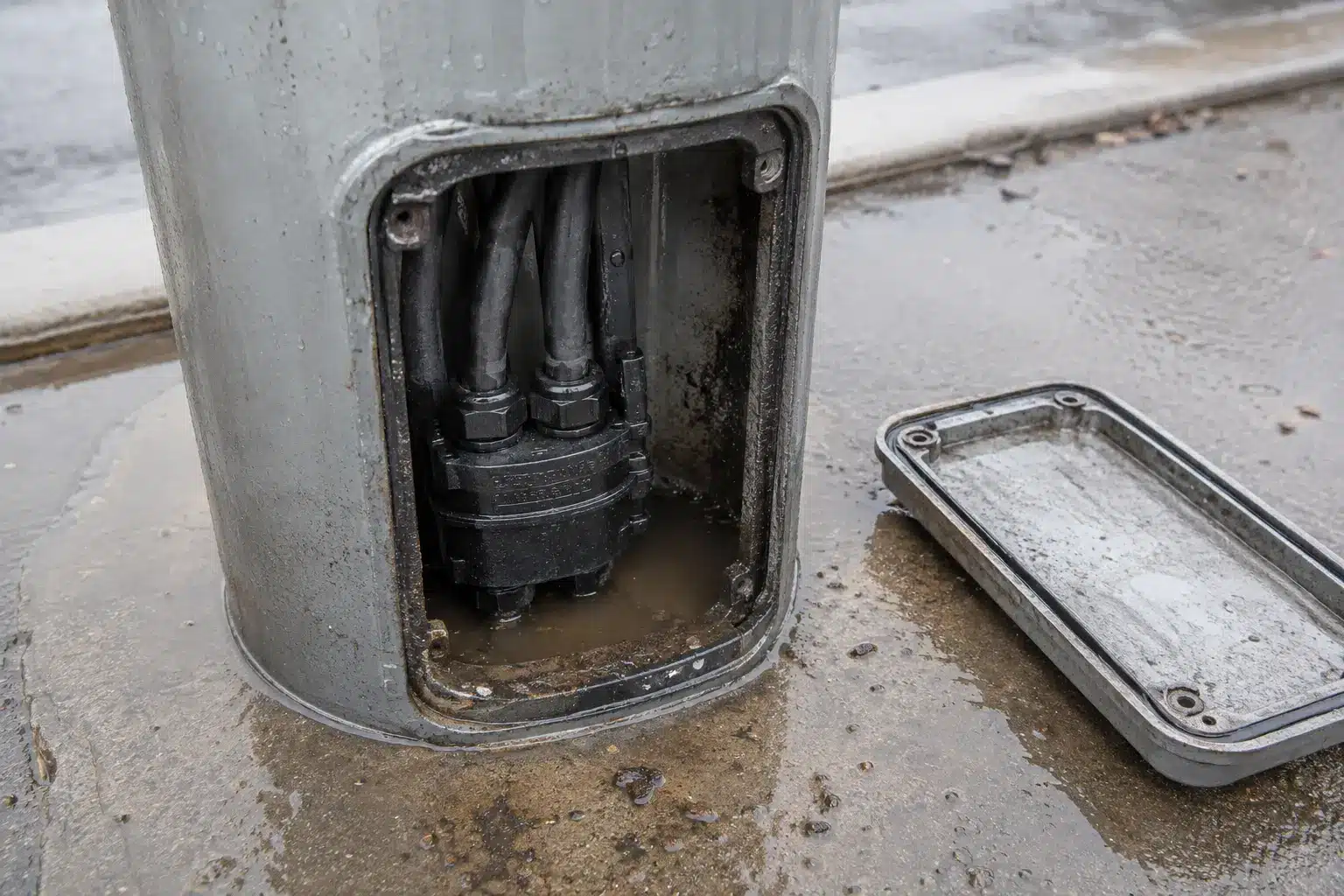
Los Angeles is not usually thought of as a wet city, but the seasonal storms arrive fast and the drainage in older intersections does not always keep up. Pole base handholes sit at curb level, which is exactly where water collects, ponds, and on bad days stands for hours. A handhole that drains poorly becomes a small basin around the wiring every rainy season. Ratings like IP67 describe splash and brief immersion; the reality of a flooded handhole is a sustained bath, and the seal has to be engineered for that condition, not just labeled for it.
The failure nobody sees first is the one that travels. When a flooded handhole warms in the sun, water vapor moves up the conduit and the cable. Temperature swings inside the pole create a pumping effect, and if the cable entry at the luminaire is not protected, that moisture reaches the driver cavity and condenses. LED drivers fail faster with chronic humidity, optics fog, and the fixture that should run for years starts costing maintenance visits instead. Stopping water at the handhole is only half the job; stopping the siphon path up the cable is the other half.
The configuration delivered in this program separates the job into three layers, each placed where it does the most good. The smart pole connector system at the luminaire handles fast aerial replacement. The handhole disconnect handles isolation and sealing where water collects. The SPD harness handles surge protection for the electronics that a smart pole now carries. Together they turn a maintenance event from a two-hour cable job into a five-minute fixture swap. That division of roles is the practical meaning of a smart pole connector system on a real pole.
| Anwendung | Roadway luminaires and integrated communication poles |
| Solution | Custom-engineered IP68 quick-disconnect weatherproof plugs + base handhole disconnect switches + SPD harnesses |
| Field objective | Tool-free aerial luminaire replacement in under five minutes from a bucket truck |
| Moisture control | IP68 handhole sealing (mated assembly, gland compressed on rated cable) + dual-chamber anti-siphon barrier against cable migration into the luminaire |
| Surge | Secondary SPD harness at the pole base, Type 4CA component architecture per program specification |
| Listing | UL 1977 per delivered part number |
| Program spec references | UL 498, ANSI C136.37 luminaires, state DOT standard specifications |
View the outdoor lighting connector solutions the program drew on →
Custom engineering is where this smart pole connector program differed from a standard catalog order. Three adjustments mattered most.
The program ran on the same four steps we use for every project, municipal or commercial. First, the engineering drawing and specification review settled the connector configuration, sealing requirements, and listing expectations. Second, samples were produced and checked against the program requirements, with prototype tooling where the configuration was custom. Third, the approved configuration moved to batch production with the inspection plan applied to every lot. Fourth, delivery in 2024 went out with labeling and packing that matched the program’s field identification needs.
Die gleichen vier Schritte gelten auch für Ihr Projekt:
For a municipal program, the measurable outcome of a smart pole connector configuration is the maintenance event itself. A tool-free quick disconnect shortens the aerial swap, an IP68 handhole seal removes the seasonal flooding failure mode, and the anti-siphon barrier keeps moisture out of the luminaire cavity where drivers and optics live. Field failure statistics from the program’s own records are not published on this page. We follow a simple rule: we publish project-specific figures only when project records back them up. Ask for the project summary pack under NDA and we will share what the records support.
| Wartung | Tool-free quick disconnect means the luminaire change is a plug event, not a wiring event, from the bucket |
| Flooding | IP68 sealing as a mated assembly keeps ponded street water out of the handhole connection |
| Moisture migration | Dual-chamber anti-siphon barrier stops vacuum-drawn moisture from climbing the cable into the luminaire |
| Smart electronics | Secondary SPD at the pole base protects communication and control gear mounted on the pole |
| Einhaltung der Vorschriften | UL 1977 listing per delivered part number, with program standards tracked as specification references |
PVLinkTech operates to IATF16949, ISO9001, ISO13485, and ISO14001, with in-house testing equipment and automated production lines behind the connector program. Product listing is stated precisely: the connector family delivered in this program is UL 1977 listed per delivered part number. UL 498, UL 1449 Type 4CA, ANSI C136.37, and state DOT specifications appear on this page as program specification references: they describe the system the components were specified against, not a certification claim for every part in the delivery. ANSI C136.37, for example, governs solid-state light sources used in roadway lighting, so it applies at the luminaire level rather than to the connector itself.
Engineering note: IP rating, current rating, and surge performance depend on the final cable size, ambient conditions, gland compression, and the complete system design. Confirm the approved configuration with an applications engineer before specifying for your own pole types.
Smart pole connector installations show up in the same places every maintenance bureau recognizes:
Scope: this case study covers the connector, disconnect, and surge harness layers, not the supply of complete luminaires or pole structures.
Send us your pole wiring drawing and the standard you are building to. We will come back with the connector family, the sealing configuration, and the listing path for your circuit, whether you are a municipal program, an integrator, or a lighting contractor.
LASSEN SIE UNS IHRE VERBINDUNGSLÖSUNG ENTWICKELN
Share your application, specifications, and estimated quantity. Our team will recommend a suitable connector solution and provide a quotation.
Geringe Mindestbestellmenge · OEM & ODM · Unterstützung bei der Produktauswahl · Schnelle Angebotserstellung