

Precisa de conectores à prova d'água?Solicite um orçamento →
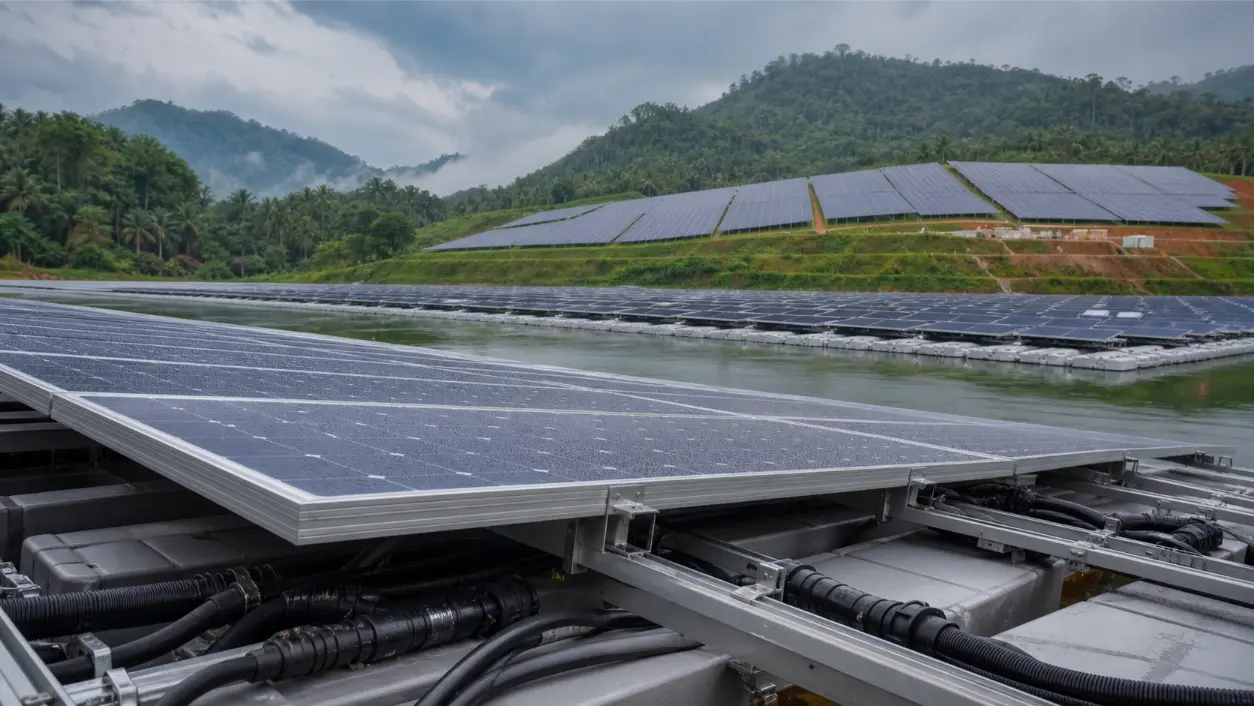
The floating solar connector we supplied went into a 120 MW solar plant in Indonesia, built by a tier-1 EPC contractor. The site mixes floating and ground-mount arrays a few degrees off the equator, and every year it spends months under monsoon humidity above 80%. Eighteen months after commissioning, the field report shows zero connection faults, and assembly time came down by about 25% versus the procedure the crew used before. We publish the case because of that climate. If a floating solar connector holds here, a less aggressive site is not where your project will fail.
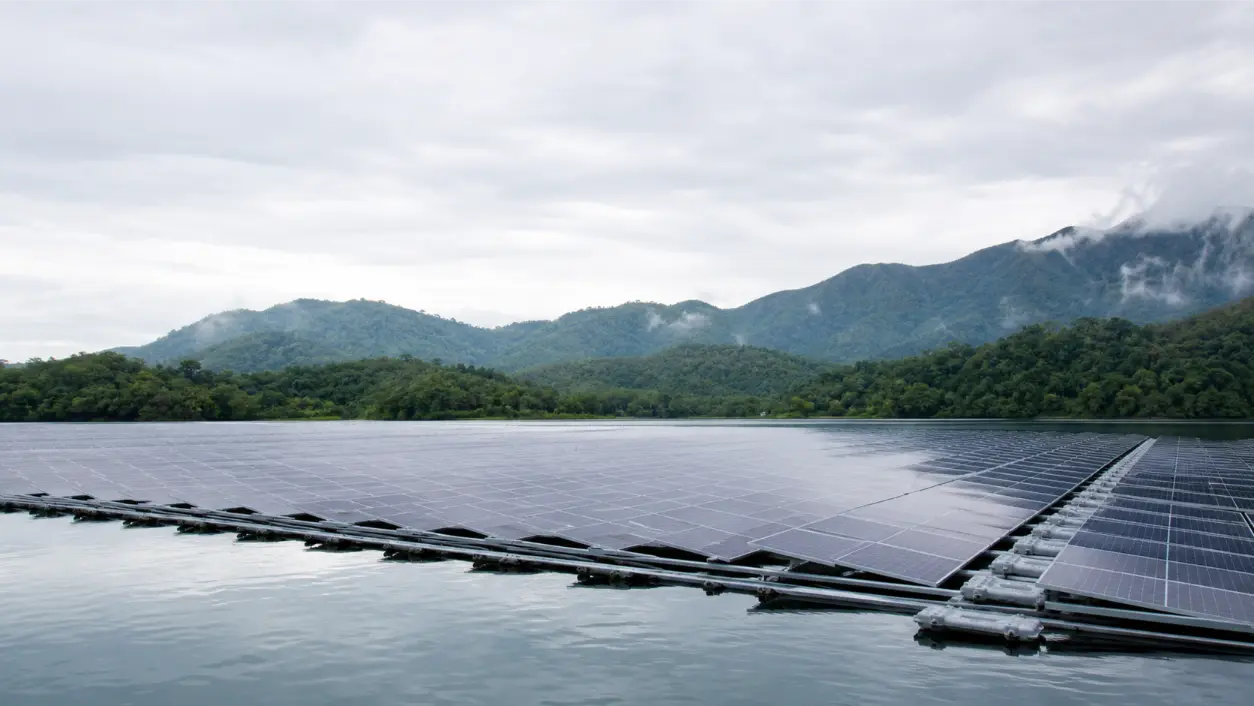
The client is a tier-1 EPC and prefers to stay unnamed. Commercial terms are under NDA, so the public part of this case is the spec, the product, and the measured results.
Indonesia is not a mild environment for DC connections. Humidity above 80% for months finds the small gaps in any housing, including housings that passed their lab IP test. The monsoon delivers rain in weeks-long stretches.
The floating half of the array never sits still, and salt spray settles on every exposed surface near the water.
Three conditions did most of the damage on a site like this.
At 80%+ relative humidity for months at a time, water vapor condenses inside any housing that is not sealed properly. That is how corrosion starts in a DC circuit, usually on the contact surface where you cannot see it until resistance climbs.
Floating arrays move with the reservoir. A floating solar connector on this site had to hold its contact through that constant motion, because movement is exactly how a marginal joint works loose and turns into a hotspot months later. A connection that seats firmly and locks symmetrically is the difference between a maintenance round and a boat trip.
Salt spray accelerates corrosion on metal parts. UV ages plastics that are not formulated for it. The housing on this connector line is rated flame retardant to UL94 V-2, and the product family carries an IP68 rating in the product datasheet.
The site runs on the MC4 interface, the same one most solar crews already work with. A different footprint would have meant new crimping dies, retraining, and a second spare-parts stock. Because the interface stayed standard, the tooling and procedures already in use carried straight over, and the project never had to pay for a second tooling set or a retraining program.
We supplied the connectors inside DC harness assemblies, cut and terminated to the site’s stringing layout. The product behind this case is the MC4 connector from our PV connector line, with the ratings below taken from the product datasheet:
| Modelo | MC4 (PV connector line) |
| Corrente nominal | 30 A |
| Tensão nominal | 1000 V DC |
| Cable range | 4 mm² / 6 mm² |
| Conductor material | Liga de cobre |
| Flame retardancy | UL94 V-2 |
| Índice de impermeabilidade | IP68 (mated, per product datasheet) |
| Certification | CE, RoHS |
Every string in the plant depends on every connection in it. One bad joint takes the whole string down, and on the floating section that string is a boat trip away.
The harnesses were built in string-length sections in the factory, so the crew on site connected section to section instead of crimping each joint in the field. That is why connection integrity and batch records mattered as much as the connector itself.
MC4 is the closest thing the solar industry has to a common connector interface. Crews already running MC4 keep their crimping dies and pull-test gauges, and nobody has to learn a new procedure. On a 120 MW site, that skips a second tooling inventory and a re-education round, both of which cost real time on a remote schedule.
The MC4 connector delivered here is certified CE and RoHS. It does not carry a TÜV/IEC 62852 mark.
If your spec requires TÜV/IEC 62852 or UL 6703 for a 1500 V system, that is the EW-PV4 series from the same product family, which holds those certificates. The two lines serve different voltage classes, and we will route you to the one that fits your BOM.
The EPC contractor got more than connectors: pre-terminated harness assemblies built to their stringing layout, with crimp records and pull-test results for every batch. Each batch was inspected against our standard export checklist before shipment, and the QC documents travelled with the goods. On a remote site, missing paperwork costs as much as missing parts.
Every reel of cable and every box of connectors stayed traceable to its batch record, so when a question came up during installation, the answer was one lookup away. We run that process on every export order. On a project where the site team is a plane ride from the factory, it is the part of the job that stops small questions from becoming delays.
Unmated connectors and open cable ends were capped and sealed for the sea crossing, and the packing list matched the harness labels one for one. When the containers reached site, the crew could check a reel or a box against the records without unpacking everything. Harness drawings and label legends shipped in the same document set, so nobody had to guess which assembly went where.
Those figures come from the project record. The client and commercial terms stay under NDA; qualified buyers can review the underlying documents on request.
Essential technical and field specifications for our high-reliability MC4 solar connector portfolio.
The connector is built to the industry-standard MC4 interface, so it mates with existing MC4 connectors and works with the crimping tools and dies already on site. If you are mixing brands across a string, do the mechanical and pull-test checks first, which is normal practice anyway.
The datasheet rates the connector at 30 A with a 1000 V rating, and the Indonesia project operated it on a 1000 V DC architecture with 4 mm² and 6 mm² conductors. It is not rated for 1500 V systems; for those, the EW-PV4 series is the right product.
This floating solar connector is rated IP68 in the product datasheet, evaluated on mated assemblies. Exact water-depth and duration conditions sit in the test records behind that rating; ask for the datasheet and test documentation with your quotation and we will send them.
Because those are different product classes. The MC4 connector in this case is CE marked and RoHS compliant. TÜV/IEC 62852 and UL 6703 are held by the EW-PV4 series for 1500 V utility projects. We publish the certificates we hold for each product, and we will route you to the series that matches your spec.
The Indonesia case is the evidence: this floating solar connector spent 18 months on a tropical monsoon site with salt spray on the floating arrays, and the field report shows zero connection faults. The housing is flame retardant to UL94 V-2 and the rating is IP68. If your site is less aggressive than that, this is not the part that will fail.
The datasheet specifies 4 mm² and 6 mm² conductors. Use the crimp dies specified for those sizes; pull tests per batch are part of our standard delivery QC.
Both. On the Indonesia project the connectors went out inside pre-terminated DC harness assemblies, cut to the stringing layout with crimp and pull-test records for every batch. For samples and smaller orders we ship loose connectors with the recommended crimp dies and the datasheet.
Sample requests move fast. Email [email protected] or message us on WhatsApp (+86 132 8895 6228); the datasheet goes out with the quotation.
More project pages are coming online. If you want the summary pack for this Indonesia case in the meantime, email us and we will walk you through the parameters under NDA.

VAMOS CRIAR SUA SOLUÇÃO DE CONECTIVIDADE
Share your application, specifications, and estimated quantity. Our team will recommend a suitable connector solution and provide a quotation.
Baixo MOQ · OEM e ODM · Suporte na seleção de produtos · Resposta rápida à solicitação de cotação