

Échantillons en stock · Réponse sous 12 heures. Demander un devis →

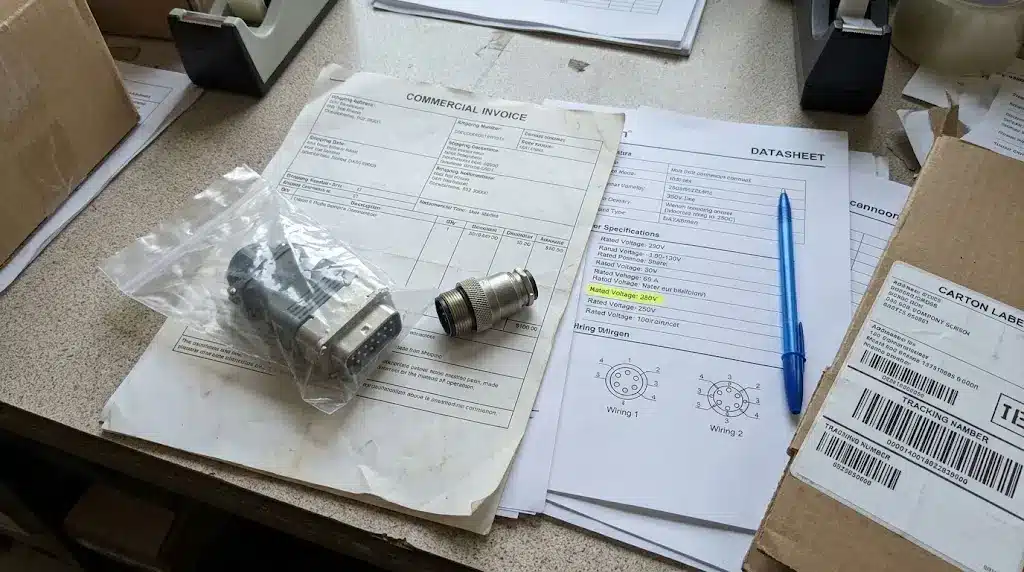
Certification claims take the longest part of a technical review I do. Putting UL 4128 on a page takes a second, and verifying it is the slow part. What I have to see is the certificate itself, the model printed on it, and the current rating on it. A certificate can name a series and still leave out the variant the page is selling, and that gap is the first thing I look for.
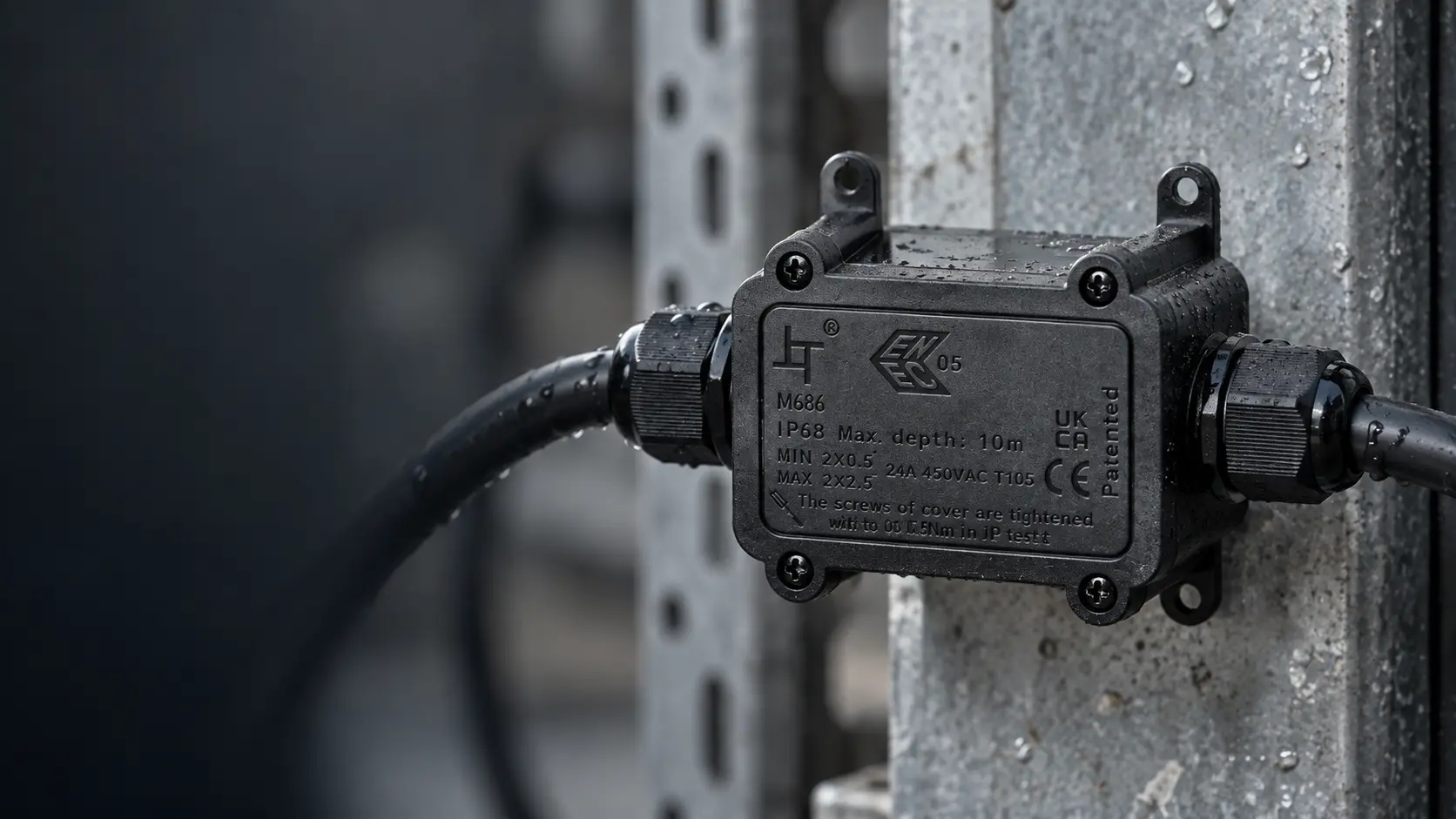
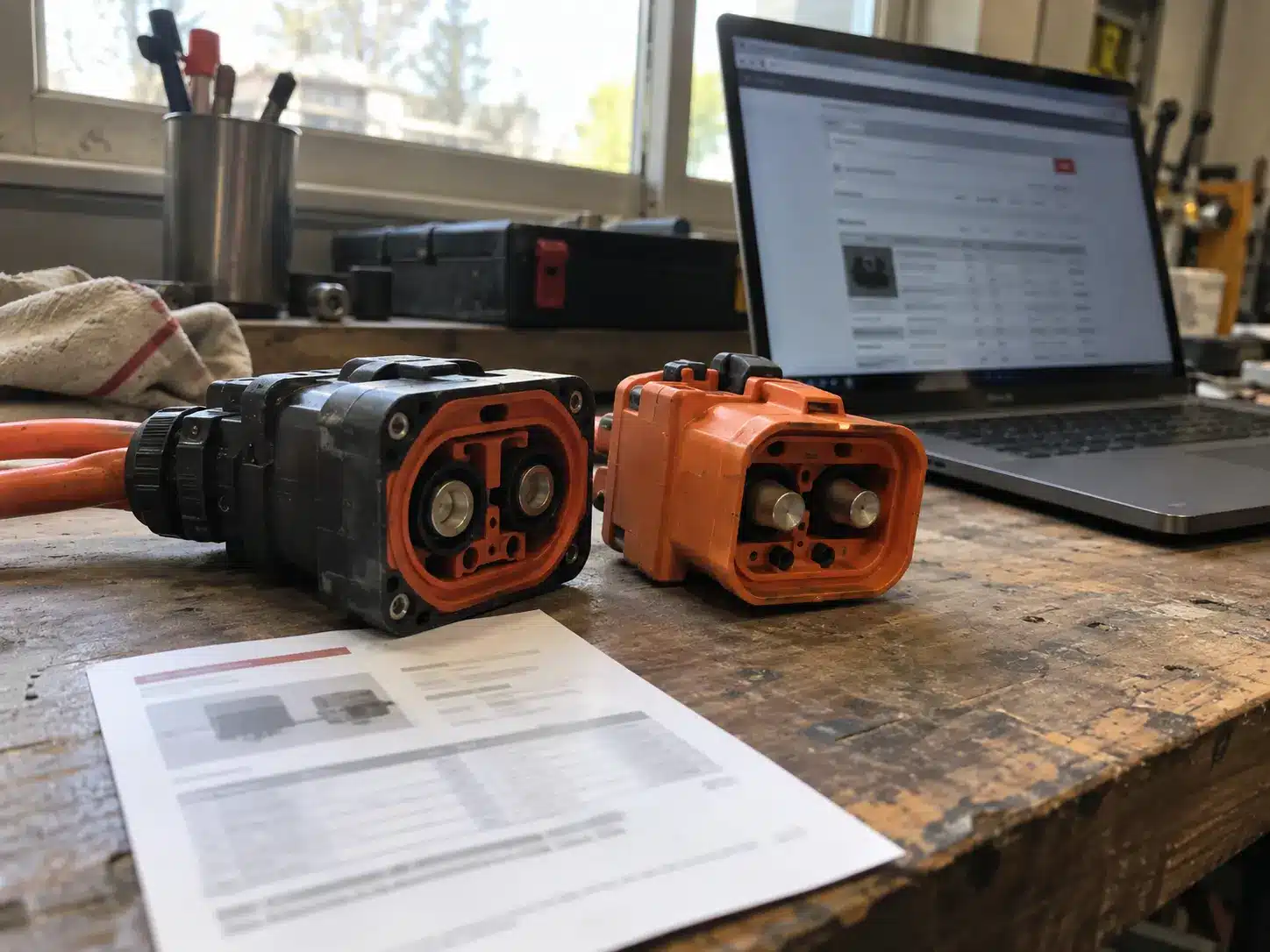
Standard numbers trip people up. IEC 60529 tells you how an IP code is tested. It does not say a connector suits a wet location, though I have seen it used that way on pages that should know better. Quoting IEC 62852 on an connecteur pour système de stockage d'énergie is a different mistake, and a buyer’s engineer will notice it before we do.
Torque values worry me more than anything else, because a customer reads 2.5 N·m and puts a wrench on it at 2.5 N·m. One digit wrong, and the joint is what fails first, usually a year later, when nobody remembers the batch.
Strip length comes up the same way. Two cables both marked 4 mm² can want different strip lengths, because jacket thickness does not appear in that number.
What comes back from me is usually a question about a figure, not a rejection. It comes down to one number: where it came from, which model it applies to, what happens outside that range. If the answer is a guess, the claim goes out as a range or it does not go out. A technical review that signs a number nobody can trace is worse than no review at all.
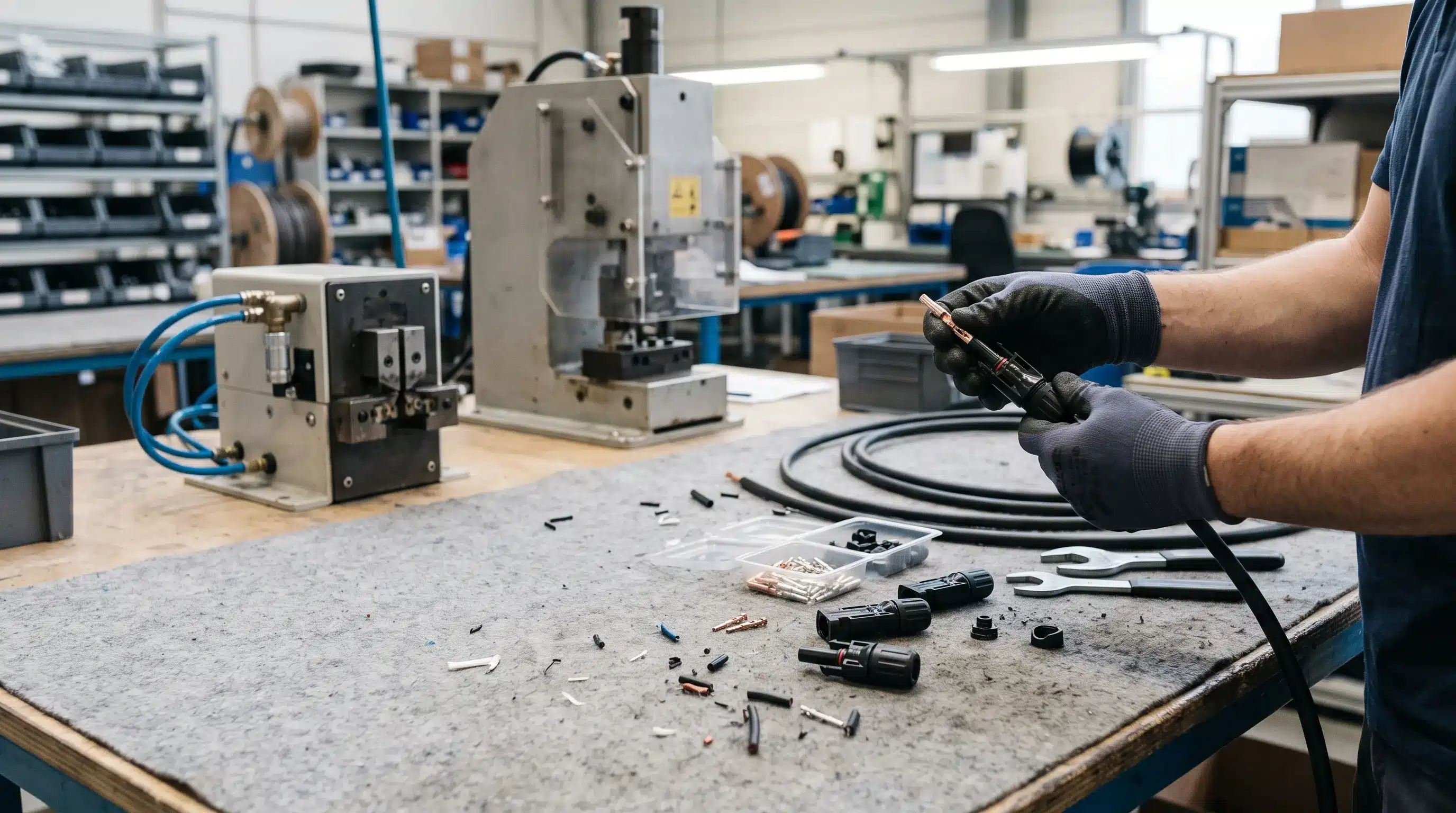
The plant is where I spend most of my week, and the test records I check against come off our own line. Either the record exists for that model, or it does not. The contrôle qualité files are where I find out which.
I can tell you what a test record says. I can also tell you which certificate covers which model, and where a standard stops applying. What I cannot tell you is what your installation will do over 25 years. That depends on the array, the wrench and the person holding it. When a question turns on your site, I say so instead of inventing a figure.
If a number here does not match what you measured, send the model and the batch with it. Ryan’s author page lists the guides, and the ones I have signed carry my name and the date at the top. For a technical review of your own drawing, send it through the formulaire de devis and mark it for me.

CONCEVONS ENSEMBLE VOTRE SOLUTION DE CONNEXION
Indiquez-nous votre application, vos spécifications et la quantité estimée. Notre équipe vous proposera une solution de connecteurs adaptée et vous fournira un devis.
Faible quantité minimale de commande · OEM et ODM · Assistance à la sélection des produits · Réponse rapide aux demandes de devis