

Precisa de conectores à prova d'água?Solicite um orçamento →
Você tem uma caixa de junção cheia de terminais para conectar, e cada um deles precisa de uma chave de fenda e de uma verificação de torque. As duas voltas em si são a parte fácil. Multiplique isso por toda uma série de produção, e a questão deixa de ser de habilidade e passa a ser de tempo. Conectores de fios sem necessidade de ferramentas Os conectores de fios sem necessidade de ferramentas permitem que você deixe a chave de fenda de lado. É por isso que eles aparecem cada vez mais nas listas de materiais (BOMs) e nas especificações de instalação. É por isso que eles aparecem cada vez mais nas listas de materiais (BOMs) e nas especificações de instalação. Mas “sem ferramentas” soa como um slogan de marketing, e sua função é verificar, não confiar. Este guia aborda como os conectores de encaixe realmente funcionam, em que situações eles se mostram eficazes e em quais não, e o que verificar antes de adotar uma família de conectores em um projeto.
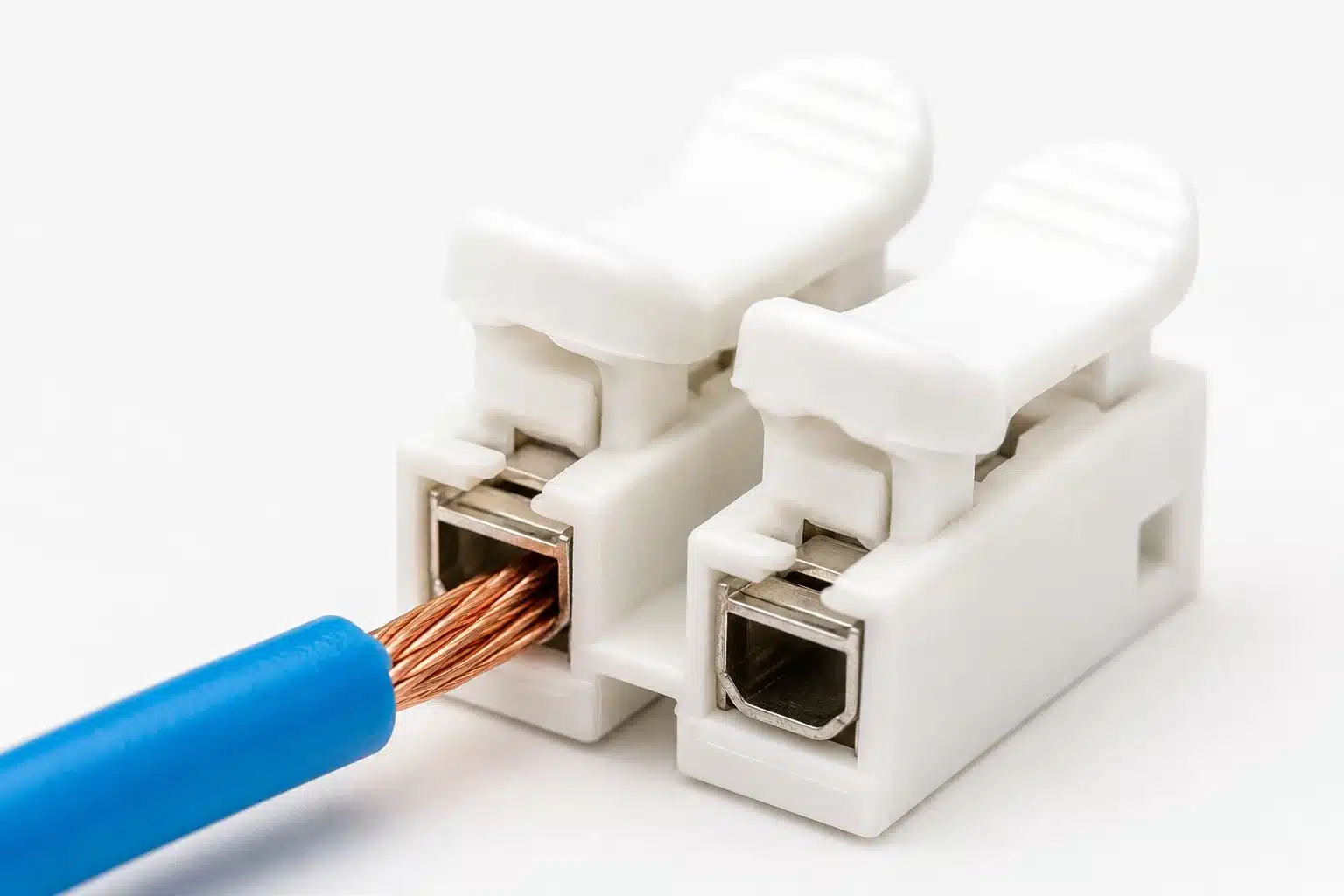
Os conectores de fio sem uso de ferramentas são uma família de dispositivos de terminação que prendem os condutores por meio de uma mola, em vez de uma rosca. Descasque o fio e empurre-o. Desencape o fio, empurre-o para dentro e o conector o prenderá. Não é preciso seguir nenhuma especificação de torque, nem usar o outro punho para segurar o terminal. Três mecanismos estão agrupados sob o mesmo nome, mas não são intercambiáveis.
Grampo de mola de encaixe — A A lâmina de aço para molas dentro do compartimento se abre à medida que o fio entra e, em seguida, pressiona o condutor assim que ele se encaixa. Esse é o mecanismo ao qual a maioria das pessoas se refere quando fala em “encaixe por pressão”. A inserção é feita com um único movimento. A remoção requer uma ferramenta na maioria dos modelos.
Grampo acionado por alavanca — Você Abra a alavanca, insira o fio e feche a alavanca. A força de fixação é gerada pelo mecanismo da alavanca, e a liberação é intencional e visível. Os modelos com alavanca costumam ser os mais fáceis de reutilizar.
Contato de deslocamento de isolamento (IDC) — O O fio é pressionado em uma ranhura que perfura o isolamento e entra em contato com o condutor. O fio é pressionado em uma ranhura que atravessa o isolamento e entra em contato com o condutor. É mais comum ver isso em instalações de cabos de dados e cabos planos do que em instalações elétricas de alimentação. O fio é encaixado em uma ranhura que atravessa o isolamento e faz contato com o condutor. Você encontrará esse tipo de conexão em instalações de cabos de dados e cabos planos. Já em instalações de energia elétrica, não é tão comum. Neste artigo, vamos nos concentrar nos tipos de encaixe e de alavanca. Não é o foco deste artigo.
Uma observação sobre a terminologia antes de prosseguirmos: os conectores de fio de conexão rápida podem se referir a desconexões do tipo lâmina em alguns catálogos. Neste artigo, “conexão rápida” refere-se a terminais com fixação por mola que não requerem o uso de ferramentas, que é o sentido que você encontrará na documentação sobre conectores de encaixe.
O princípio de funcionamento é mais simples do que o marketing sugere. Dentro do invólucro há um elemento de aço para molas. Quando você empurra um condutor descascado na entrada, a mola se comprime para permitir a passagem do fio e, em seguida, volta à posição original, encostando-se no condutor. A força de contato vem da mola, e não da intensidade com que você empurra ou do cuidado com que aperta um parafuso. Isso é importante na produção: a qualidade da conexão deixa de depender das mãos do instalador.
Dois detalhes determinam sePreparação do fio — O comprimento do fio deve corresponder ao conector. Se for muito curto, a mola prenderá no isolamento em vez de no cobre. Se for muito longo, o condutor desencapado ficará saliente além do terminal e poderá entrar em contato com outro condutor. [VERIFICAÇÃO TÉCNICA NECESSÁRIA — insira o comprimento exato da tira por série, por exemplo, “X mm ± Y mm para a Série Z”]. O mesmo vale para fios trançados: alguns conectores de encaixe aceitam condutores trançados diretamente, enquanto outros exigem a utilização prévia de uma virola. [VERIFICAÇÃO TÉCNICA NECESSÁRIA — requisito de virola por série/calibre].
As braçadeiras de mola do tipo “push-in” geralmente exigem uma ferramenta de liberação (uma chave de fenda pequena ou um pino de liberação específico) para abrir a braçadeira antes que o fio seja retirado. A possibilidade de reutilização de um conector após a liberação depende do projeto da mola e do invólucro. Algumas séries são projetadas para uso repetido; outras, para instalação única. [VERIFICAÇÃO TÉCNICA NECESSÁRIA — classificação de reutilização e número de peça da ferramenta de liberação por série].
Os terminais de encaixe mostram seu valor quando se verificam três condições: a fiação é repetitiva, o espaço é reduzido ou o instalador deseja uma qualidade de conexão que não dependa da aplicação correta do torque.
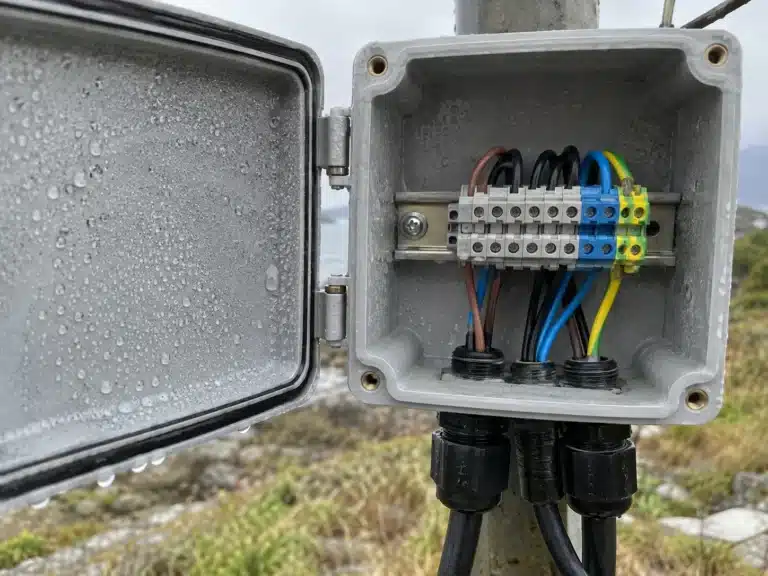
Luminárias de teto, luminárias de LED, iluminação embutida e caixas de junçãosão o território clássico dos conectores de encaixe. Uma mão segura a luminária, a outra encaixa o fio. A substituição dos terminais para manutenção é rápida, o que é importante para luminárias que passam por manutenção mais de uma vez. Ao especificar conectores de encaixe para iluminação, verifique primeiro a faixa de bitola dos fios em relação à sua instalação elétrica no local. Os circuitos de iluminação costumam usar 1,5–2,5 mm² ou 14–12 AWG, e o conector deve cobrir essa faixa com margem de segurança. [VERIFICAÇÃO TÉCNICA NECESSÁRIA — confirmar a cobertura exata por calibre para cada série].
Os montadores de painéis utilizam terminais de alavanca e de encaixe em trilhos DIN para a fiação interna, onde a rapidez da instalação e um layout organizado são fundamentais. A questão da aplicação é de natureza mecânica: o terminal se encaixa no perfil do trilho, e o layout da fiação oferece espaço suficiente para que o instalador possa encaixá-lo diretamente? Inserções tortas são a principal causa de mau contato nos painéis.
→ Relacionado: Conectores para automação industrial
Quando a mesma conexão é feita centenas de vezes, a terminação sem ferramentas elimina uma etapa do ciclo. O argumento sobre a consistência mencionado anteriormente se aplica diretamente aqui: a fixação por mola elimina a variável humana do operador na conexão.
Os conectores de fio que não requerem ferramentas não são um substituto universal. Evite utilizá-los em condições de alta corrente contínua bem acima da classificação do conector, em caso de aquecimento prolongado próximo ao limite do material da carcaça e em ambientes com forte vibração, a menos que o fabricante comprove que o conector é adequado para essa aplicação. Locais externos e úmidos exigem um invólucro ou uma série de conectores projetados para resistência à umidade; um terminal de encaixe de uso geral não é um dispositivo com classificação IP. [VERIFICAÇÃO TÉCNICA NECESSÁRIA — limites de corrente, temperatura e vibração por série]. Os condutores de alumínio também merecem uma verificação específica de compatibilidade; não se deve presumir que um terminal projetado para cobre seja compatível com alumínio.
Cada método de terminação envolve uma compensação. A tabela abaixo os compara com base nos aspectos que aparecem nas revisões de projeto para verificar se a conexão é confiável.
| Dimensão | Encaixe por pressão / sem uso de ferramentas | Terminal de parafuso | Crimpagem |
|---|---|---|---|
| Tempo de instalação | Rápido Uma obra por maestro |
Moderado, passo de torque por condutor | Rápido com as ferramentas corretas; inclui alicate de crimpagem e matriz |
| Consistência de força | Ajustado na primavera, sempre da mesma forma | Depende do torque do operador | Depende da calibração da ferramenta de crimpagem |
| Retrabalho | É necessária uma ferramenta de liberação; reutilização por série | Fácil Reaperto dos parafusos |
Cortar e refazer a crimpagem |
| Comportamento vibratório | É bom quando a mola é mantida (por série) | Pode se soltar; é necessário reapertar periodicamente | Ótimo Deformação mecânica |
| Custo de ferramentas | Baixo (extrator mais ferramenta de liberação) | Baixo | Higher (ferramenta de crimpagem e matrizes) |
| Tendência do custo unitário | Preço unitário mais alto, custo de instalação e retrabalho mais baixo | Preço unitário mais baixo | Material mais ferramentas amortizadas |
| Melhor ajuste | Caixas de junção, iluminação, painéis, instalação elétrica de produção | Reparos em campo, medidores mistos, terminações de alta corrente | Conexão direta, chicotes elétricos, serviço de alta confiabilidade |
Uma referência útil: os dispositivos de conexão com unidades de fixação sem parafusos para instalações elétricas em edifícios são comumente avaliados com base em IEC 60998-2-2 ou o requisito equivalente da UL, mas a classe padrão varia de acordo com o mercado e a série. [VERIFICAÇÃO TÉCNICA NECESSÁRIA — confirme qual classe padrão e qual classificação se aplicam a cada série antes de citar uma norma aqui].
A PVLinkTech publica classificações, faixas de bitola e requisitos de instalação por série nas fichas técnicas, e enviamos a ficha técnica junto com cada cotação. O que não publicamos em posts de blog são os detalhes de certificação ou os resultados de testes por série; esses dados são verificados por série e compartilhados mediante solicitação.
Precisa da ficha técnica de uma série específica antes de finalizar um projeto? Solicite uma ficha técnica e um orçamento, e nós enviaremos as especificações exatas para a série que você está avaliando.
Para conhecer a linha de produtos e os fatores de seleção importantes para pedidos em grande quantidade, consulte nossa página “Conectores de fio do tipo push-in para atacado”.
| Verificar | Por que isso é importante | Pergunte ao fornecedor |
|---|---|---|
| Corrente e tensão nominais | O conector deve suportar as condições de operação contínua e de falha do seu circuito | Qual é a temperatura ambiente para a qual a corrente nominal se aplica? |
| Gama de fios, sólidos e trançados | Um alcance incorreto indica contato inadequado ou ausência de inserção | Quais calibres são aprovados, com ou sem virola? |
| Normas e certificação | A certificação é o que garante a aprovação em uma auditoria na fábrica ou na visita de um inspetor | Quais normas UL/IEC/EN se aplicam? Você poderia nos enviar o certificado? |
| Material de fabricação e inflamabilidade | Os plásticos amolecem com o calor; a classe de inflamabilidade é importante em algumas inspeções | Material e classe de inflamabilidade por série |
| Política de divulgação e reutilização | Os procedimentos de manutenção dependem disso | Instalação única ou reutilizável, e com qual ferramenta de lançamento? |
| Consistência dos lotes para pedidos em grande volume | Um número de peça deve ter o mesmo comportamento em todos os lotes | Como o mesmo número de peça é controlado entre os lotes de produção? |
Uma referência útil: os dispositivos de conexão com unidades de fixação sem parafusos para instalações elétricas em edifícios são comumente avaliados de acordo com a norma IEC 60998-2-2 ou com o requisito equivalente da UL, mas a classe da norma varia de acordo com o mercado e a série. [VERIFICAÇÃO TÉCNICA NECESSÁRIA — confirme qual classe padrão e qual classificação se aplicam a cada série antes de citar uma norma aqui].
A PVLinkTech publica classificações, faixas de bitola e requisitos de instalação por série nas fichas técnicas, e enviamos a ficha técnica junto com cada cotação. O que não publicamos em posts de blog são os detalhes de certificação ou os resultados de testes por série; esses dados são verificados por série e compartilhados mediante solicitação.
Precisa da ficha técnica de uma série específica antes de finalizar um projeto? Solicite uma ficha técnica e um orçamento e enviaremos os índices de audiência exatos da série que você está avaliando.
Para conhecer a linha de produtos e os fatores de seleção importantes para pedidos em grandes quantidades, consulte nosso Conectores de fio do tipo “push-in” no atacado página.
Os conectores de fios sem ferramentas não são mágicos; são um mecanismo que substitui a chave de fenda por uma mola, e a questão de engenharia é se essa substituição se adequa à sua aplicação. Preparação dos fios, faixa de bitola, temperatura e política de reutilização são os quatro aspectos a serem verificados antes da compra. Quando esses fatores estiverem alinhados, a terminação por encaixe é geralmente a opção mais consistente tanto na bancada quanto em campo.
Conheça toda a nossa linha de conectores de fio de encaixe ou solicite primeiro uma ficha técnica e um orçamento.

VAMOS CRIAR SUA SOLUÇÃO DE CONECTIVIDADE
Envie-nos sua aplicação, especificações e quantidade estimada. Nossa equipe recomendará uma solução de conectores adequada e fornecerá um orçamento.
Baixo MOQ · OEM e ODM · Suporte na seleção de produtos · Resposta rápida à solicitação de cotação