


CN series energy storage connectors are single-core connectors for battery energy storage system cable connections. Available configurations cover 70A to 500A and up to 1500V DC, with IP67 protection when mated. Select the exact model according to working current, cable size, voltage, terminal style and certification scope.
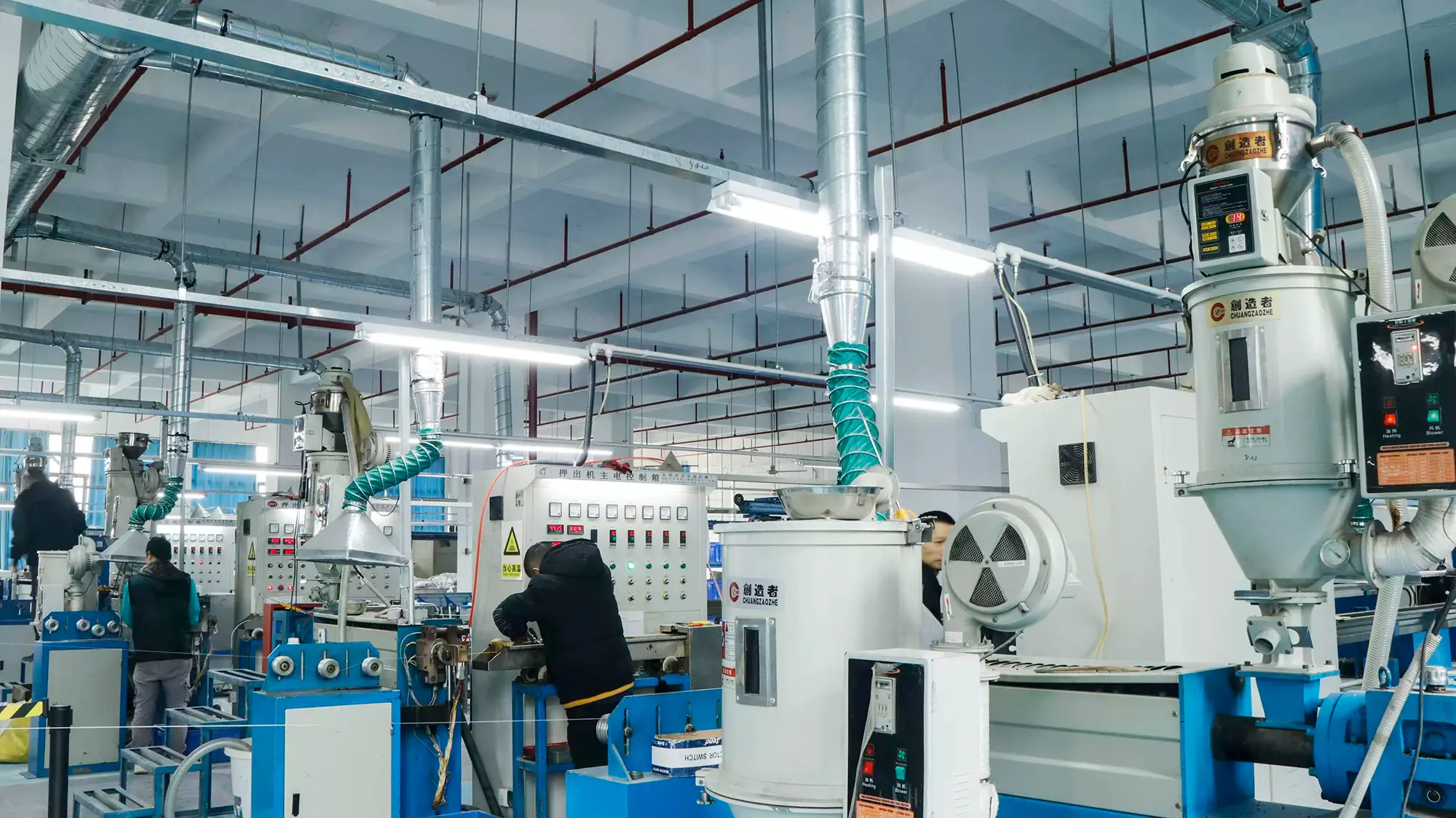
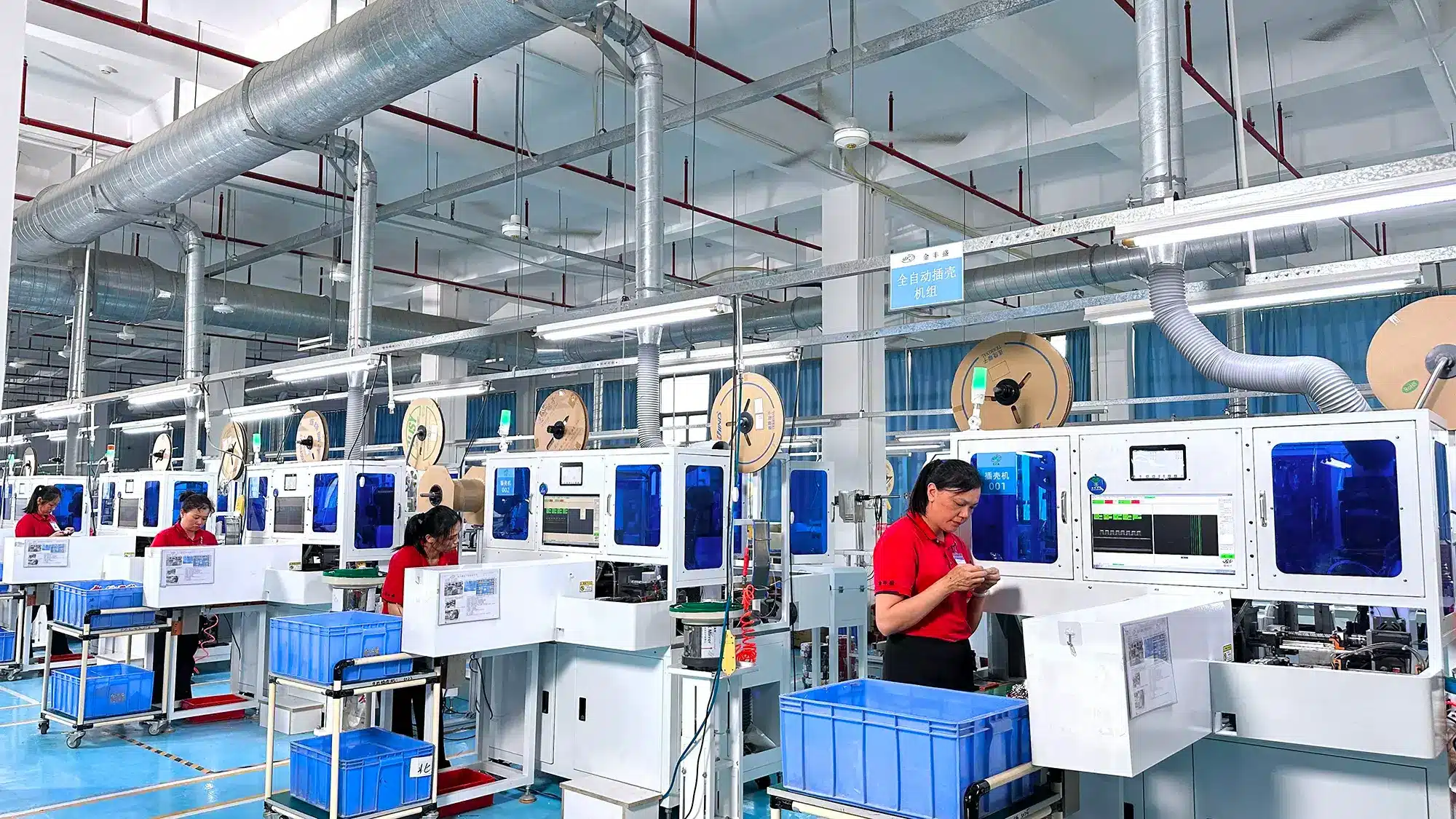
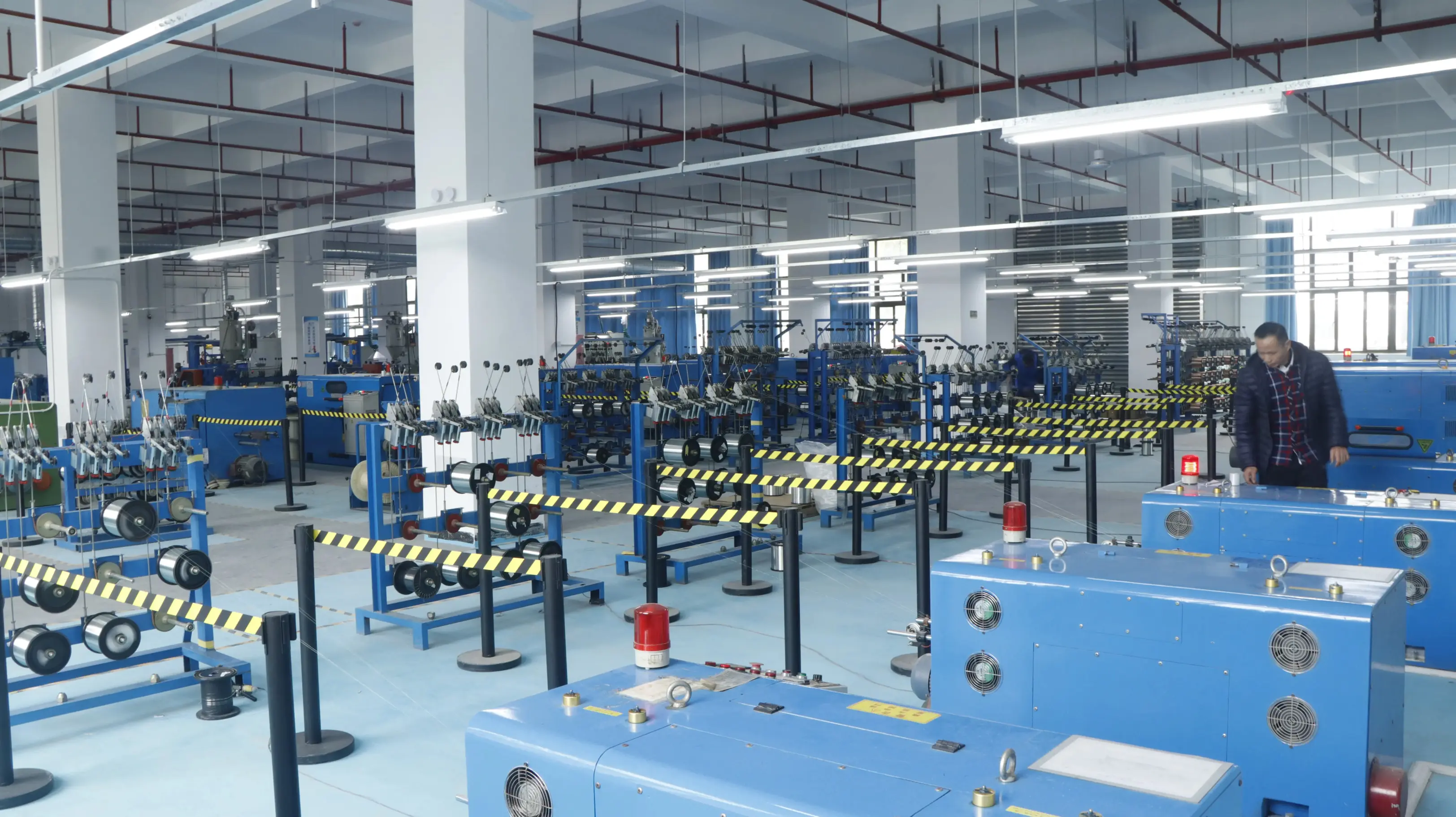
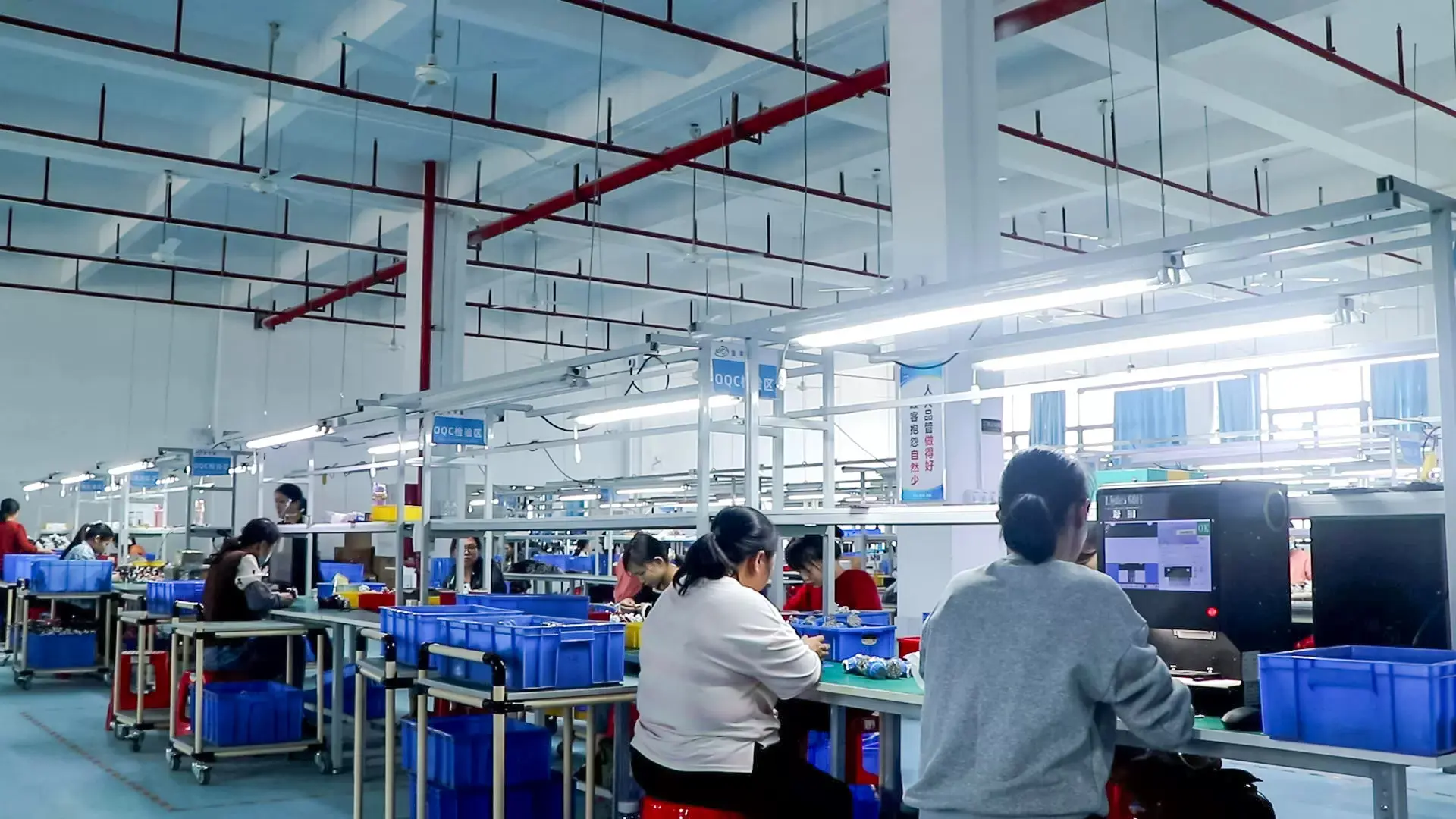
The CN series is not assembled from bought-in housings. We cut the tool, mold the PA66 body, stamp and plate the contacts, and assemble and test the finished connector under one roof. That matters at the two moments a BESS buyer usually loses a month: the sample stage, when a cavity change is a schedule decision instead of a negotiation with a third party, and the audit stage, when a buyer asks who actually made the part on the drawing.
Tooling is where most supplier conversations stall. A factory that buys its molds outside quotes a lead time in weeks and a change order in months. Because the tool room sits in the same building as the molding floor here, a gate position or a keyway change is quoted against the same schedule as the production run. That is the practical difference between a connector supplier and an energy storage connector manufacturer.
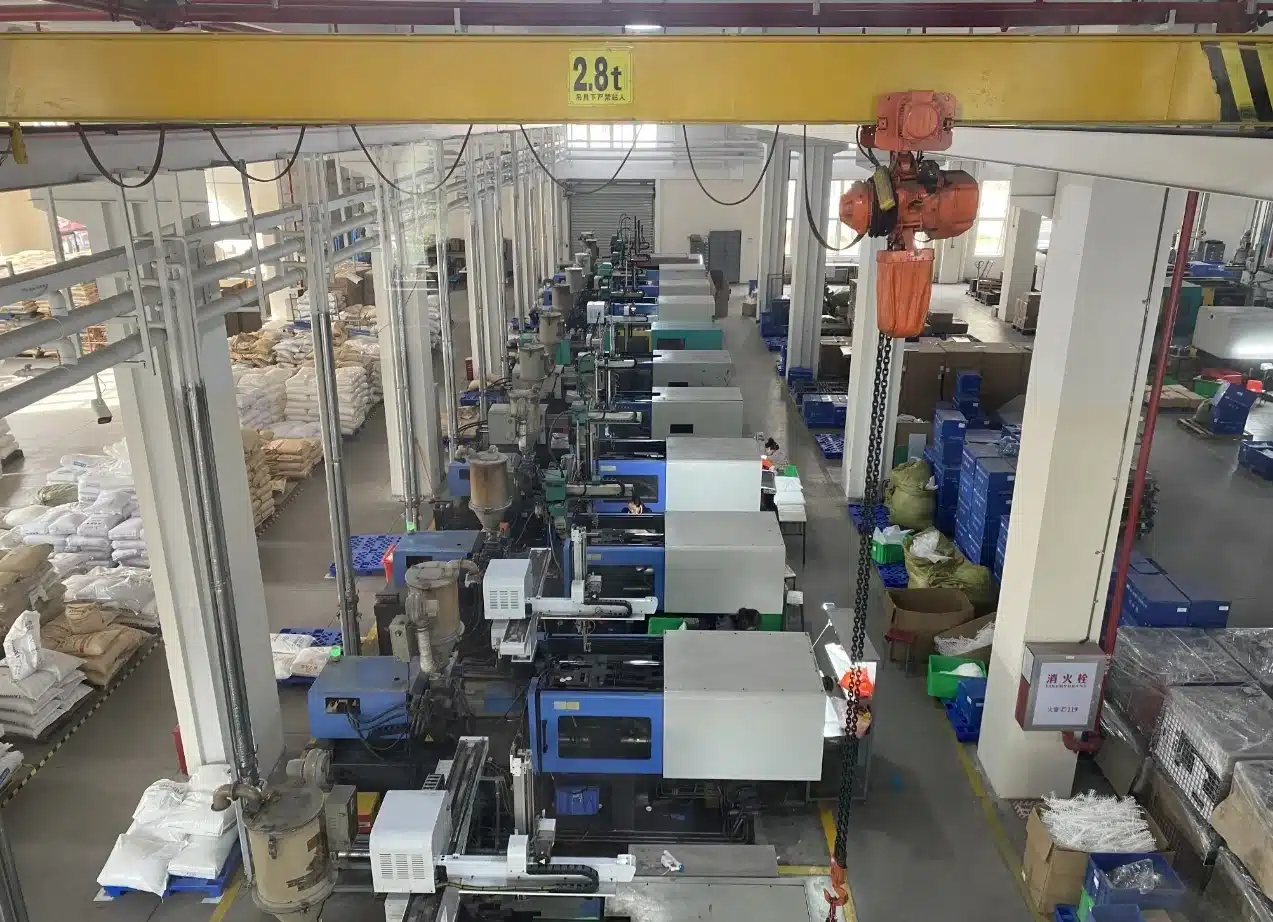
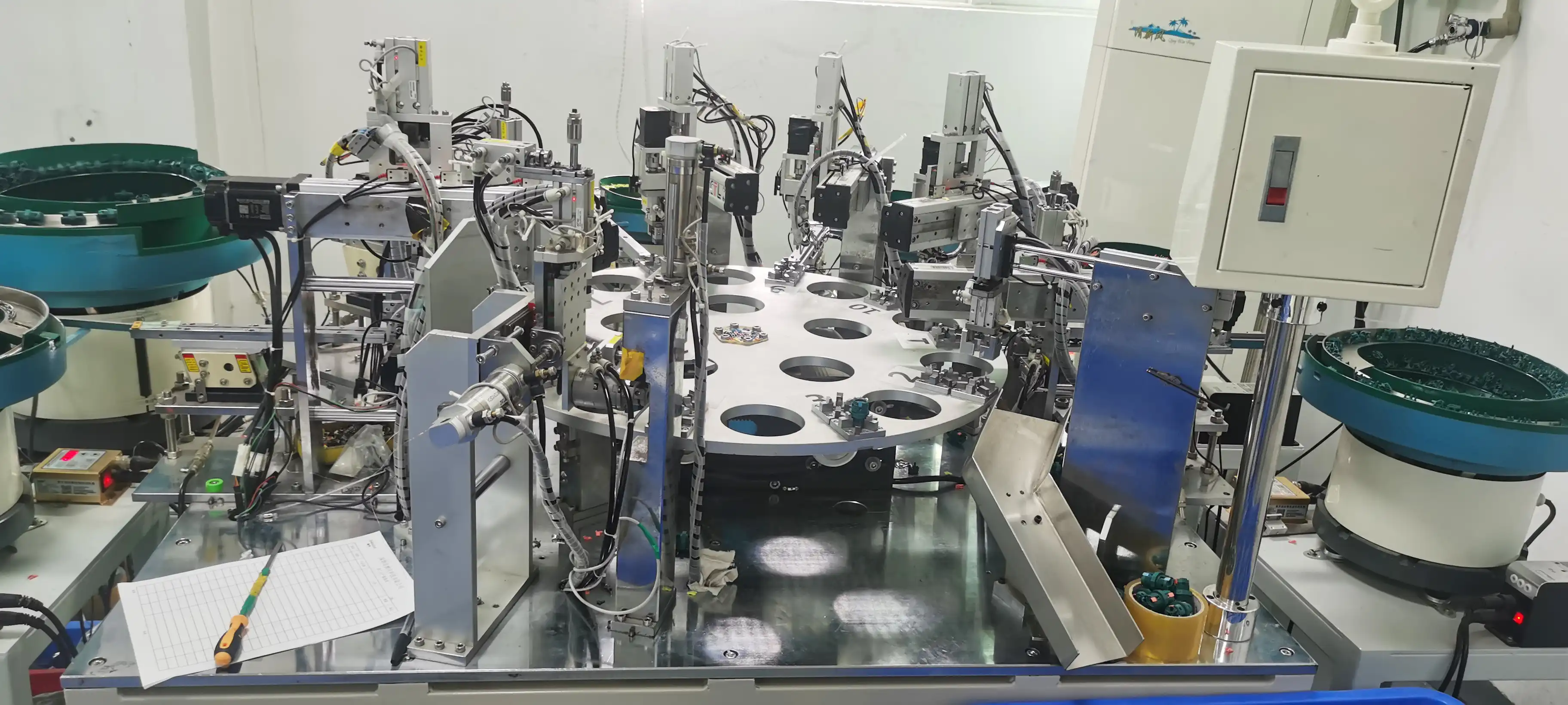
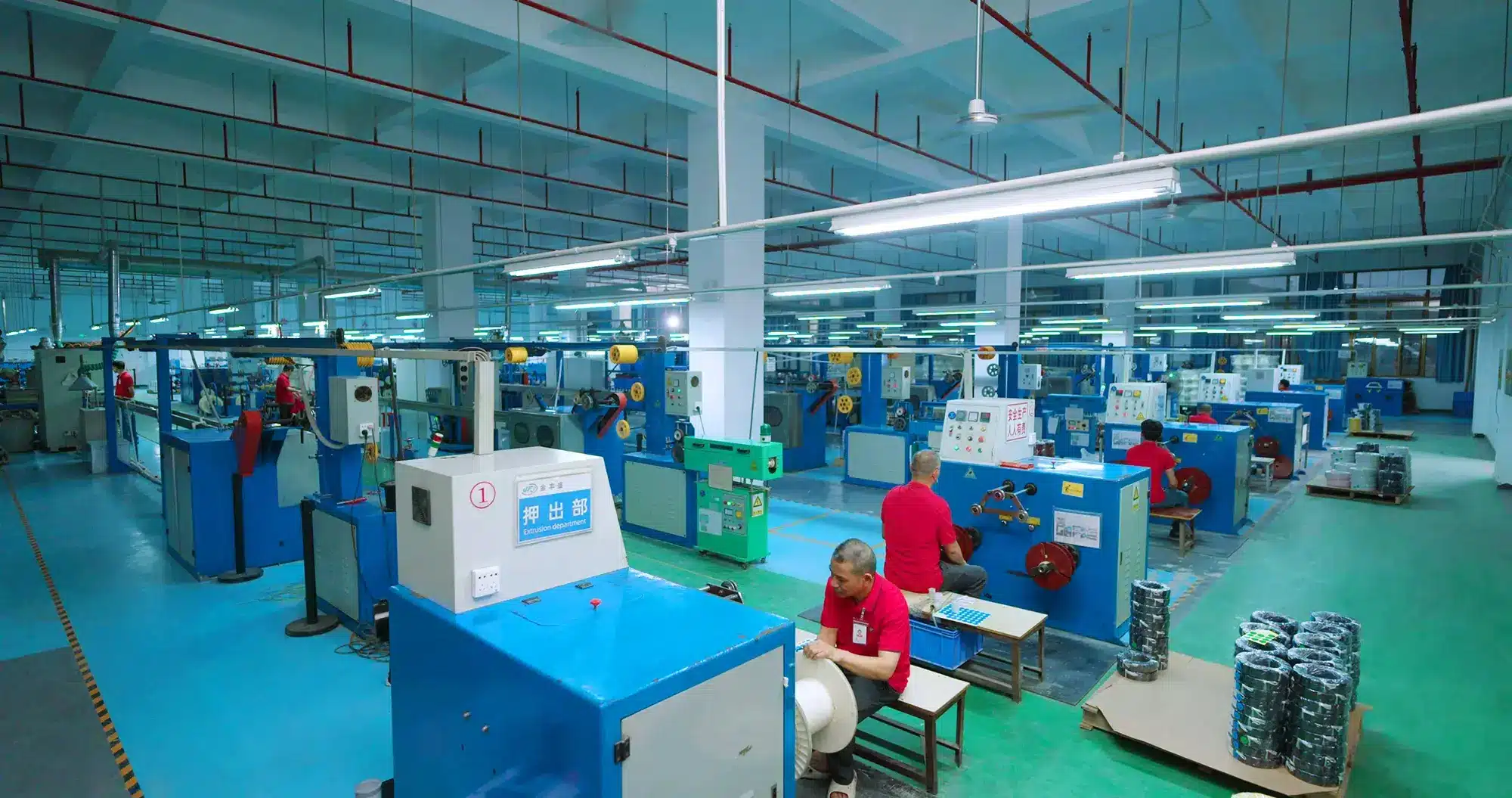

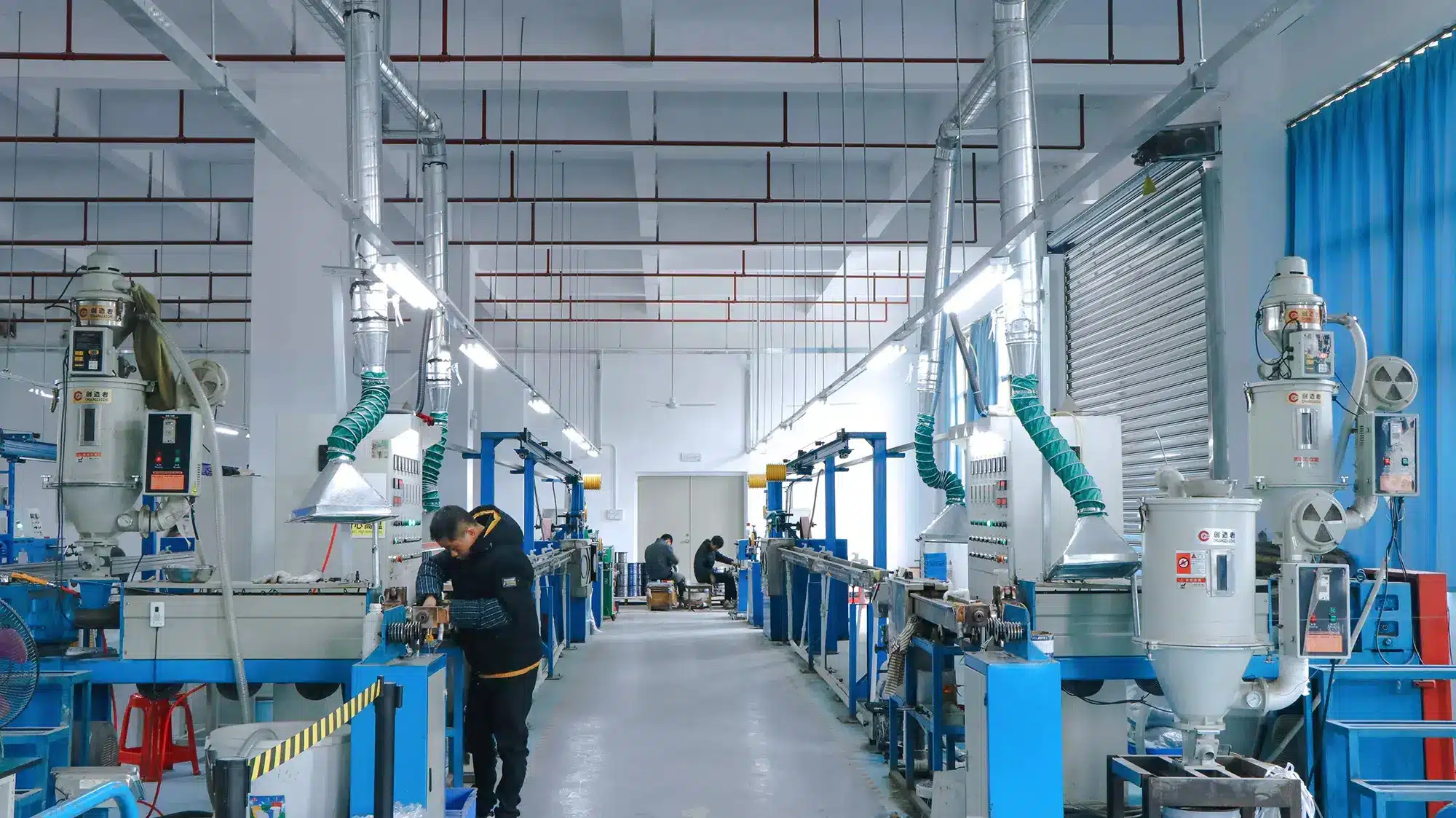


| Scope | Detail |
|---|---|
| Plant | 6,800 m² in Guangming District, Shenzhen; operating since 2015 |
| In-house processes | Mold making, precision injection molding, metal stamping, CNC machining, harness assembly, connector assembly, testing |
| Engineering | 30+ R&D engineers on connector and cable assembly design |
| Metrology | 0.005 mm inspection accuracy; test reports and material certificates ship with the order |
| Quality | >99% outgoing pass rate; 100% batch traceability |
| Management systems | ISO 9001, IATF 16949, ISO 13485 (entity and scope per certificate document) |
What an energy storage connector manufacturer actually ships is a range, not a single part with a long option list. There are five models here, and each is built around one cable size class, so the current rating and the conductor size move together and neither can be specified without the other.There are five models here, and each is built around one cable size class, so the current rating and the conductor size move together and neither can be specified without the other.
| Model | Current rating | Voltage rating | Cable size | Contact resistance | Dielectric strength |
|---|---|---|---|---|---|
| CN06 | 70A / 100A / 120A | 1000V / 1500V DC | 10 / 16 / 25 mm² | ≤0.2 mΩ | 3000 / 4000V AC |
| CN08 | 150A / 200A / 250A | 1500V DC | 35 / 50 / 70 mm² | ≤0.2 mΩ | 4000V AC |
| CN10 | 200A / 250A / 300A | 1500V DC | 50 / 70 / 95 mm² | ≤0.5 mΩ | 4000V AC |
| CN12 | 250A / 300A / 350A | 1500V DC | 70 / 95 / 120 mm² | ≤0.5 mΩ | 4000V AC |
| CN14 | 400A / 450A / 500A | 1500V DC | 150 / 185 mm² | ≤0.5 mΩ | 4000V AC |
Contact resistance is quoted at 100 mA,For fixed busbar connections, see our battery busbar connectors. For a manual isolation point, review the MSD-350 manual service disconnect. which is the measurement condition behind the ≤0.2 mΩ and ≤0.5 mΩ figures rather than an operating current. The contacts are silver-plated T2Y pure copper.
Four things change between CN06 and CN14: current, cable size, contact resistance and dielectric strength. Everything below is identical on all five models, which is why a sample from one tells you how the others are built.
| Parameter | Value, all CN models |
|---|---|
| Number of cores | Single core |
| Housing material | PA66, flame retardant to UL94 V-0 |
| Contact material | T2Y pure copper, silver plated |
| Insulation resistance | >500 MΩ |
| Insertion / withdrawal force | ≤75N |
| Mating cycles | ≥500 |
| Degree of protection | IP67 when mated |
| Operating temperature | -40°C to +125°C |
| Terminal styles | M (threaded hole), LD (screw), LM (nut), T (through-hole) |
| Orientation | Straight and 90° right-angle |
| Housing colors | Orange, red, black, with keyway polarity coding |
Every model is cut with a round hole and four screws: M4 on CN06 through CN12, M5 on CN14. Tolerance is ±0.1 mm. Two panel versions exist, orange/red and black, and the keyway is polarized so a positive and a negative cannot be mated to the wrong half.
| Model | Panel cutout diameter | Mounting screws |
|---|---|---|
| CN06 | Ø18 ±0.1 mm | 4 × M4 |
| CN08 | Ø21 ±0.1 mm | 4 × M4 |
| CN10 | Ø25 ±0.1 mm | 4 × M4 |
| CN12 | Ø27 ±0.1 mm | 4 × M4 |
| CN14 | Ø30 ±0.1 mm | 4 × M5 |
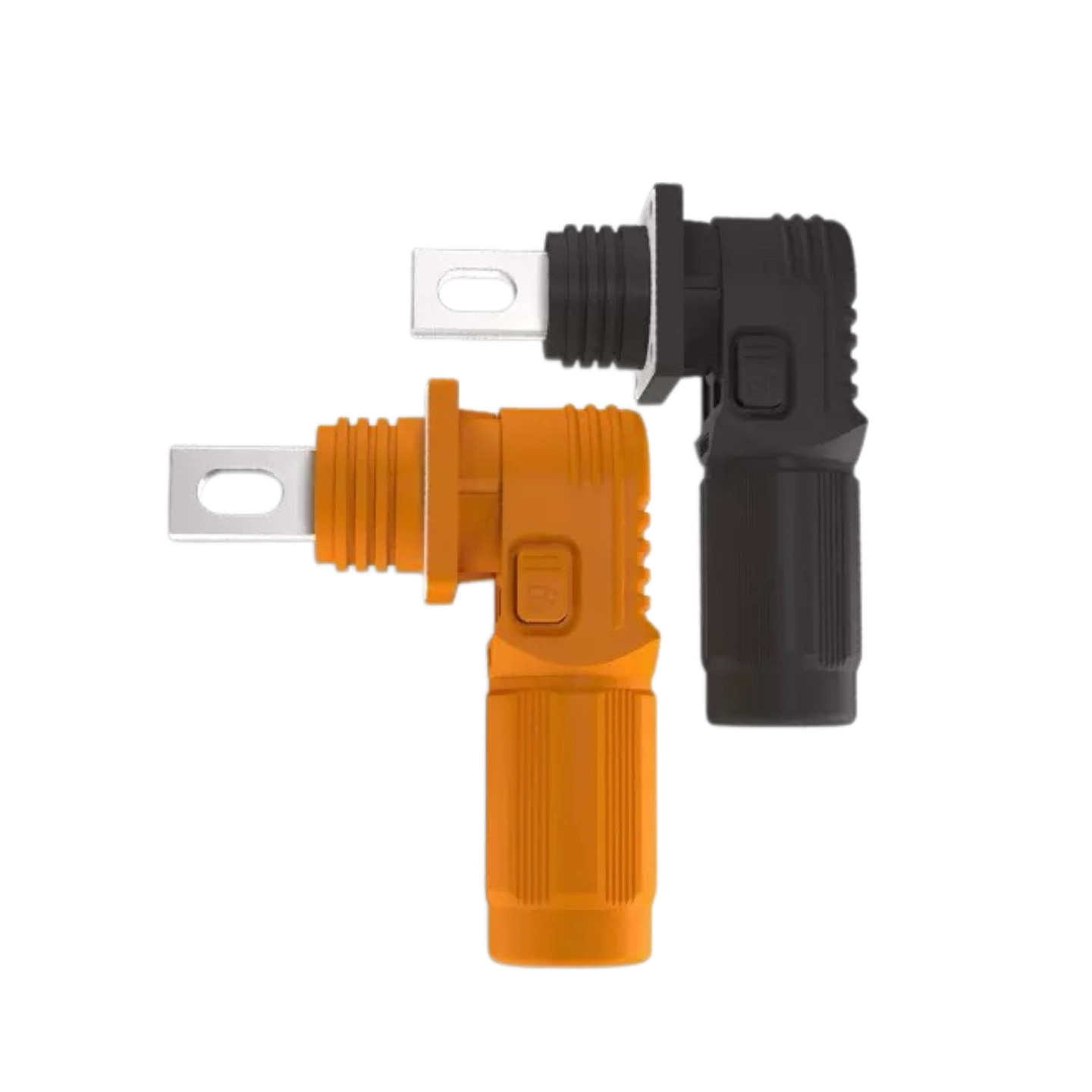
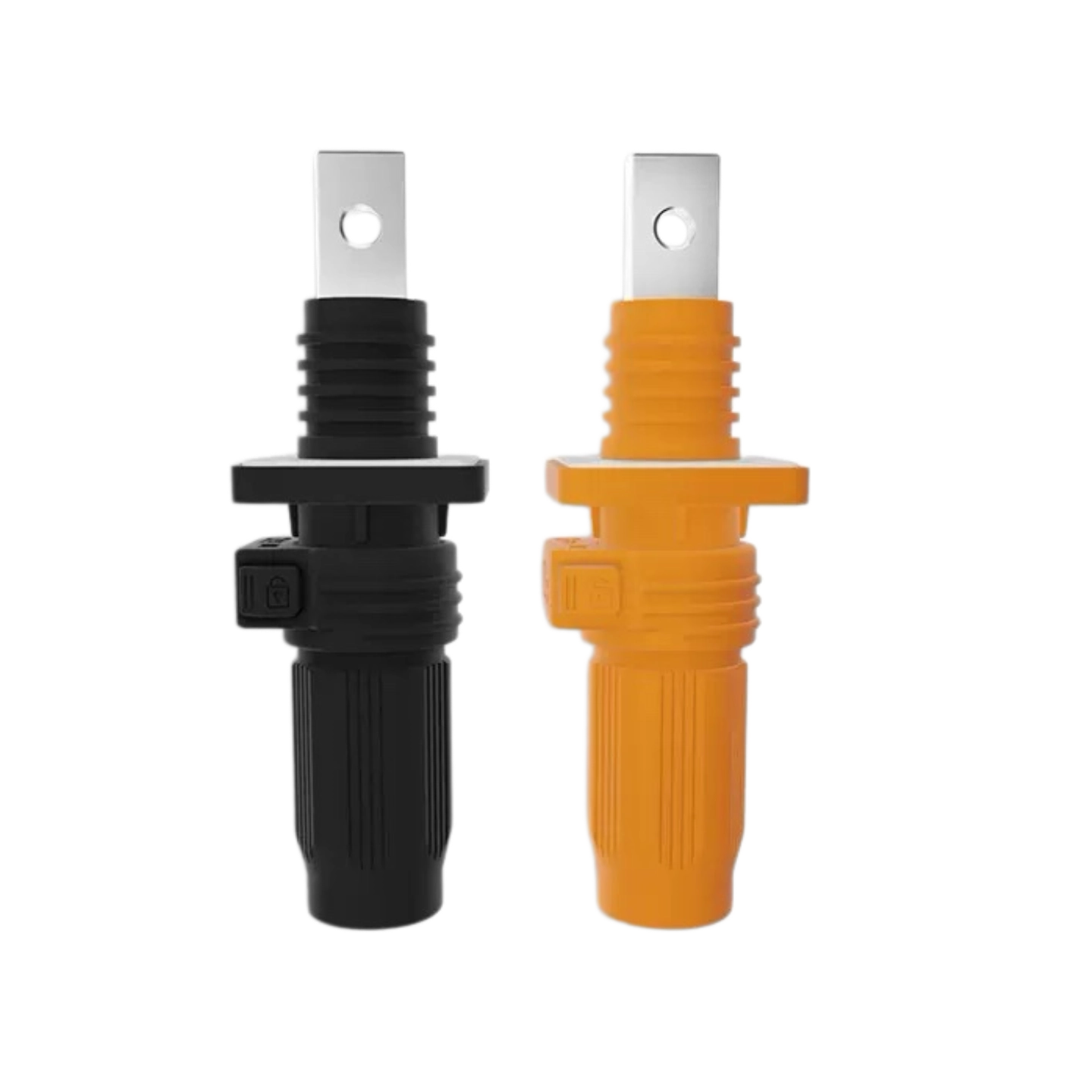
The cable outlet rotates 360° whichever orientation you order. Keyway-polarized housings in orange, black and red carry polarity through the assembly, and the latch has an anti-disconnect feature so a live joint cannot be pulled apart by cable load.
Most of what separates one energy storage connector manufacturer from another is a document, not a datasheet. These six checks are the ones that change a decision, and each one produces something a buyer can hold.
| Certificate | What it covers | What it does not cover |
|---|---|---|
| CE | European market access for the models listed on the declaration | Performance at a rating outside the declared scope |
| RoHS | Restricted substance limits in the materials used | Electrical performance |
| UL | Component recognition per model and rating | Models and voltage classes outside the file |
| ISO 9001 | Quality management system at the manufacturing site | The product or its ratings |
| IATF 16949 | Automotive quality management system | BESS-specific performance |
| ISO 13485 | Medical device quality management system | Any connector rating |
Any energy storage connector manufacturer can hand you a certificate. The scope page is the document that decides whether it applies to your order. Ask a trading supplier for the same page and the reply usually arrives as a photo of a certificate with the supplier name cropped out of the frame.
BESS connectors are commonly evaluated against UL 4128, the UL outline for connectors inside battery systems. UL 1977 covers general-purpose component connectors and is the older, broader outline. The two are not interchangeable on a specification, which is why the UL 1977 vs UL 4128 comparison is worth reading before you accept a certificate as proof of suitability. UL certification here is available per model. Confirm the certificate covers your exact part number and ratings before ordering, and treat a certificate for a sibling model as information rather than approval.
A battery energy storage system has several distinct connection points and they do not carry the same current. Inside a pack, cells are welded or bolted. Between pack and rack, cables run through connectors, and this is where a push-in part does its work. Between racks and the DC bus, or between cabinet and inverter, the current is higher and the cable heavier.
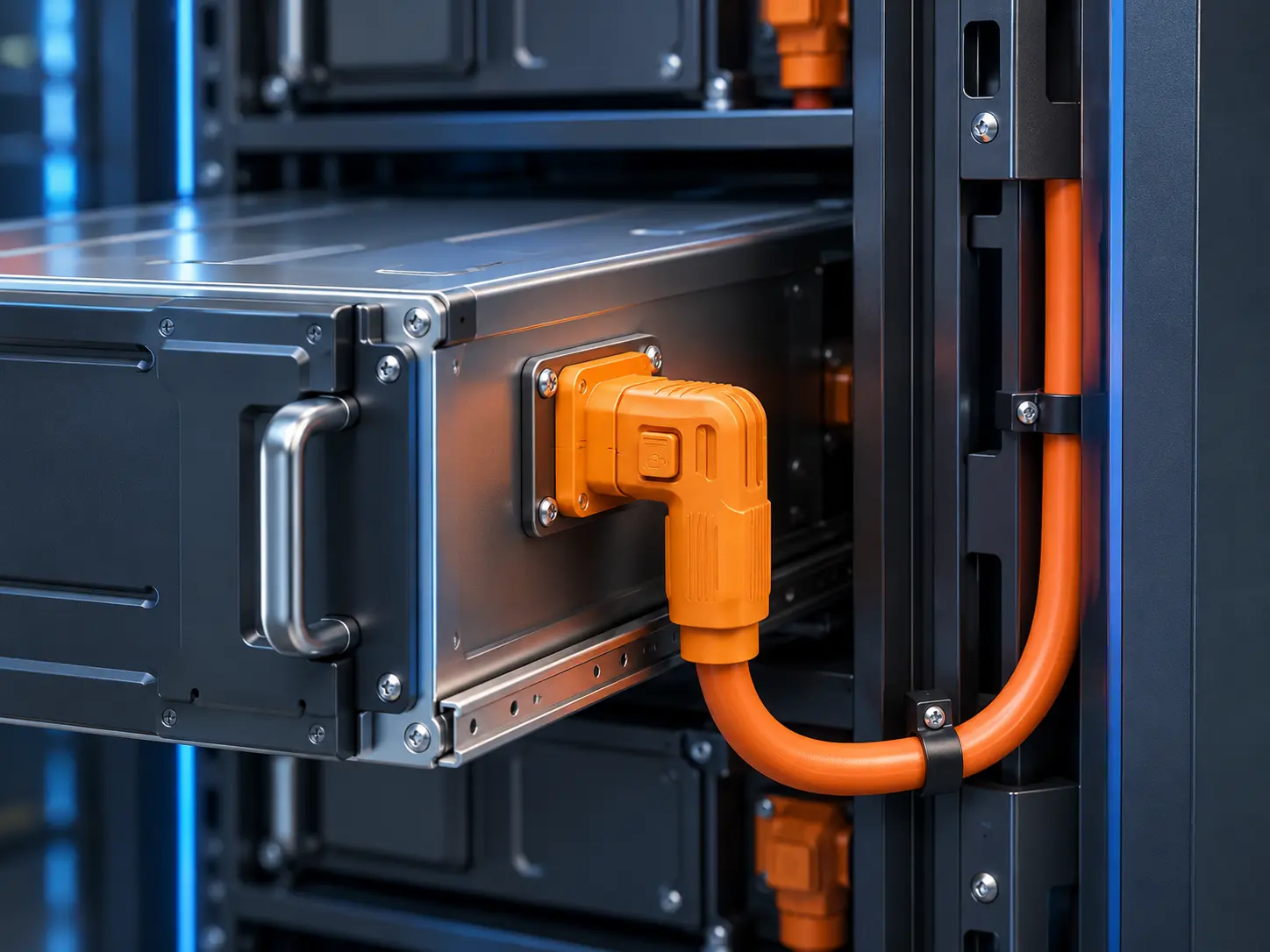
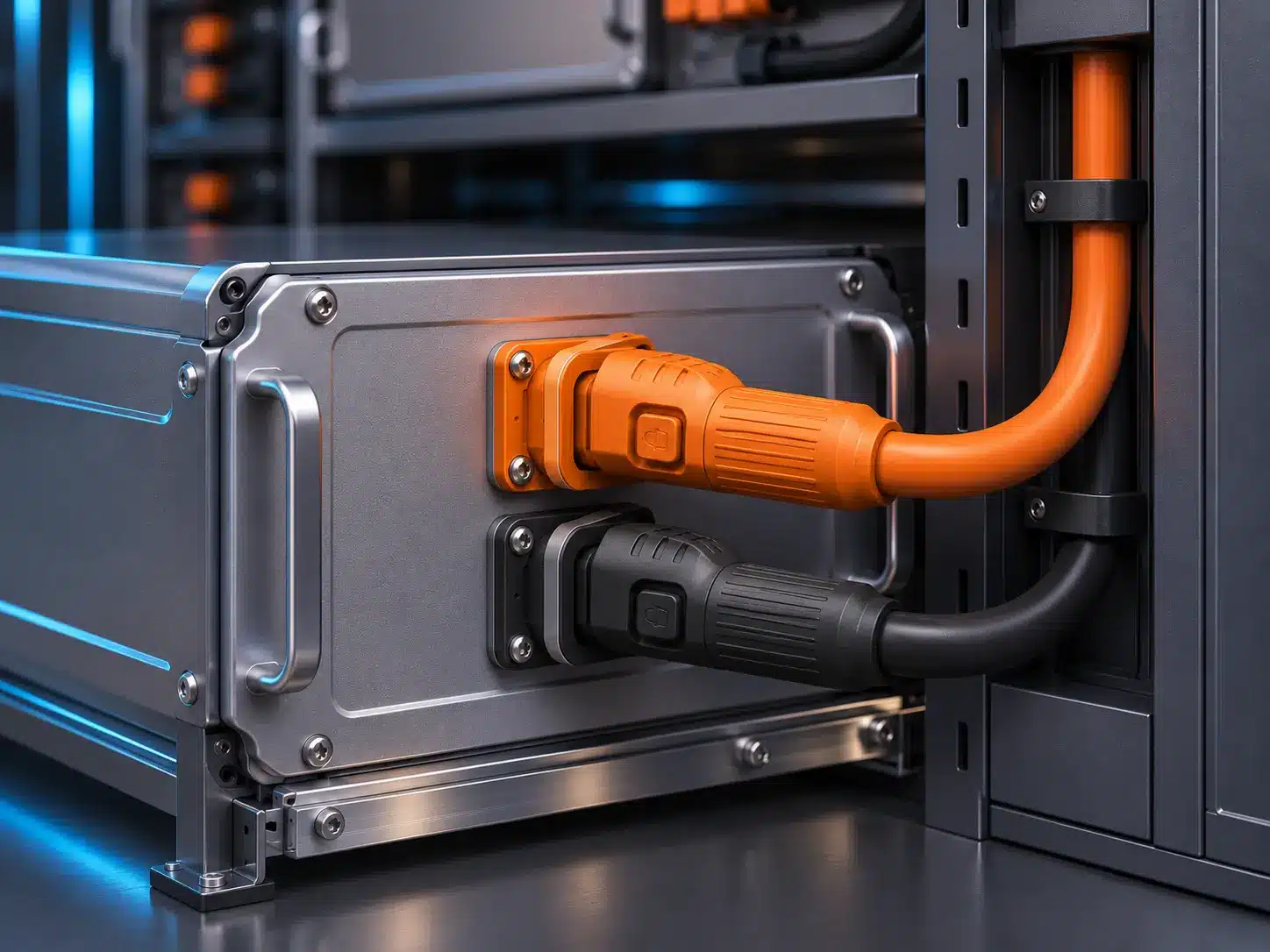
In practice the CN series covers pack-to-rack and rack-to-cabinet joints from 70A to 500A. Each joint type has an owner, and an energy storage connector manufacturer should be able to say which model belongs at which point. Points that terminate on a busbar instead of a cable belong to a different family: battery busbar connectors handle the bolt and copper bar joints up to 600A. Module-to-module joints inside a residential or commercial stack use a separate part, a panel-mounted pair rather than a cable connector, which we cover on its own page. And any DC path that technicians will open for service needs a defined isolation point, which is what a manual service disconnect provides.
At the same power, a higher DC bus voltage means lower current, which means thinner copper, less weight and fewer parallel strings to balance. That is why utility-scale storage moved to 1500V DC, and why the CN series is rated there across the range. CN06 also covers 1000V DC, so a system built on the older class still has a model in this family. Not every energy storage connector manufacturer rates a range at both classes.
The trade is on the insulation side. Higher potential means the housing material, the creepage distance and the dielectric strength all have to hold it, which is why the series is built to 4000V AC dielectric strength on CN08 through CN14, with CN06 at 3000V AC on the 1000V build and 4000V AC on the 1500V build.
| Check | Rule |
|---|---|
| Working current | Take the nominal current and leave headroom for temperature rise; a 200A continuous circuit belongs in CN10 or CN12, not CN08 |
| Cable size | Match the conductor the system already specifies, then confirm the model covers that size |
| Voltage class | 1500V DC for the string; CN06 additionally covers 1000V DC systems |
| Form factor | Straight for in-line runs, right-angle where rear clearance or bend radius is tight |
| Terminal and panel | Terminal style M, LD, LM or T; confirm cutout and hole pattern before the panel is punched |
The first thing an energy storage connector manufacturer will ask for is the cable size, not the current. Cable size and current are the pair that trips people up. The models overlap on current (CN10, CN12 and CN14 all offer a 250A class), but they do not overlap on conductor size, and the conductor is what the terminal is built to crimp. Choose the cable the design already calls for, then pick the model that covers both the cable and the current.
Every energy storage connector manufacturer publishes a crimp specification. What matters is that the die you use matches the terminal you receive.
Strip the jacket and insulation to the lengths on the datasheet, crimp with the matching die for that terminal, and verify pull-out force before the shell goes on. A crimp that passes a visual check and fails a pull test is the most common defect we see in returned samples, and it is invisible once the connector is closed.
Insertion force is rated ≤75N across the series. Treat that as a field instrument: if a connector mates noticeably harder or noticeably easier than its neighbours on the same rack, stop and inspect the contacts and the latch before proceeding. Mating cycles are rated ≥500, which covers normal maintenance intervals without a replacement plan.
The series is IP67 when mated, dust-tight and protected against temporary immersion. Operating temperature is -40°C to +125°C, and the PA66 housing carries a UL94 V-0 flame rating. If the cabinet sees standing water or continuous submersion, say so before the quotation. That is a different application condition, and it changes which part is appropriate.
Four terminal styles are standard: M (threaded hole), LD (screw), LM (nut) and T (through-hole).
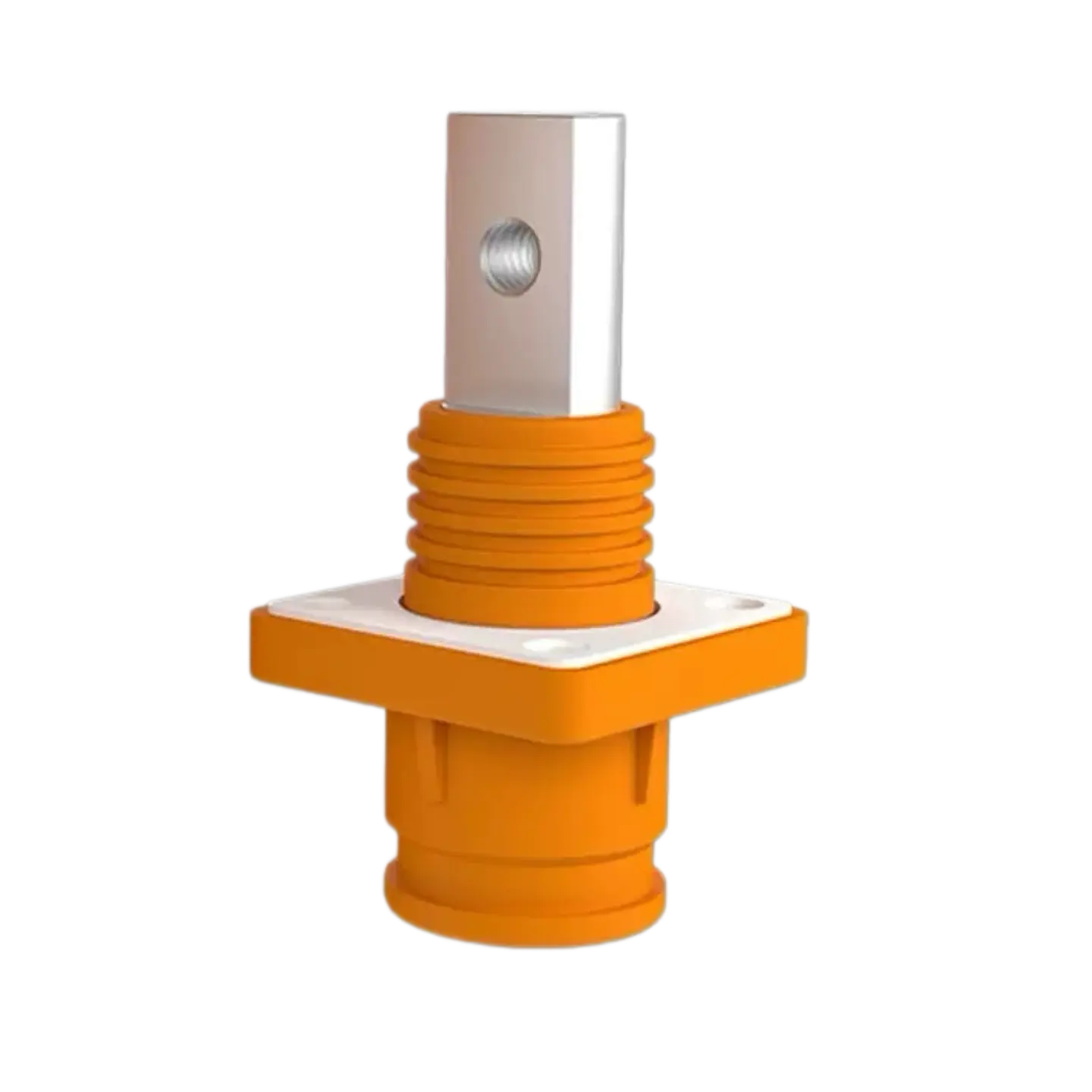
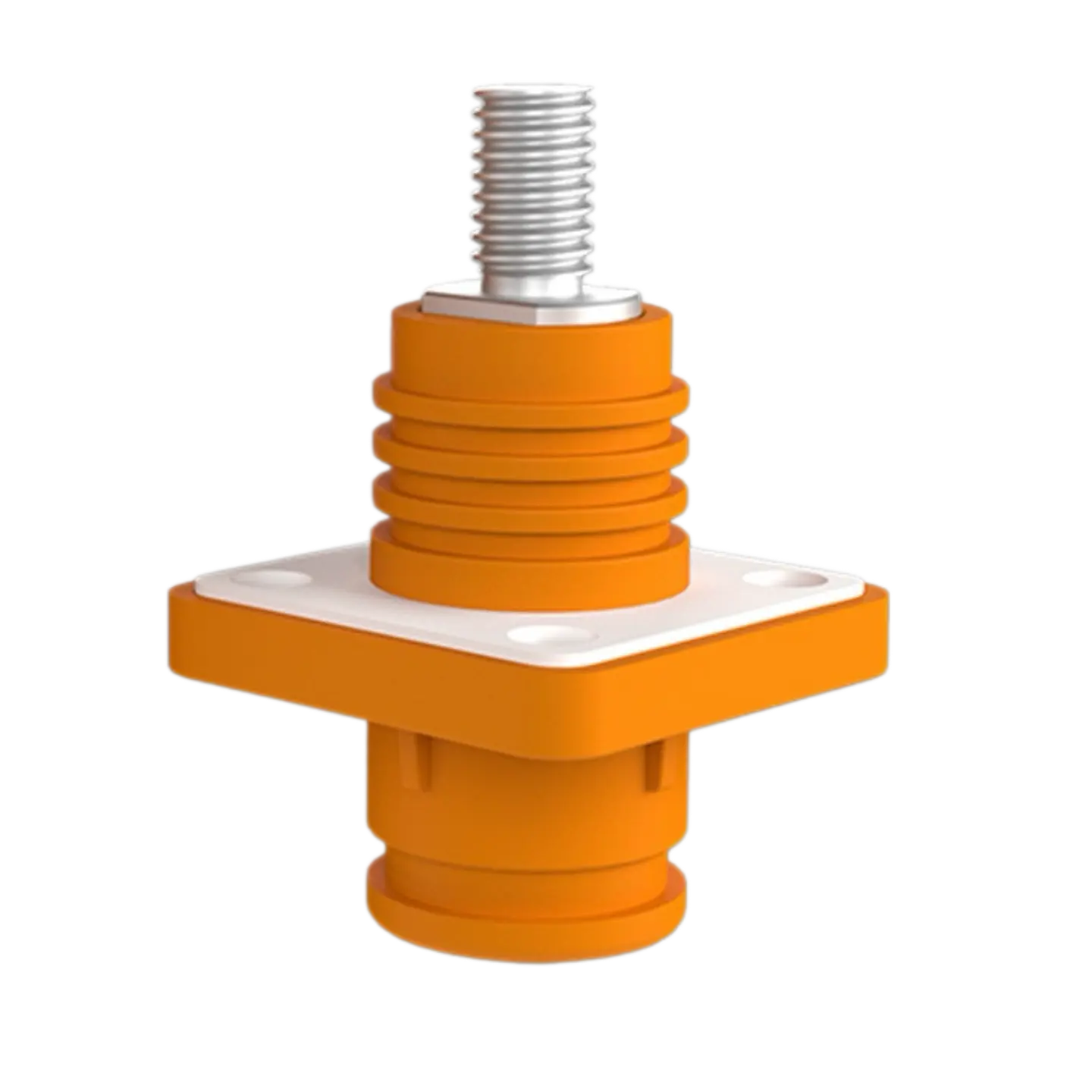
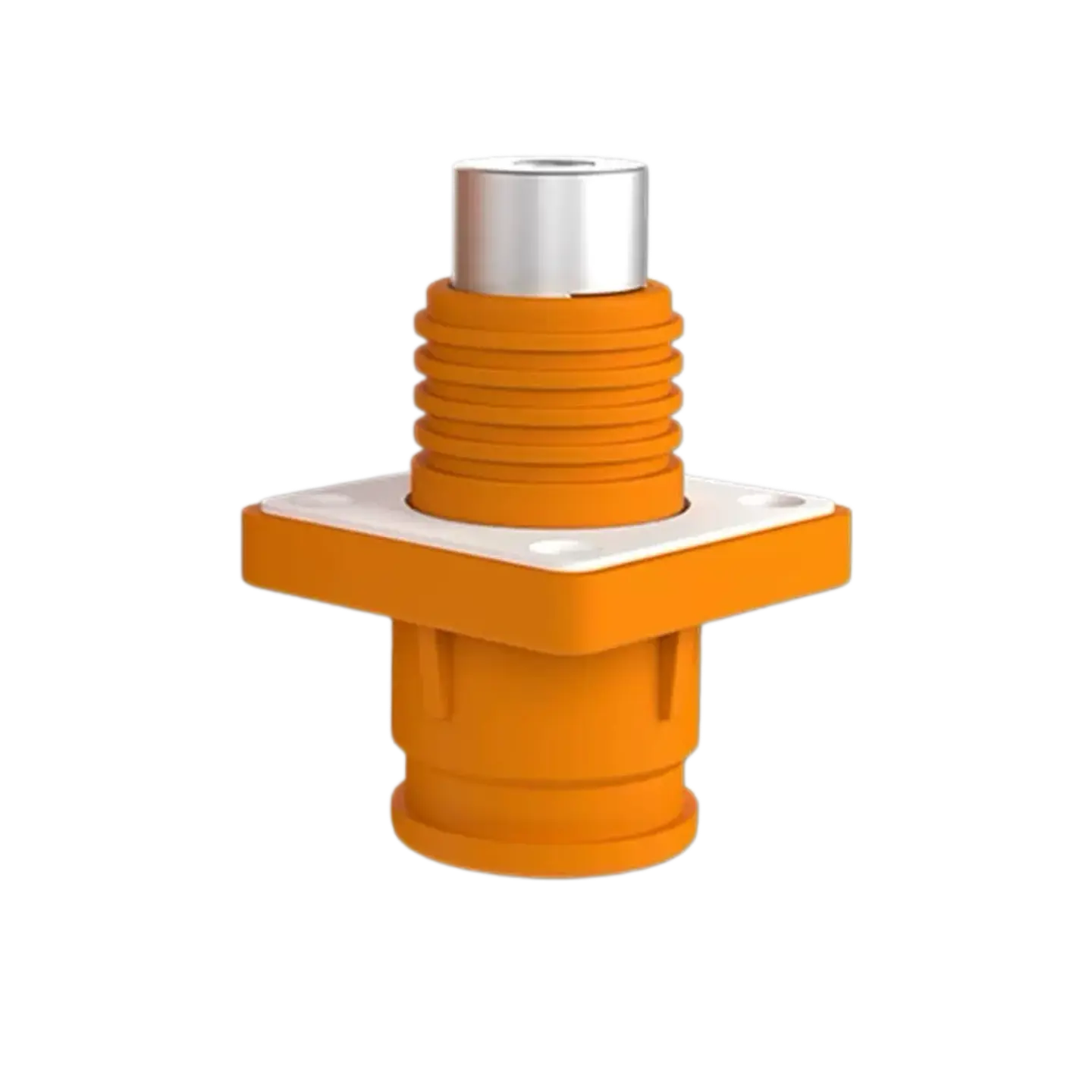
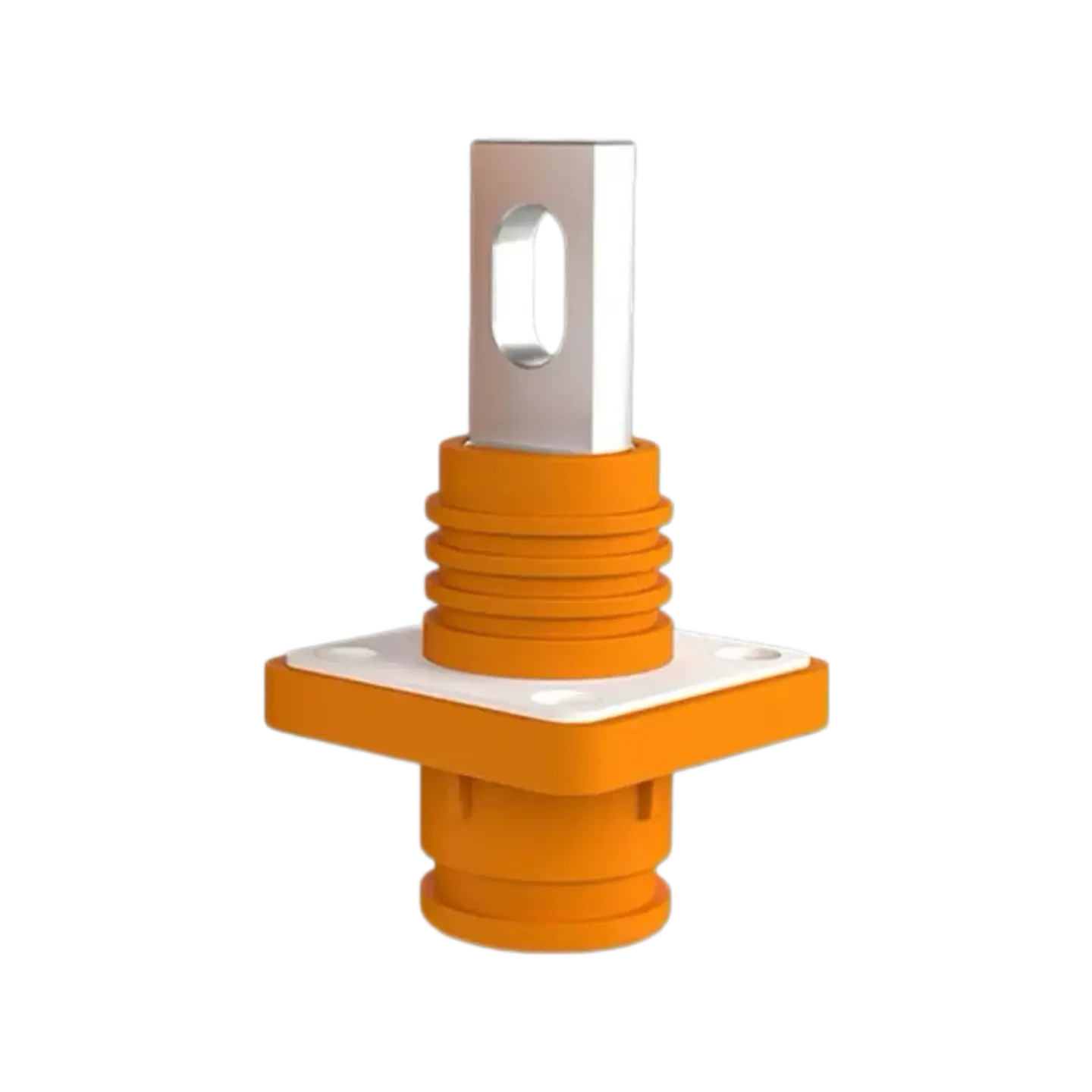
Beyond that, we build cable assemblies terminated on CN connectors, cut to length and tested before shipment, which removes the crimp from your production line. Housing and panel colors, keyway configuration and panel design can be customized, and private label marking is available on volume orders. OEM and ODM work is where an energy storage connector manufacturer earns the second order. If your design has a joint this series does not cover, custom cable assemblies is the usual route.
A reference is a deployment a buyer can name. We can name two. CN series connectors and factory-terminated cable assemblies are in service in a 5MW/10MWh containerized BESS in Bavaria, Germany, running at up to 350A with contact resistance below 0.5 mΩ. A second deployment, a 1.5MW/3.2MWh greenhouse microgrid in Westland, Netherlands, runs at up to 300A with contact resistance below 0.35 mΩ. Detailed references are available under NDA for buyers who need them for an approval package.
Send the four numbers that decide the model, plus the panel drawing. We check the joint against the drawing, confirm the certificate scope for the part you would actually order, and reply within 12 hours.
Four things: the working current at the joint, the cable size, the system voltage class, and the panel or enclosure drawing. Model, quantity and target date shorten it further. Send those and a model recommendation comes back with the quotation rather than after it.
Start from the cable, not the connector. CN06 covers 10–25 mm², CN08 covers 35–70 mm², CN10 covers 50–95 mm², CN12 covers 70–120 mm² and CN14 covers 150–185 mm². The model that covers your conductor and your current is the starting point; the other four are the alternatives to rule out.
Both CN10 and CN12 have 300 A configurations rated at 1500 V DC. To shortlist the right connector for a pack-to-pack connection, send us your cable cross-section, continuous current, maximum ambient temperature, and panel drawing. We’ll confirm the exact part number, cable termination, and mounting dimensions for your application.
Yes, CN12 is rated 250A–350A at 1500V DC with cable from 70 to 120 mm². Confirm the cable matches the terminal and that the circuit stays within the rating with headroom for temperature rise.
They are IP67 when mated, which is dust-tight and protected against temporary immersion. The 240A stackable connector is also IP67. The 70A floating stackable part carries a UL94 V-0 rating with no IP code , because it is a pack-internal component. If the installation involves standing water or continuous immersion, tell us before the quotation.
Yes. Straight and right-angle are both available across the range, the cable outlet rotates 360°, and the latch releases with one key press.
CN14, rated 400A–500A at 1500V DC, and it takes 150 mm² or 185 mm² cable. The mounting drawing is per model, so send the panel drawing and we will return the cutout for the model you are ordering before anything is punched.
Four are standard: threaded hole (M), screw (LD), nut (LM) and through-hole (T). Terminal type, cable assembly, color and panel design can be customized. Send the joint details and the change is quoted with the connector.
Yes, and the request should name the model and the rating, because the scope is per model. Test reports and material certificates ship with the order; certificate copies are provided for the approval package. For the UL file, ask for the page listing the part numbers so the scope is visible rather than assumed.
Samples are available from 1 piece so the part can be evaluated before a production order. Most suppliers treat a sample as a cost line. We treat it as the first unit of the order, which is why the sample and the production run come off the same line. Production quantities and price breaks are quoted against the model and the annual volume.
LET’S BUILD YOUR CONNECTION SOLUTION
Share your application, specifications, and estimated quantity. Our team will recommend a suitable connector solution and provide a quotation.
Low MOQ · OEM & ODM · Product Selection Support · Fast Quote Response