


PVLinkTech stackable energy storage connectors connect adjacent battery modules in a stack. Choose between a 70A floating model designed to accommodate module misalignment and a 240A stationary model rated at 1500V DC with IP67 protection when properly mated. Compare electrical ratings, panel requirements and mounting drawings to find the right option for your battery system.
A floating contact is built with clearance, so the plug can find the receptacle while modules are being stacked. A stationary contact has no such clearance. It holds position, which means the stack itself has to be true before the two halves meet. That one difference decides what a stackable energy storage connector has to be: current rating, voltage class, protection level and panel thickness.
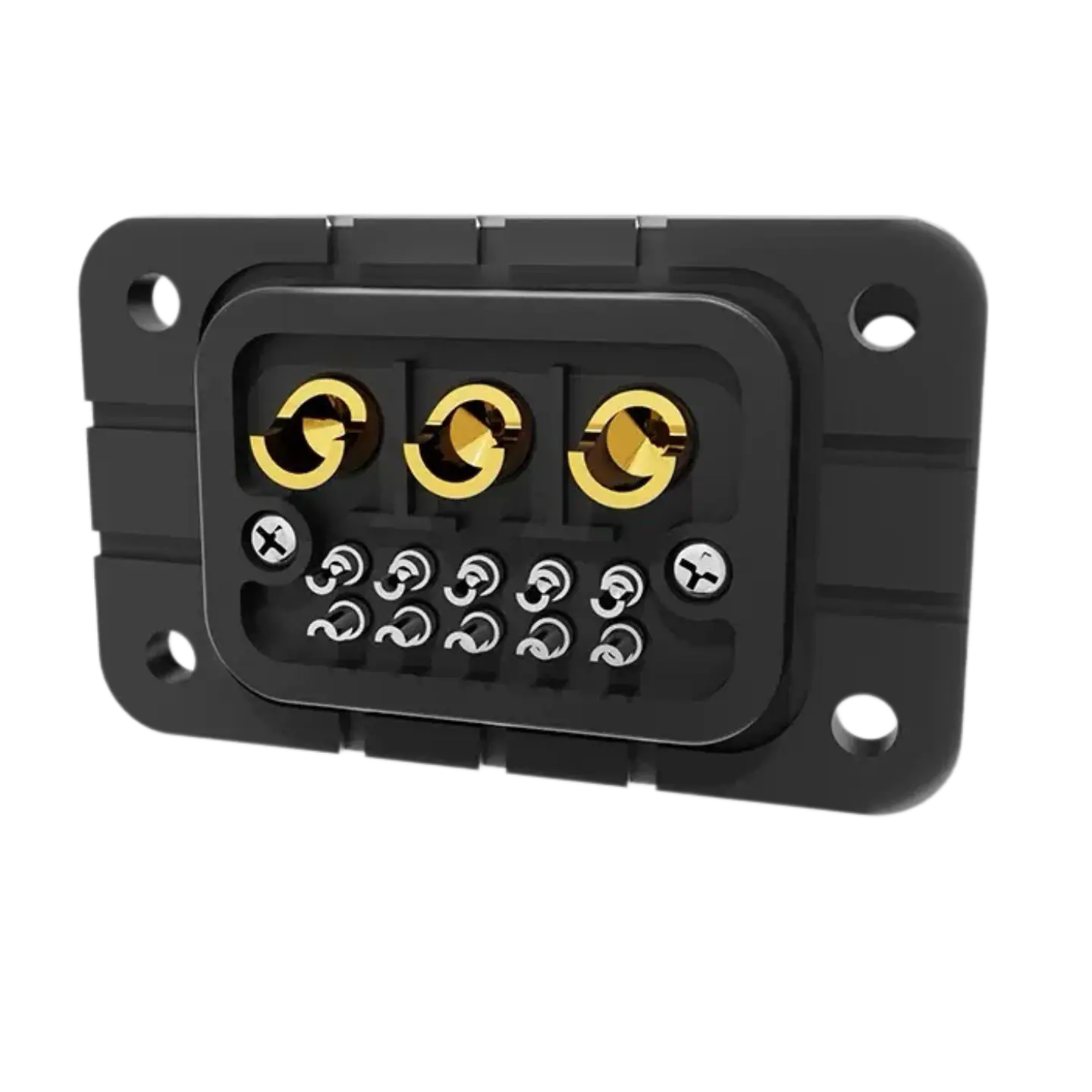
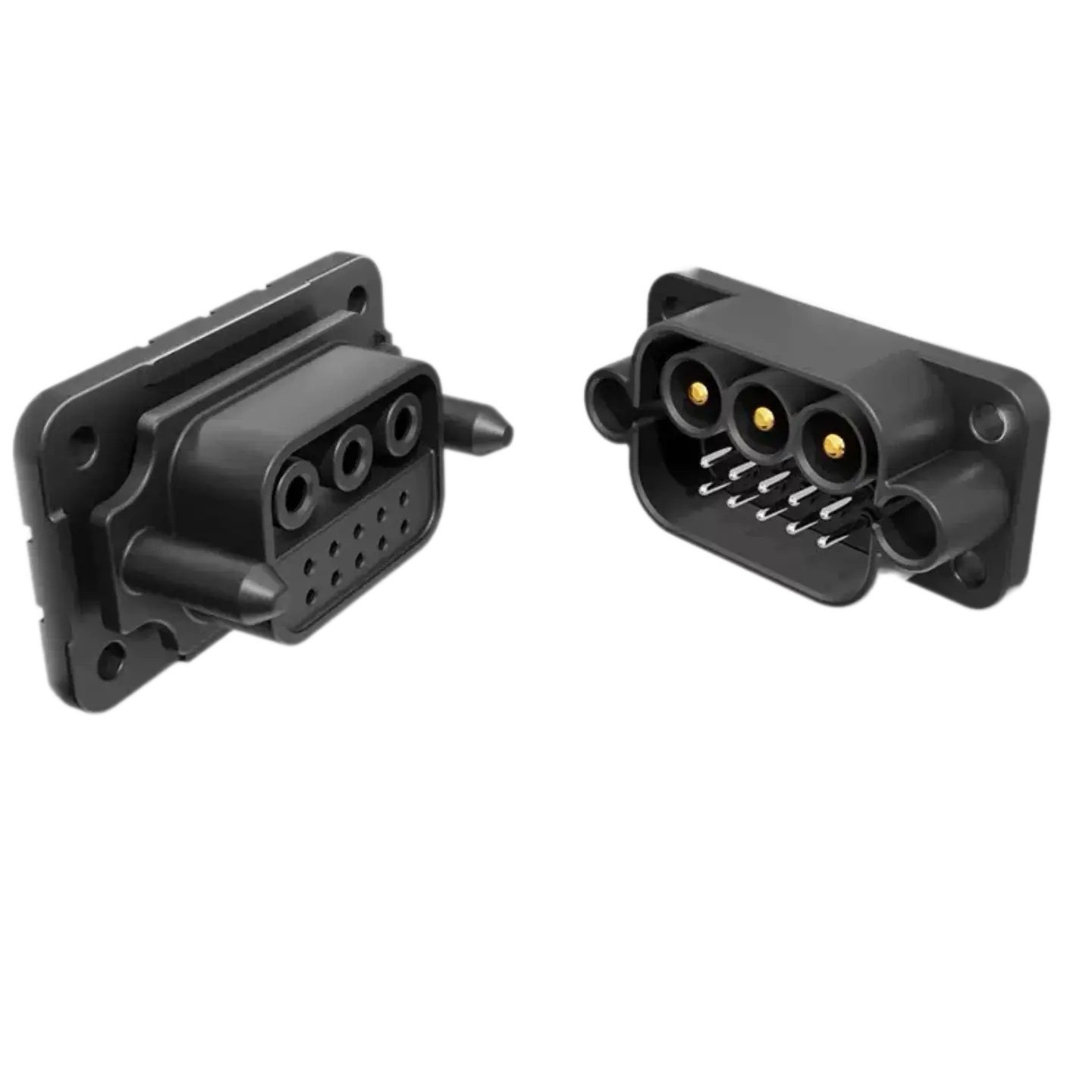
| Parameter | 70A floating | 240A stationary |
|---|---|---|
| Rated current | 50A–70A | 120A–240A |
| Rated voltage / dielectric strength | 220V DC / 500V AC | 1500V DC / 4000V AC |
| Stack-up error | Absorbs misalignment between modules | Holds position; the stack must carry the alignment |
| Housing / contacts | PA66 / gold-plated brass | PA66 / T2Y copper, silver plated |
| Mounting screw | M4 | M4 |
| Ingress protection | None rated; UL94 V-0 flame rating only | IP67 |
| Panel thickness | 3.0 mm, ±0.05 mm tolerance | 2–3 mm recommended |
| Contact resistance | ≤0.5 mΩ | ≤0.5 mΩ |
| Insulation resistance | >10MΩ @ 500V DC | >10MΩ @ 500V DC |
| Operating temperature | -40°C to +125°C | -40°C to +125°C |
Swipe left or right to compare specifications.
The 70A stackable energy storage connector exists for one reason: modules rarely line up exactly, and a stack of eight or twelve of them compounds that. Clearance in the contact lets the plug settle into the receptacle as the module slides home, so the assembly does not have to be forced straight. That is the whole value, and it is why the 70A part carries the lower voltage class. It is a pack-internal connection at 220V DC, not a cabinet feed.
Gold plating on the brass contacts keeps the mating surface stable across the service life of the pack, which matters more in a residential unit that may sit closed for a decade than in a cabinet that gets serviced. Both halves are supplied as a matched pair: the receptacle mounts to one module, the plug to the next.
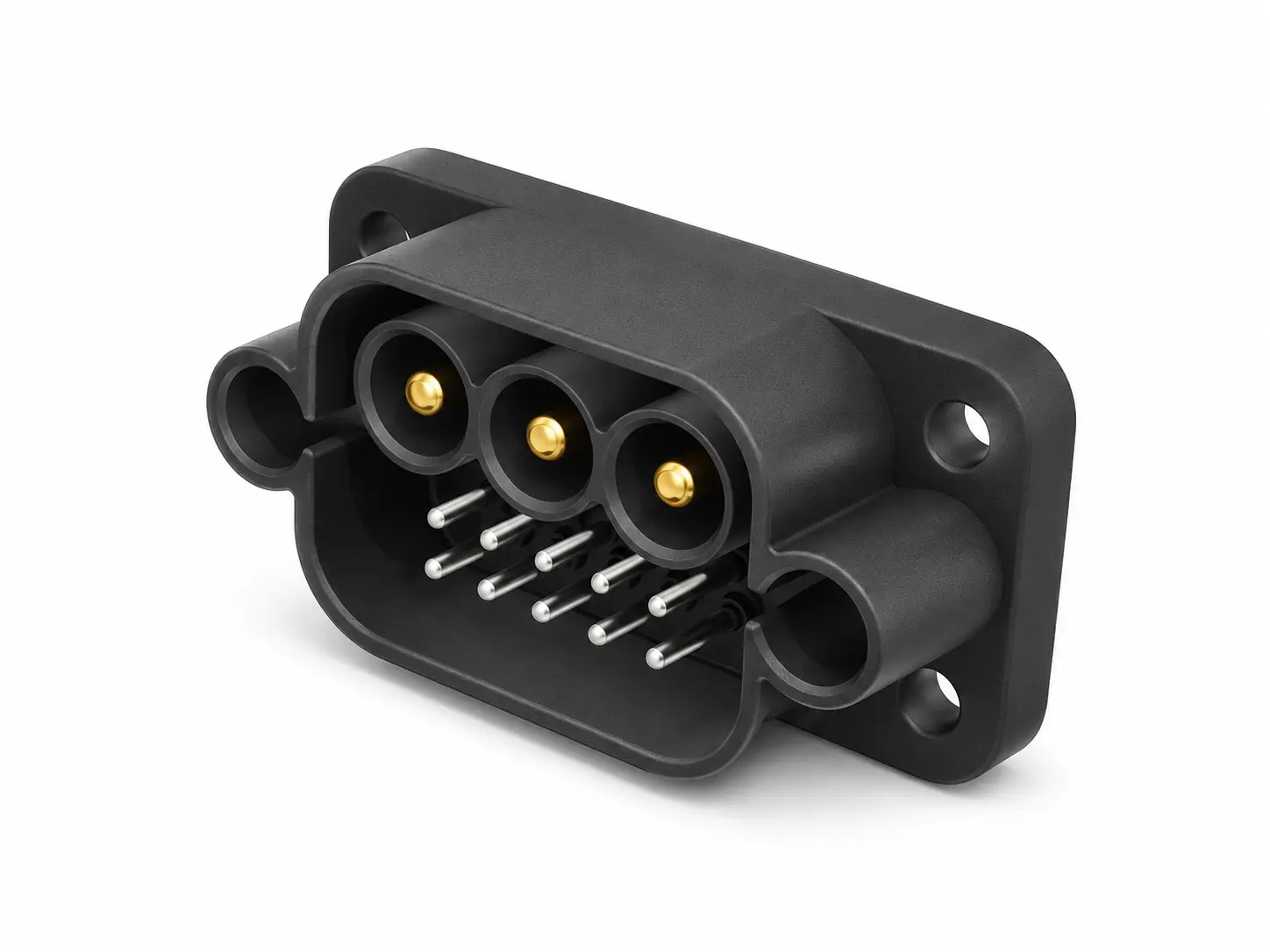
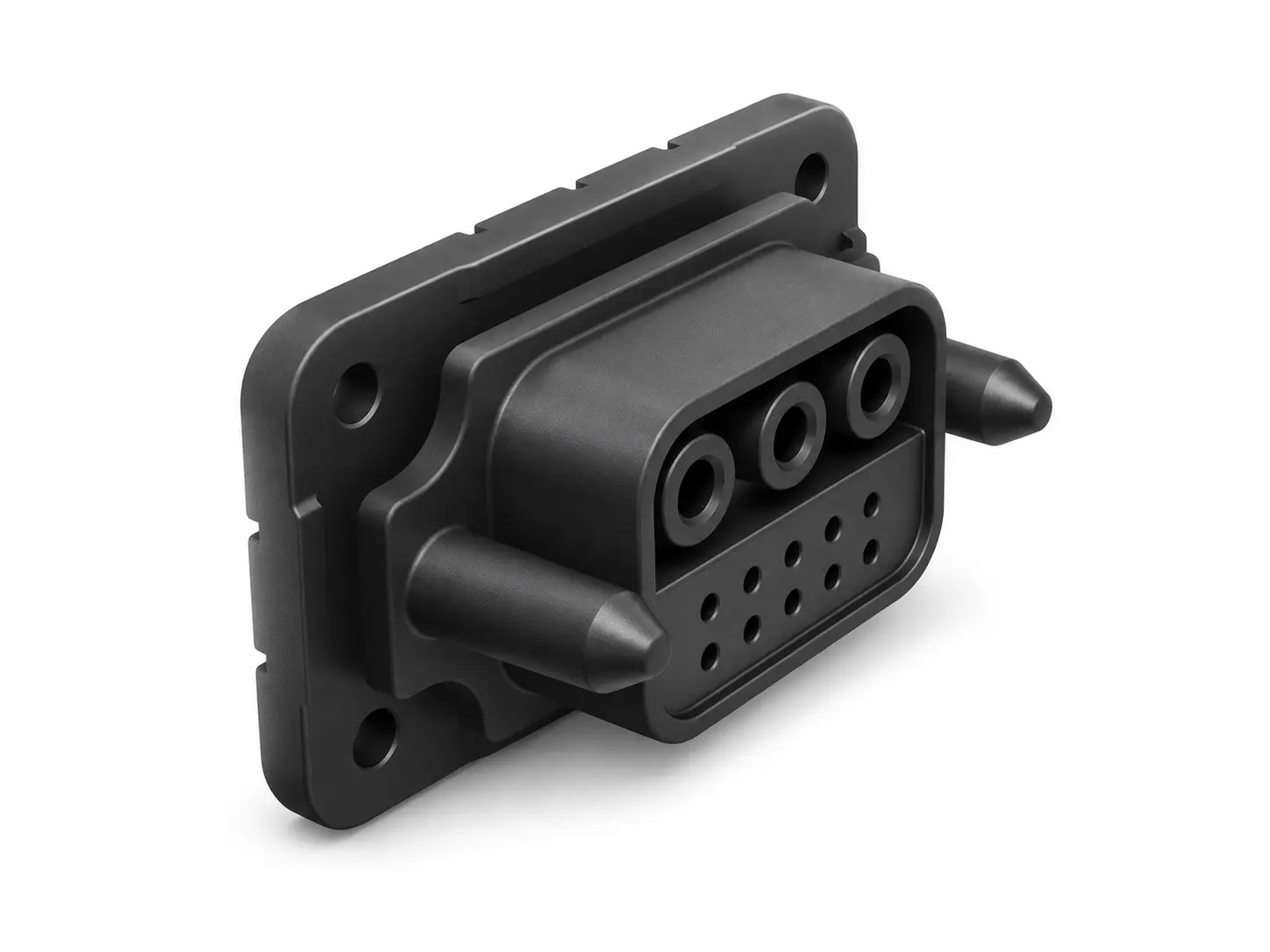
The 240A stackable energy storage connector holds a fixed center distance instead of absorbing error. In exchange it carries 120A–240A at 1500V DC, which is the class where a commercial pack or a cabinet feed actually operates. Contacts are T2Y copper with silver plating, the same conductor material used in the CN series, and the housing is PA66 with a UL94 V-0 rating behind IP67 when mated.
A stack is a chain of tolerances. Each module brings a panel thickness within its own limit, a hole position within its own limit, and a little tilt from the rails. The joint at the far end of the stack sees the sum. With a stationary contact, that sum has to be smaller than the clearance inside the connector, so the stackable energy storage connector only works if the stack is designed and built to hold it. With a floating contact, the connector spends its clearance on the sum, and the stack can be built to ordinary sheet metal tolerance.
Six checks decide which stackable energy storage connector goes into a stack, and the first four are usually enough.
A stackable energy storage connector quote moves faster with six pieces of information: number of modules in the stack, the stack or panel drawing, working current at the joint, system voltage, panel thickness, and cable size per module. Add the quantity and the date you need the first batch. If the drawing is not final, send the current revision anyway and mark what is still open. We would rather quote against a draft than guess at a hole pattern.
Send the drawing, the module count and the current at the joint. We will come back with the model, the panel cutout check and a sample date.
or read how ordering works before you send the drawing.
No. The 240A stationary connector is IP67 when mated, with a UL94 V-0 housing. The 70A floating connector carries the UL94 V-0 flame rating only, with no IP code. That reflects where each part is used: inside a sealed pack, or on a panel that can be exposed.
No. Its rated current is 50A–70A. Above that, the stationary version of the stackable energy storage connector covers 120A–240A at 1500V DC.
No, and they are not interchangeable. The CN series is a cable connector that terminates a conductor; the stackable range is a panel-mounted pair that joins modules. If your joint is a cable to a rack or cabinet, start with the energy storage connectors page instead.
M4 on both versions. The 70A part is drawn with a 3.0 mm panel and a ±0.05 mm tolerance. The 240A part recommends a 2–3 mm panel.
Yes. Both halves are supplied as a matched pair, since the clearance and the contact alignment are properties of the pair rather than of one half.
Send the stack drawing and the module count. If the stack is already built, tell us what misalignment you are seeing at the last joint. That single number usually settles floating versus stationary faster than a spec sheet.
LET’S BUILD YOUR CONNECTION SOLUTION
Share your application, specifications, and estimated quantity. Our team will recommend a suitable connector solution and provide a quotation.
Low MOQ · OEM & ODM · Product Selection Support · Fast Quote Response