


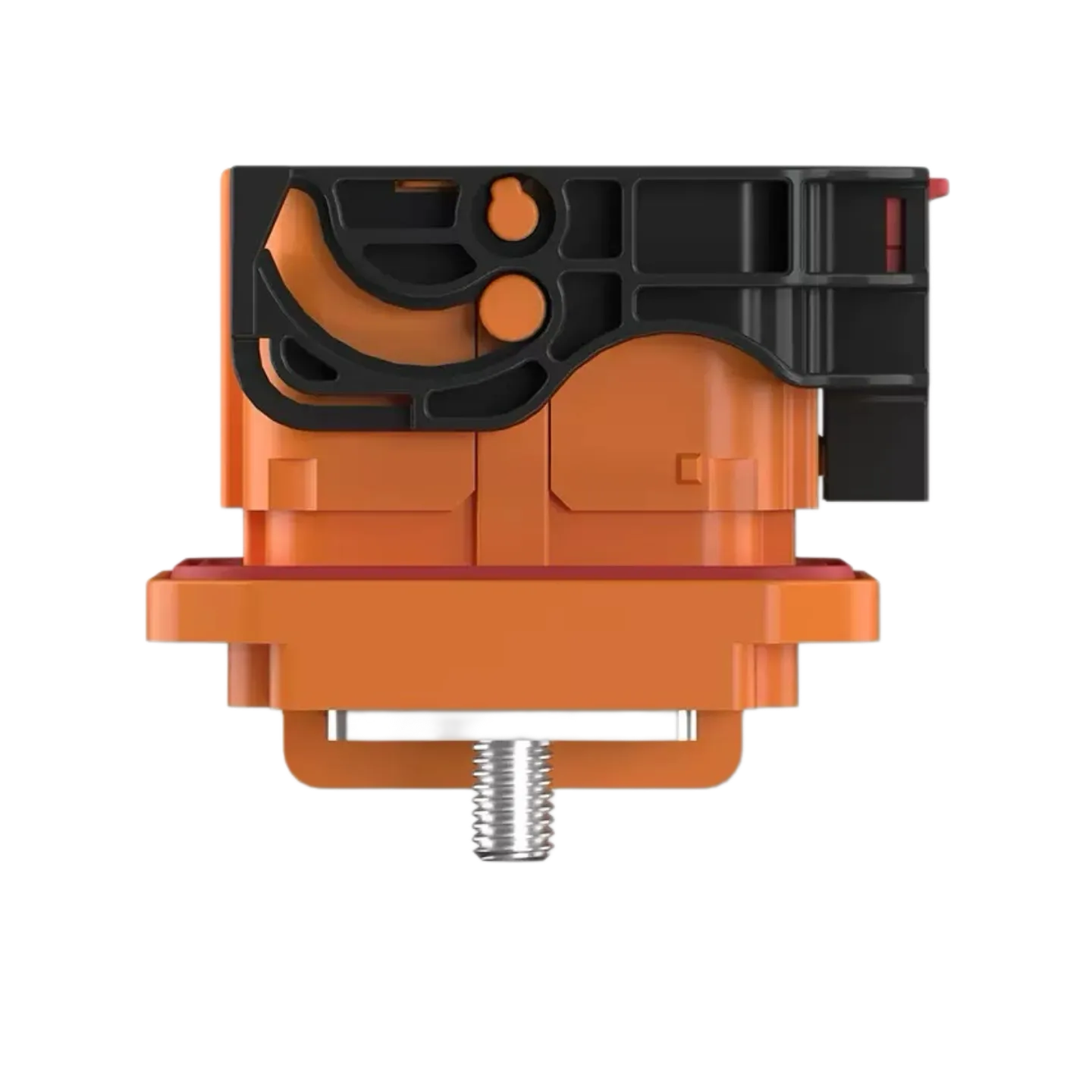
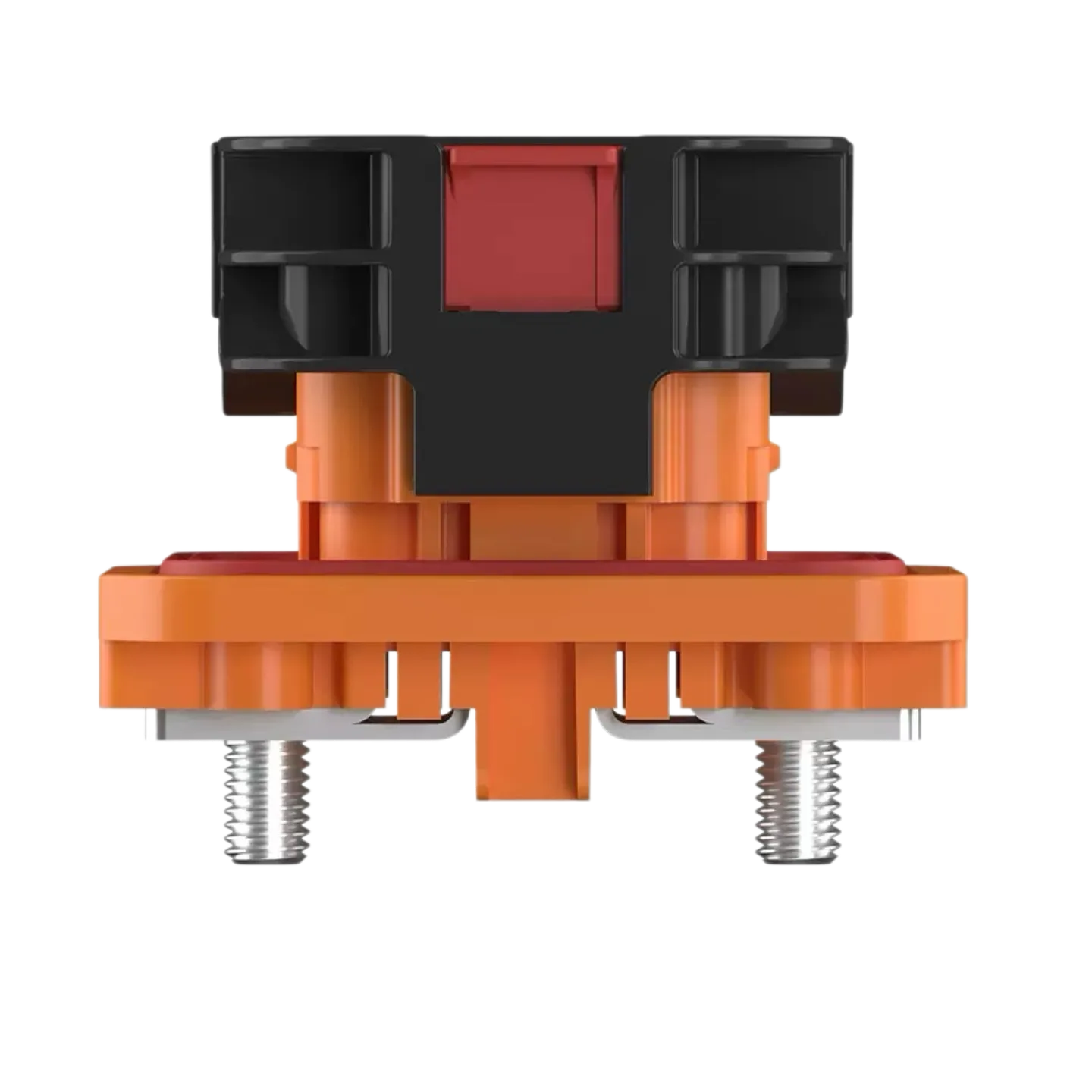
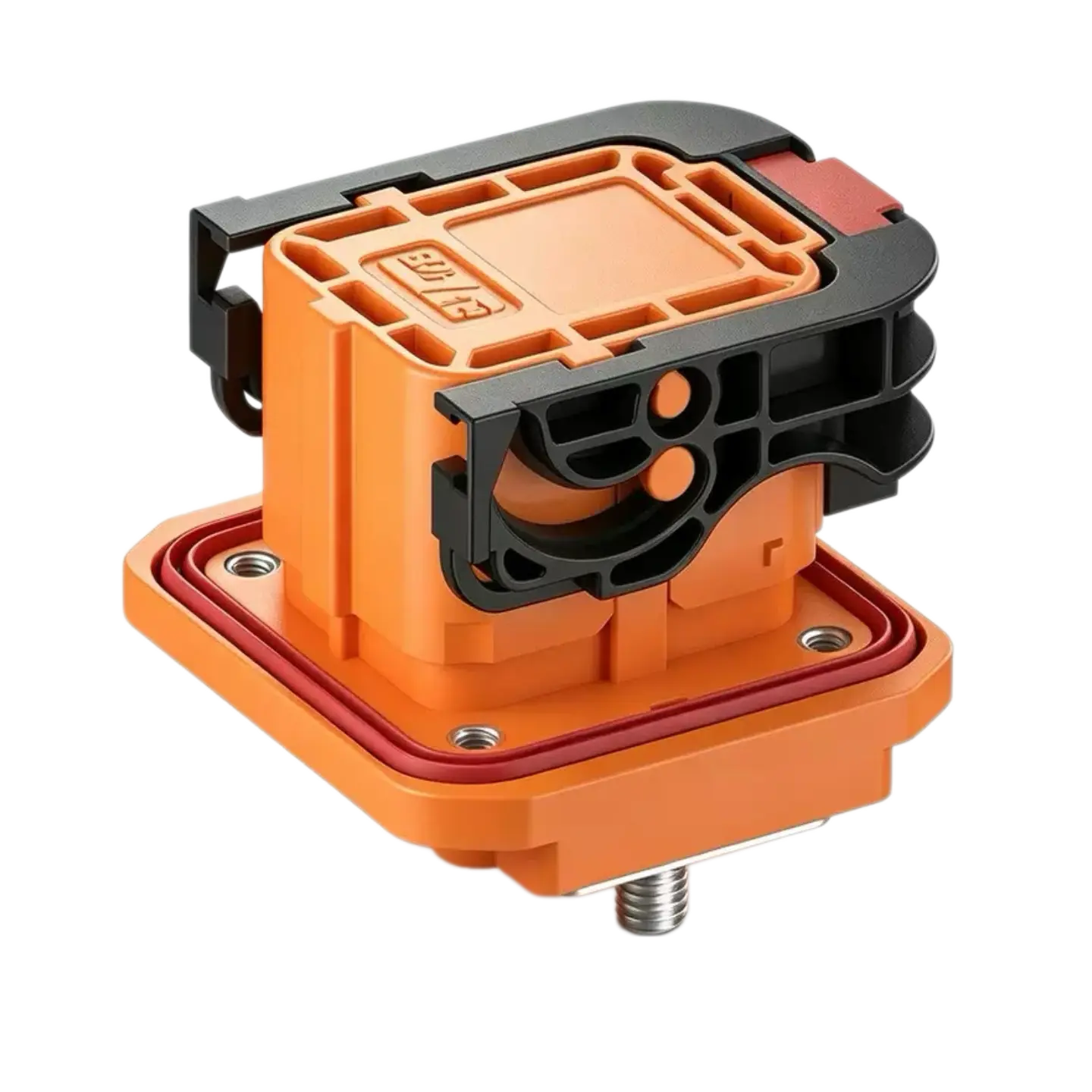
A manual service disconnect (MSD) is a non-fused isolator that physically separates high-voltage DC battery circuits in BESS racks and EV packs before maintenance. Rated at 350 A and 1,500 V DC with IP67 sealing, our MSD-350 uses a two-stage interlocking handle to provide a lockable, zero-voltage isolation point after system shutdown.
Three situations justify adding a manual service disconnect to a battery system. The requirement is similar in each case: a clearly defined physical isolation point for the high-voltage DC circuit.
Inside a storage cabinet, the DC bus can remain energized even after the inverter has been shut down. A technician working on the battery rack needs a defined physical isolation point. A software or inverter shutdown alone should not be treated as physical DC isolation. The MSD provides a manual disconnect at the battery side of the system for service and maintenance procedures.
When a module overheats, a connection shows abnormal temperature rise, or the battery management system reports a fault, a clearly identified manual disconnect can help isolate the affected section. The MSD provides a defined mechanical disconnection point that authorized personnel can operate in accordance with the system manufacturer’s procedures and site safety requirements.
An MSD does not replace fuses, contactors, or the battery management system. Instead, it supports the overall protection strategy by providing a clearly identifiable manual disconnect during inspection and fault investigation. Service personnel can isolate the circuit and then verify the absence of hazardous voltage using the appropriate test equipment before beginning service work.
MSD stands for Manual Service Disconnect — a hand-operated high-voltage isolator that breaks the DC circuit in a battery storage system or EV pack so technicians can service it safely. A manual service disconnect, usually shortened to MSD, is a manually operated disconnect device that physically separates the high-voltage circuit in a battery energy storage system or electric vehicle. It usually sits between the battery pack and the rest of the system, so a technician has one defined point to break before opening an enclosure or pulling a module. A battery isolator works on a similar physical isolation principle in vehicle and marine electrical systems. MSD products designed for high-voltage energy storage applications are built for DC systems up to 1500V DC.
Application: High-voltage battery systems in battery energy storage systems (BESS) and electric vehicles, where a defined manual disconnection point is required.
The MSD-350 uses a PA66 housing with silver-plated high-conductivity copper contacts. All three values can be checked with standard test equipment before the part goes into a live system.
Four devices can sit on the same DC bus, and each one does a different job. Swapping one for another, or expecting one of them to cover the MSD’s role, is a common specification error.
| Function | MSD-350 | Contactor | Circuit breaker | Fuse |
|---|---|---|---|---|
| Operated by | Technician, by hand | Control signal | Manual or automatic trip | Fault current |
| Resets without parts | Yes, reseat the handle | Yes, by signal | Yes, after trip | No, replace it |
| Breaks current under load | No, isolate the load first | Yes | Yes | Yes, once |
| Role in the DC bus | Isolation point for service | Normal switching | Overcurrent protection | Short-circuit protection |
| Rated for repeated service use | Yes, ≥300 mating cycles | Yes | Yes | No |
An MSD does not replace any of the other three, and none of them gives a technician a place to put a lock. That is the job the MSD-350 takes. Whichever device isolates the circuit, verify the absence of hazardous voltage before work starts.
The MSD-350 shows up wherever a high-voltage DC battery circuit needs a controlled break point.
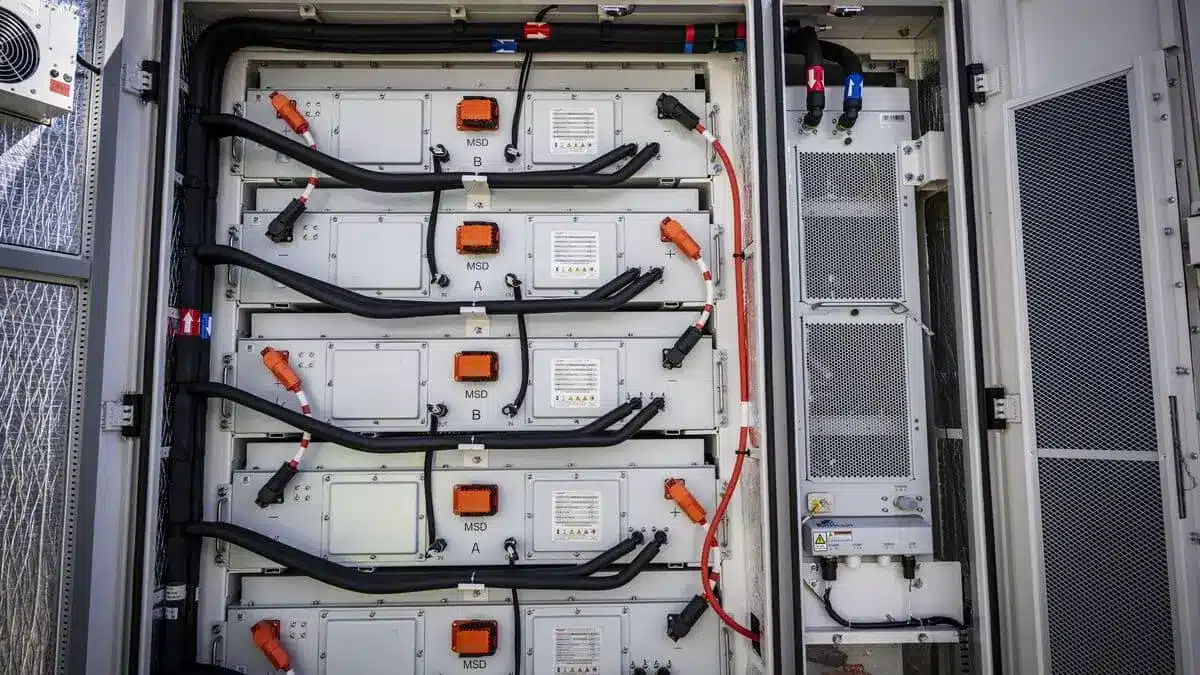
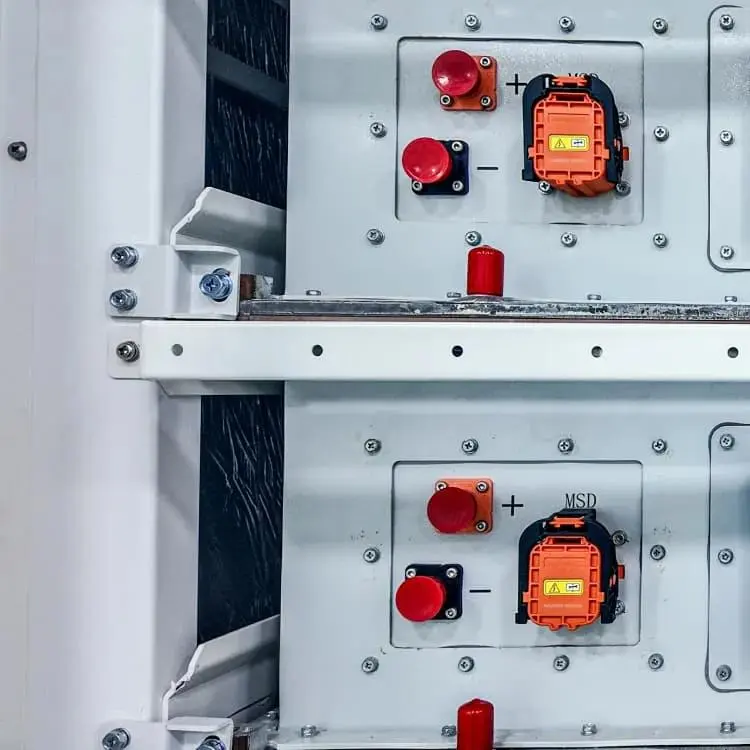
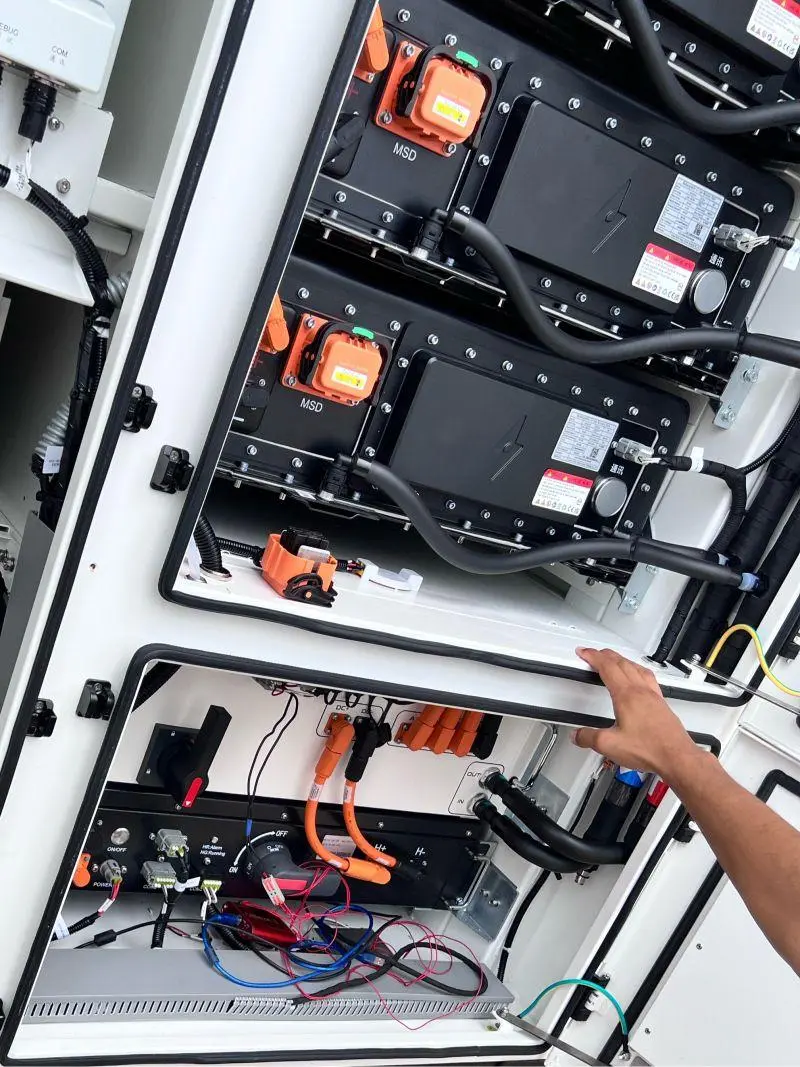
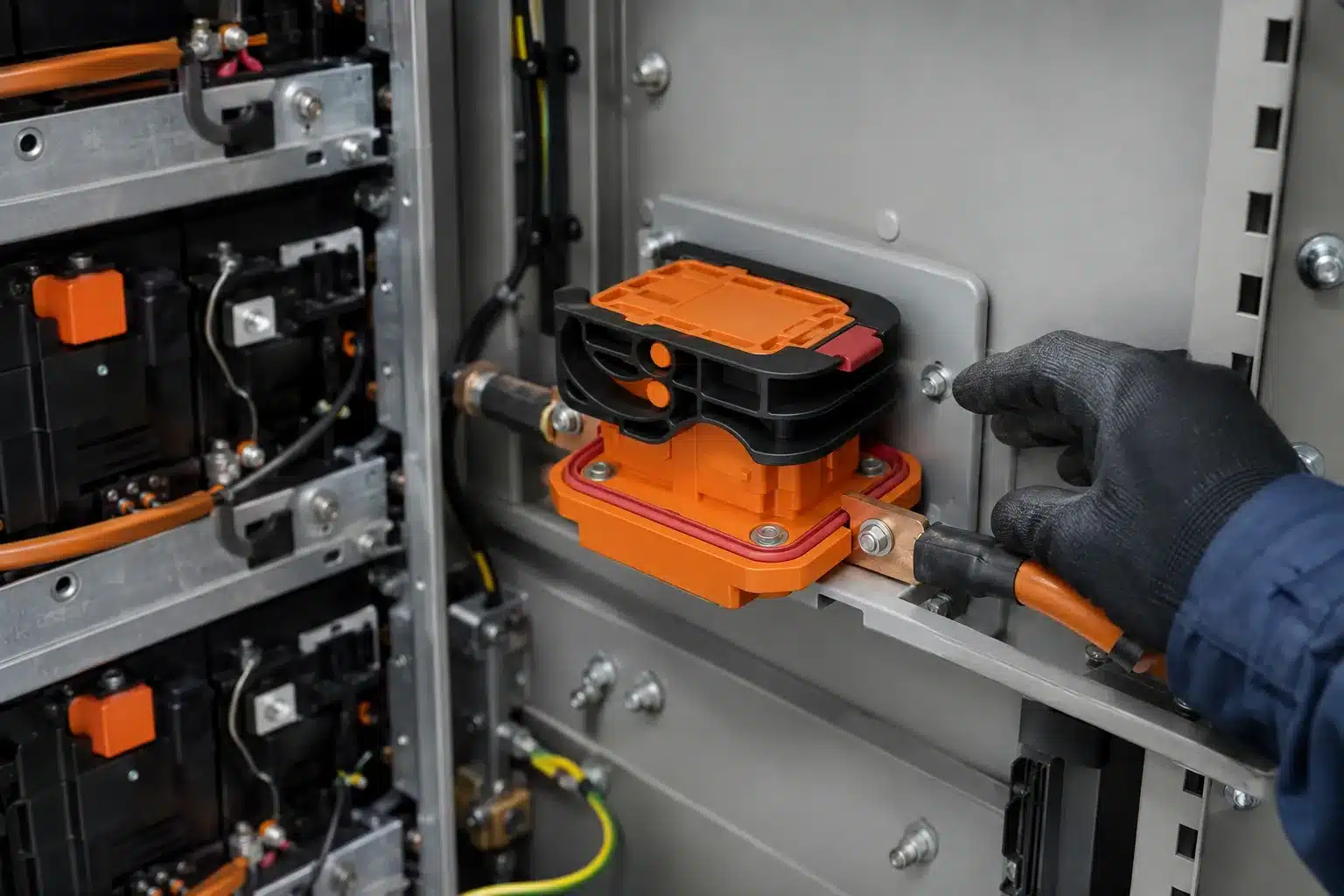
It sits on the DC side between the rack and the power conversion system, so one rack can be isolated without taking the plant down.
It goes in last on the pack line, before end-of-line testing. The test station then has one repeatable way to disconnect the pack.
EV packs need the same thing: one point where the workshop isolates the pack before service. On production vehicle programs, HVIL circuits and USCAR / SAE test documentation are quoted per project, so tell us the required standard at inquiry stage.
The MSD-350 is available in one version with one set of ratings. For the electrical ratings, it is suitable for systems operating at or below 350 A and 1,500 V DC.
| Parameter | Value |
|---|---|
| Model | MSD-350 |
| Rated current | 350 A |
| Rated voltage | 1,500 V DC |
| Dielectric strength | 4,000 V AC |
| Contact impedance | ≤ 0.20 mΩ |
| Insulation resistance | > 10 MΩ @ 500 V DC / > 100 MΩ @ 1,000 V DC |
| Plugging force | ≤ 75 N |
| Degree of protection | IP67 / UL94 V-0 |
| Number of mating cycles | ≥ 300 |
| Locking method | Two-stage interlocking |
| Mounting screws | M5 × 14, 3 N·m |
| Wiring screw torque (M8) | 12 N·m |
| Weight / Dimensions | Weight not specified; see dimensional drawing |
| Housing material | PA66 |
| Contact material | High-conductivity copper, silver-plated |
| Operating temperature | −40°C to +125°C |
| Storage / shelf conditions | −20 °C to +65 °C, below 60 % RH; shelf life 1 year |
The MSD-350 has a single current rating. Use this checklist to confirm that the rest of your system is compatible before sending an inquiry.
| System condition | MSD-350 compatibility | What to do |
|---|---|---|
| System voltage ≤ 1500 V DC | Compatible | Proceed to the next check. |
| Maximum circuit current ≤ 350 A | Compatible | Proceed to the next check. |
| Panel mounting: 4 × Ø13 mm holes | Confirm against the drawing | Ask us for the dimensioned drawing and confirm the M8 fasteners. |
| Cable cross-section: 95–150 mm² | Confirm lug compatibility | Tell us the cable cross-section and lug type. |
| IP67 requirement | Designed for IP67 | Check gasket condition and panel flatness during installation. |
| CE / UL / RoHS documentation | Available on request* | Tell us your target market and which documentation you need. |
| Custom color or marking | Customization available | Include your color or marking requirements in the inquiry. |
Comparing connector families for the same cabinet? Read our 1500 V BESS connector selection guide for an overview of the DC bus.
Four steps, in order. The panel opening is the expensive one to get wrong.
Confirm the panel opening and the four Ø13 mm mounting holes against the dimensioned drawing before installation.
Seat the gasket correctly and secure the MSD-350 with M8 screws. Tighten evenly to compress the seal without distorting the housing.
Attach the 95–150 mm² cable lugs using M8 bolts and tighten them to the torque specified on the approved product drawing (typically 12–15 N·m for M8 high-voltage terminals) to maintain contact impedance ≤ 0.20 mΩ.
Operate and reseat the handle once to confirm that the two-stage interlock moves freely before the system is energized.
The M8 bolts take the lug you specify. Check the cable size against your own temperature rise and voltage drop budget.
Need sizing confirmation? Send us your exact cable cross-section and lug specifications with your inquiry, and our team can help confirm mechanical fit.
Keep the part between −20°C and +65°C, below 60% relative humidity, away from chemicals and heavy loads. Shelf life is one year, and units stored longer should be re-inspected before they go into a live system. These figures describe warehouse and transport conditions, not the operating limit of the part, which is −40 °C to +125 °C.

To quote the right MSD-350 the first time, send us these details:
Energy storage cabinet (BESS), battery rack, EV battery pack, or custom power unit.
Nominal DC system voltage and maximum continuous or peak current requirement.
Cable cross-section in mm² or AWG and lug type, or the relevant internal busbar connection details.
Enclosure panel thickness, mounting surface, and required hole or cutout pattern.
Target-market compliance requirements such as CE, UL, RoHS, REACH, or other applicable standards.
Required sample quantity or estimated production volume, together with your target delivery date.
Housing color, laser marking, keying options, HVIL harness length, private labeling, or other project-specific customization requirements.
MSD-350 · TECHNICAL SUPPORT
Send us your working current, DC voltage, busbar dimensions, cable size and panel opening. Our team will help confirm whether the MSD-350 fits your application.
Response within 12 hours Technical selection support
MSD-350 APPLICATION SUPPORT
Share your system ratings and installation details. Our team will help review the MSD-350 for your application.
One business day response Technical support
The MSD-350 is made, inspected and customized in our own plant.
We have made energy storage and new energy connectors since 2015. Our factory covers 6,800 m² with CNC machining, injection molding, and assembly lines under one roof. The factory is certified to ISO 9001, IATF 16949, and ISO 13485, and our outgoing inspection pass rate is above 99%. Every MSD-350 ships with inspection reports and material certificates on request. Product certificates for CE, UL and RoHS are available on request.
We also build custom variants. If your cabinet needs a different mounting pattern, a different handle color, or a specific marking, we can adjust the product around the same 350 A / 1,500 V DC core. Tell us the requirement and we will confirm feasibility before tooling anything.
Answers to common questions about the MSD-350 manual service disconnect.
Request the MSD-350 specifications for your application.
LET’S BUILD YOUR CONNECTION SOLUTION
Share your application, specifications, and estimated quantity. Our team will recommend a suitable connector solution and provide a quotation.
Low MOQ · OEM & ODM · Product Selection Support · Fast Quote Response