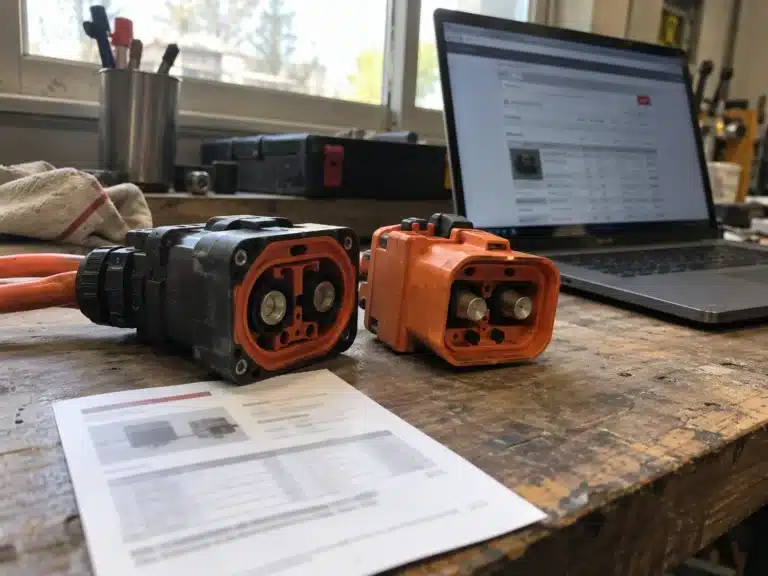


Samples in stock · Response within 12 hours. Request a Quote →
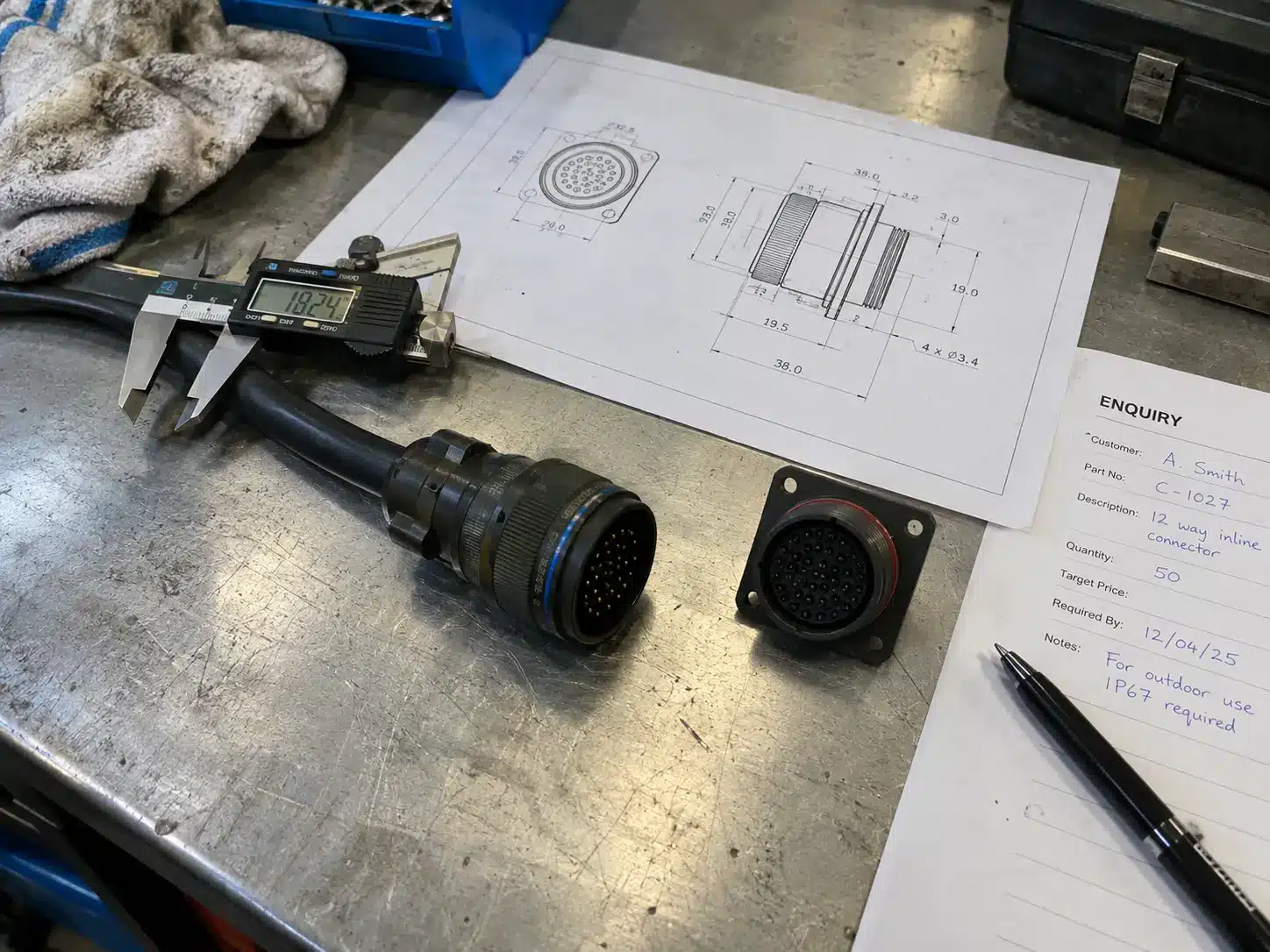
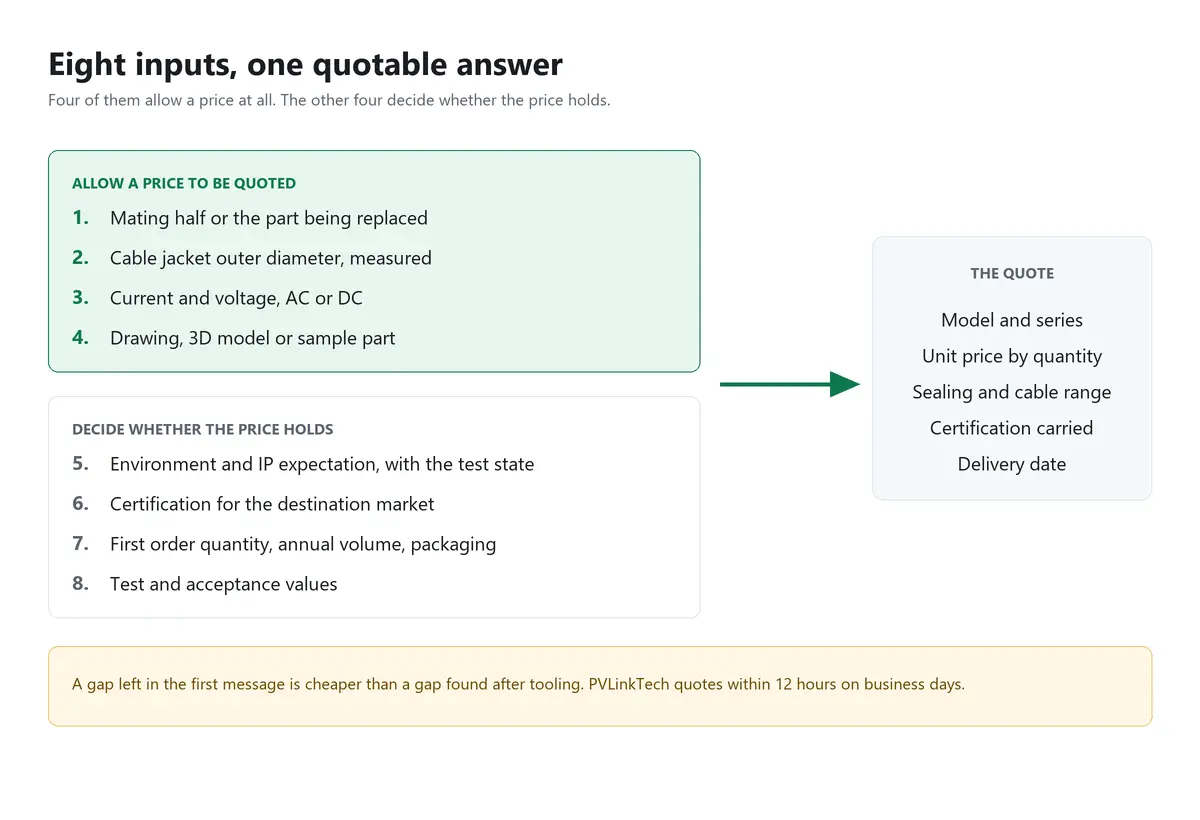
A connector RFQ is the message that starts a connector order, and it reaches a price in one exchange when eight details travel with it: the mating half, the jacket outer diameter of the cable, the electrical pair, a drawing or a reference part, the environment with the IP expectation, the certification for the destination market, the quantity with its packaging, and the values your incoming inspection will use. Most first messages carry a current, a voltage and a photo. That opening works, because a supplier can start without a finished specification. What no connector RFQ can do is confirm sealing, tooling and certification from a number with no cable and no mating interface attached to it.
| Item | Value |
|---|---|
| Details that decide the price | 8, listed in the table below |
| Details usually confirmed in a later round | Mating state, cable outer diameter, test and acceptance values |
| Quote turnaround PVLinkTech works to | Within 12 hours on business days |
| # | What to send | Why it decides the price | What goes wrong without it |
|---|---|---|---|
| 1 | The mating half, or a photo of the part being replaced | Fixes the series, the keying and the sealing method | The reply names a family that may not lock into your interface |
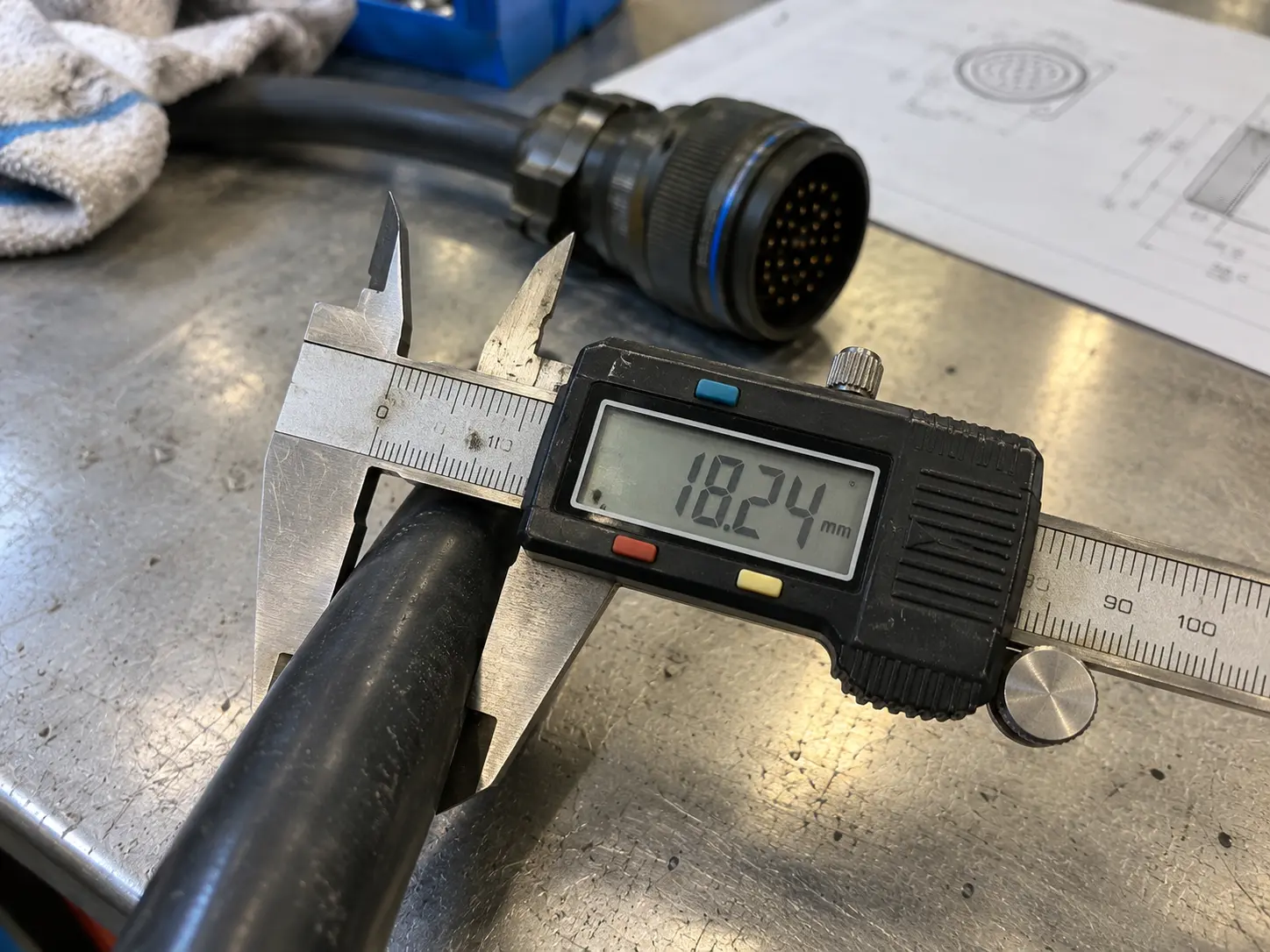
| 2 | Cable jacket outer diameter, measured, with the conductor size | The gland seals on the jacket, not on the conductor | The gland arrives too small or too large for your cable |
| 3 | Current and voltage, AC or DC, per contact or total | Sets the contact size, the plating and the spacing | The rating is read per contact, not for the whole connector |
| 4 | A drawing, a 3D model or a sample part | Removes the assumptions from the interface | Dimensions come from a catalogue page and get corrected later |
| 5 | Environment and IP expectation, with the test state | Picks the seal, the housing material and the test level | An indoor part is quoted for an outdoor installation |
| 6 | Certification for the market where the goods are sold | Decides whether the part can be sold there at all | Certificates surface after tooling, when the part may not qualify |
| 7 | First order quantity, annual volume, packaging and labels | Sets the price break, the packing and whether tooling is needed | The price comes back for a quantity you cannot use |
| 8 | Test and acceptance values | Fixes what a pass means before the first shipment | The first batch is measured against values nobody agreed |
Four of the eight decide whether a connector RFQ can be priced at all: the mating half, the cable, the electrical pair and the installation. The other four decide whether the price holds once the order is placed. The first four usually come from engineering, the last four from purchasing and quality.
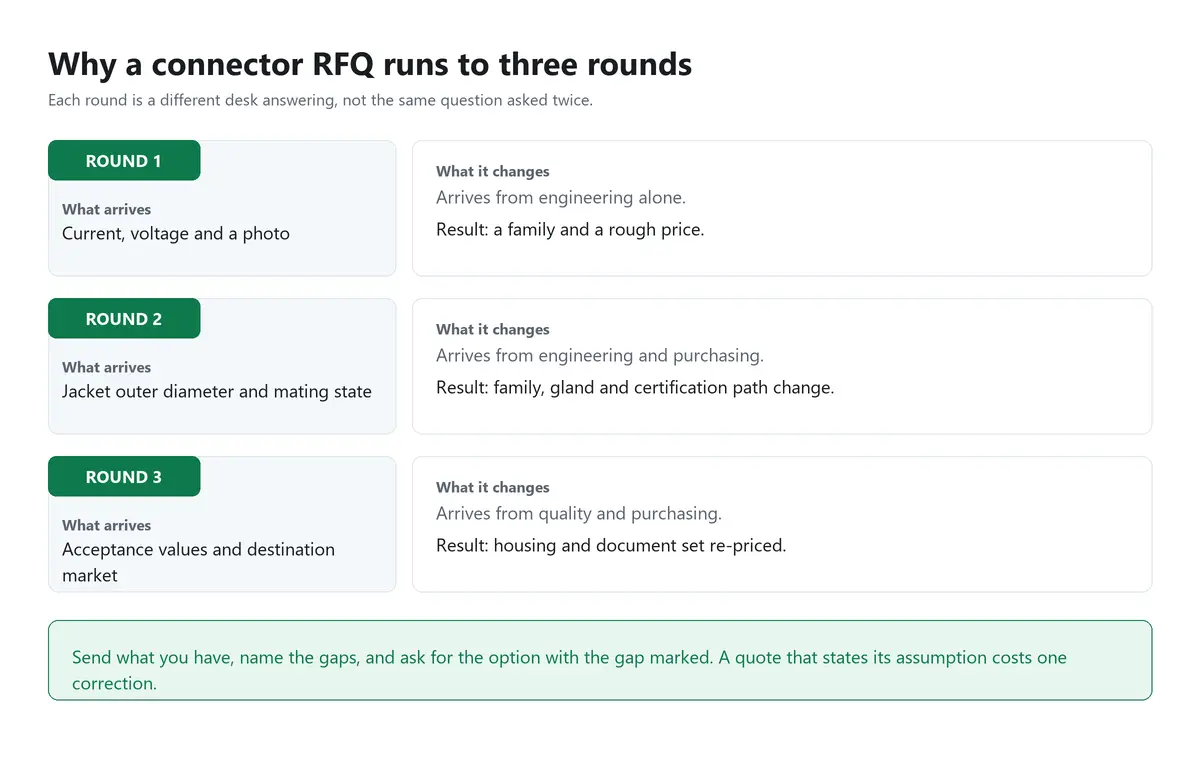
A connector RFQ runs long for one reason, and it is not carelessness: the answers sit on three desks. Engineering holds the interface and the drawing, purchasing holds the quantity and the destination, quality holds the acceptance values. When the message leaves from one desk, round two is where the other two catch up.
Round two of a connector RFQ is no repeat of round one. The jacket outer diameter and the mating state change the family, and with it the contact size, the gland and often the certification path. Round three opens when the acceptance values or the destination market land, because a part priced as standard may need a different housing or document set.
The fix is short. Send what you have, name the items you have not confirmed, and ask for the realistic option with the gap marked. A connector RFQ that says which value is assumed costs one correction; one that assumes quietly costs a design change.
Current without voltage is half a rating, and neither is complete without AC or DC. A contact carrying 32 A at 24 V DC and one rated 32 A at 250 V AC are not the same part. The difference sits in the arc rather than the conductor: direct current does not cross zero twice per cycle, so a contact gap that interrupts an AC arc may not interrupt a DC one. Suppliers keep separate ratings, and a connector RFQ naming one and not the other comes back with a question.
The second pairing is per contact against total. In a connector RFQ, a four-pole part asked to carry 3 x 12 A and 1 x 4 A is not the same order as one asked for 40 A in total, because the load sits differently on the contacts. State which contacts carry power, and whether the load is switched elsewhere. Nothing in this class is meant to be mated or unmated under load.
Motors, capacitor banks and inrush current all need a peak figure in the connector RFQ. So does the ambient temperature inside the enclosure, because a rating printed at 25°C is a starting point and not a promise at 60°C.
| What people write | What it still leaves open |
|---|---|
| 32 A | AC or DC, and per contact or for the whole connector |
| 500 V | The system voltage, or a test voltage |
| 4-pole | Whether every contact carries power |
The seal closes on the jacket, so the jacket outer diameter decides whether a connector fits your cable. Measure it on a smooth round section, away from print and labels, and send the range your cable supplier holds rather than the figure on a drawing. A cable outside the sealing range of the housing cannot be fixed by tightening.
Conductor size is a separate question in a connector RFQ. 2.5 mm² in fine strand and 2.5 mm² in solid are the same copper and two different assemblies, and a spring-clamp contact that accepts one may not accept the other. State mm² or AWG, the strand class, and whether the cable arrives already terminated.
On the panel side, a connector RFQ needs the hole size, the panel thickness, the thread if the housing has one, the room for a wrench, and the direction the cable leaves. Where the connector is part of a cable assembly, say who builds it, since a connector order and a custom cable assembly carry different tooling.
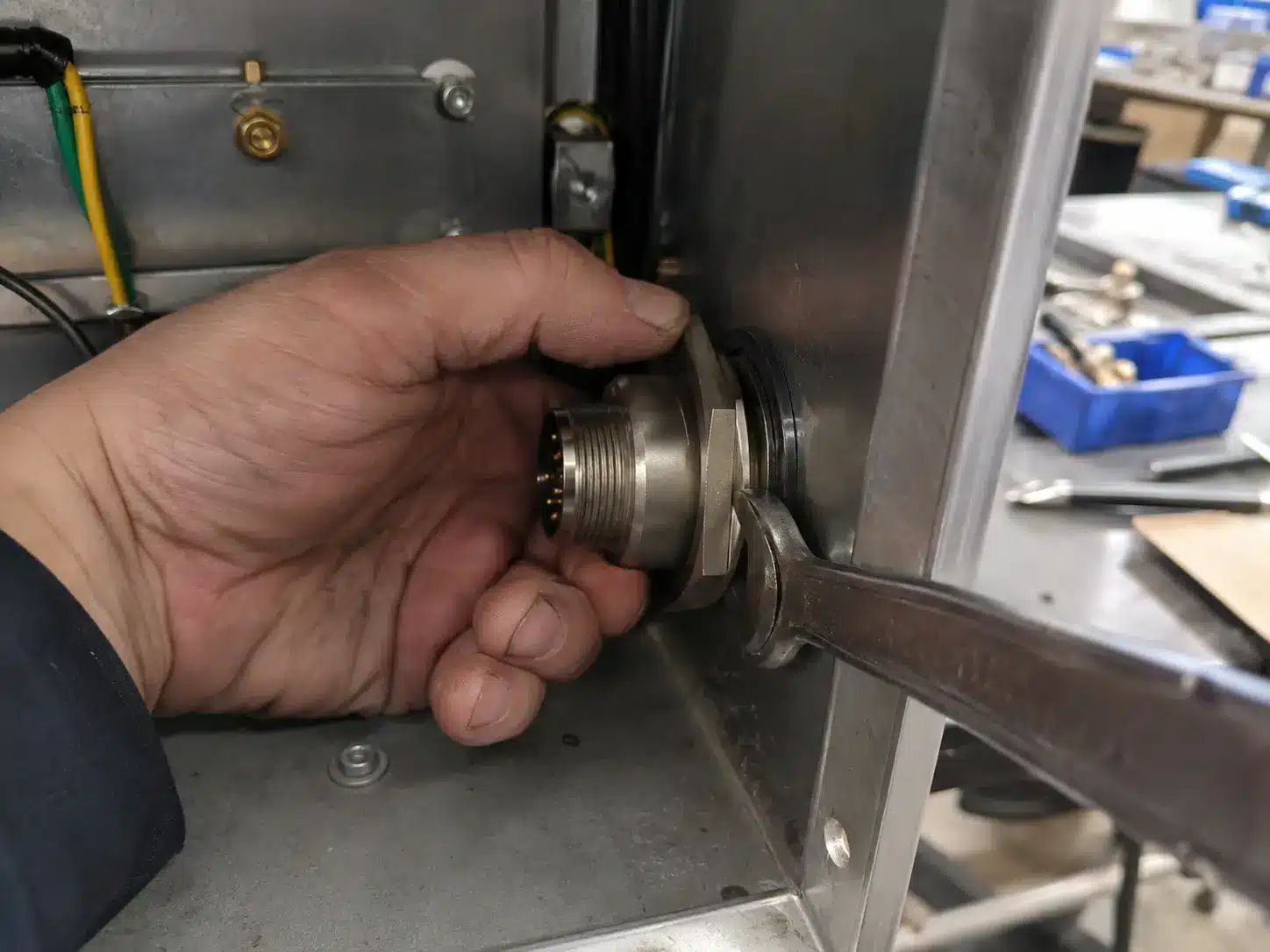
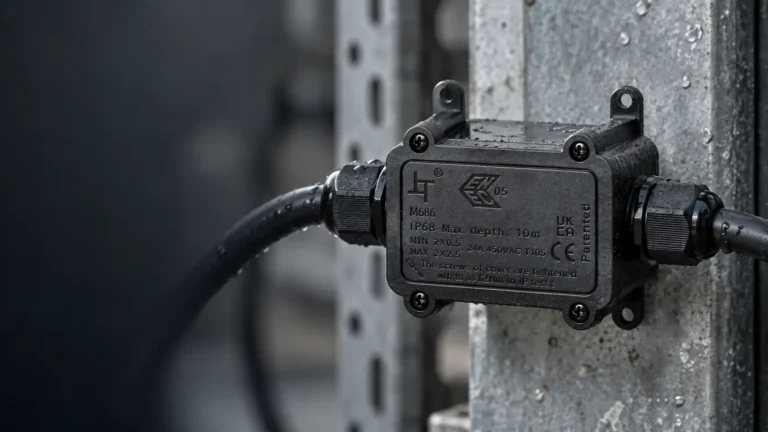
An IP rating on its own is an incomplete answer, and this is where a connector RFQ loses the most time. Two connectors both marked IP68 can be tested at different depths for different durations, because the standard leaves the depth and the time for the manufacturer to declare. Ask for the conditions, and ask which state they apply to: mated, unmated, or capped. For the M686 range, PVLinkTech publishes the IP68 test condition beside the rating, and that condition is 2 m for 120 hours.
Outdoor installation adds three questions to any connector RFQ. Sun and ozone decide the housing material, salt from a coastline or a winter road decides the plating on metal parts, and the daily temperature swing decides the seal.
Where equipment is washed down, a connector RFQ should name the process rather than the grade. High pressure, high temperature spray and immersion are tested differently, and IP68 does not cover the spray test that a food plant or a vehicle washdown asks for.
Certification follows the destination rather than the specification sheet. North America expects a UL or ETL mark with a file number, a European installation points to CE with the directives that apply, the United Kingdom uses UKCA, and Australia and New Zealand work with SAA and RCM. Naming the market in the first connector RFQ saves a second pass.
Documents belong in the connector RFQ, asked for the way you ask for the part: a declaration of conformity, a datasheet with the ratings you queried, a RoHS and REACH statement, and a test report naming the standard and the date. Where a mark carries a file number, it can be checked in the issuing body’s database, which settles the question faster than an email.
Give two quantities rather than one. The first order sets the price break, and the volume you expect over twelve months decides whether a tool exists yet. Standard parts from PVLinkTech start at one piece, enough for a test fit, and the MOQ above that is confirmed with the quote.
Add the packaging to the same connector RFQ. Bags by the piece or boxes by the hundred, a label carrying your part number, a barcode on the outer carton, and the marks a carton carries all change the packing method and sometimes the price.
Close with the destination country, the delivery terms you want, and the day the goods must arrive rather than the day they leave. Payment terms, shipping and the paperwork are set out on the how to order waterproof connectors page, so a connector RFQ can stop at the technical detail and the quantity.
Most first connector RFQs leave this item out, and it is the one that decides whether the first shipment can be received. Write down how the batch gets checked, how many pieces get pulled, which values are measured, and what result counts as a pass.
The values carry the risk. If your incoming inspection uses a contact resistance limit or a pull force tighter than the manufacturer’s release value, that limit belongs in the connector RFQ, because production will otherwise be checked against the standard inspection rather than yours.
Running those checks on a sample is a separate exercise. The values PVLinkTech releases against are set out on the quality control page.
Copy the list below into an email and fill in what you can. A connector RFQ written this way needs no attachment to be answered, and every blank tells the supplier where to ask a question instead of guessing.
Subject: RFQ: 3-pole waterproof connector for an outdoor lighting circuit
We need a panel-mount connector for a street lighting handhole: outdoor, 600 V DC, 20 A on two contacts and 2 A on the third, continuous. Cable is 3 x 2.5 mm² fine strand, jacket outer diameter 8.5 mm, not terminated. IP expectation is IP68 in the mated state. First order 500 pieces, around 4,000 a year, destination United States, so a UL or ETL listing is required. Cartons need our part number on the label. We can send a sample of the current connector and the panel drawing.
Application, the movement of current and the cable are the three that narrow the family before any price exists, and a connector RFQ that carries those three gets a useful first reply. Add the mating state, because a connector that has to lock into a part you already own is a different order from a free-standing one. The remaining details refine the price rather than create it.
No. A photo of the connector in place, the model number of the part being replaced, or a sample you can post will usually do. A drawing is the fastest route when the interface is new, because it removes the assumptions about hole size, panel thickness and keying. Where a sample exists, measurements taken from it become the reference for the quote.
The gland seals against the cable jacket, while the conductor passes through the contact. If the jacket sits outside the sealing range, the gland cannot compress evenly and water finds the gap, whatever the conductor size is. Send both in the same connector RFQ, and measure the jacket on a smooth round section rather than over print or a label.
Often yes, and it shortens the exchange when the part sits on a drawing or in an existing assembly. Send the model number, a photo of the mating interface and the panel opening. The reply should name the equivalent model and the differences that matter for your design, not call the two parts interchangeable. A connector RFQ built on a competitor reference still needs the cable and the ratings.
Describe the installation instead. Indoor, outdoor, buried, washed down or exposed to driving rain are answers a supplier can work from, and each points to a different test level. Add whether the connector is installed mated or unmated, because that changes which condition has to pass. Guessing high is not free, since the higher grade usually means a different housing and a different price.
Send the eight details through the quote form and the reply comes back with a model, a unit price at each quantity break and a date. Where a detail is still open, say so in the message and we will answer with the two or three options that fit rather than one model that may not. Request a quote sits next to this list, and the product range lets you check whether a series already matches your cable and current.

LET’S BUILD YOUR CONNECTION SOLUTION
Share your application, specifications, and estimated quantity. Our team will recommend a suitable connector solution and provide a quotation.
Low MOQ · OEM & ODM · Product Selection Support · Fast Quote Response