

Samples in stock · Response within 12 hours. Request a Quote →
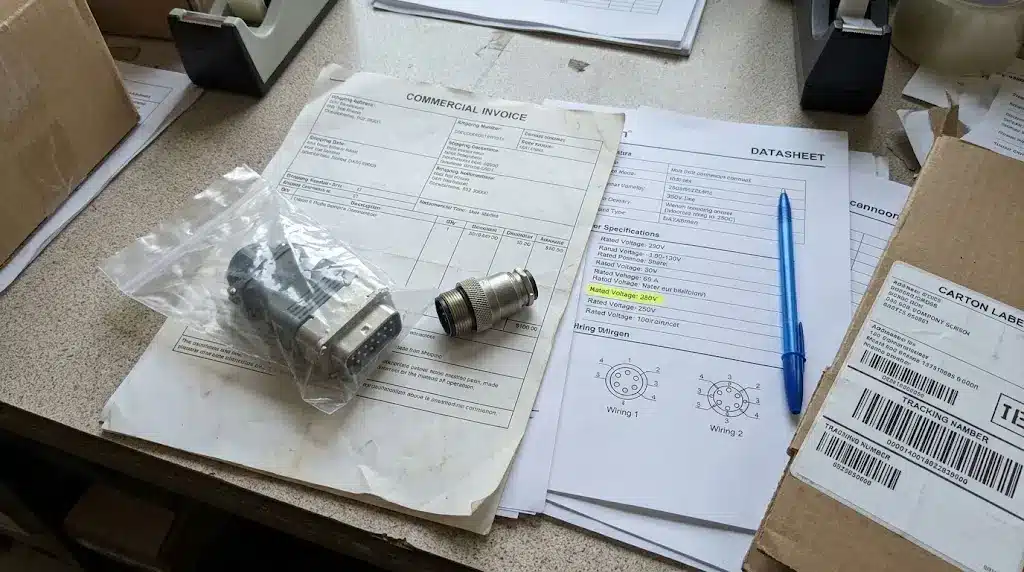
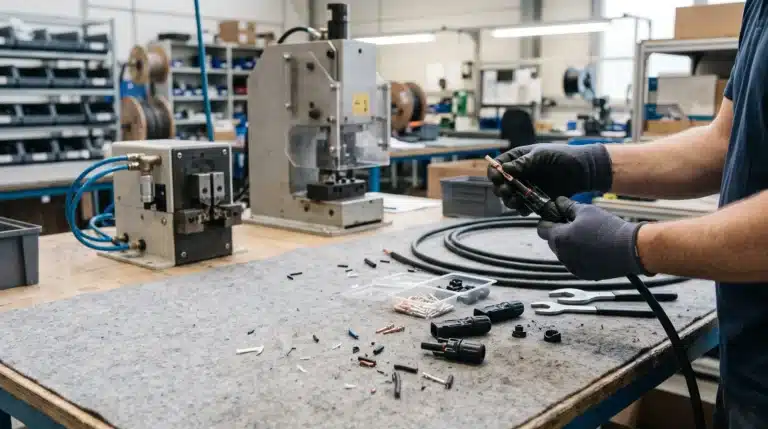
The Waterproof connector HS code check: mated IP68 connector pair, commercial invoice, and technical datasheet on a packing bench, or by clamping, crimping or screwing onto the conductor? A connector that mates by pushing one half into the other is a plug and socket, and in the EU that lands in CN 8536 69 90, where third-country duty is 2.3%. Where a part clamps, crimps or screws onto the conductor it becomes a connection and contact element for wire and cable, CN 8536 90 10, which enters duty free. MC4 and PV4 connectors follow the first line; cable glands, ferrules and screw-terminal connectors follow the second. A part rated above 1,000 V, or one that ships with cable already attached, follows a third code.
| Item | Figure |
|---|---|
| Codes that carry most sealed connector imports | 8536 90 10 and 8536 69 90 |
| Third-country duty, CN 8536 90 10 | 0% |
| Third-country duty, CN 8536 69 90 | 2.3% |
| Voltage ceiling of heading 8536 | 1,000 V |
| Third-country duty, apparatus above 1,000 V (heading 8535) | 2.7% |
| Validity of a Binding Tariff Information decision | 3 years, binding in all 27 member states |
Customs does not read trade names. It reads the way a part establishes the connection, and the Combined Nomenclature note on subheading 8536 90 10 is blunt about it: the subheading takes all terminal devices fitted to the ends of wires or cables for establishing an electrical connection by means other than plugging, and names crimp, screw-type, soldered and clamp terminals. Plugs and sockets have their own subheading in 8536 69, and a sealed connector that mates by hand belongs there whatever its datasheet header calls it.
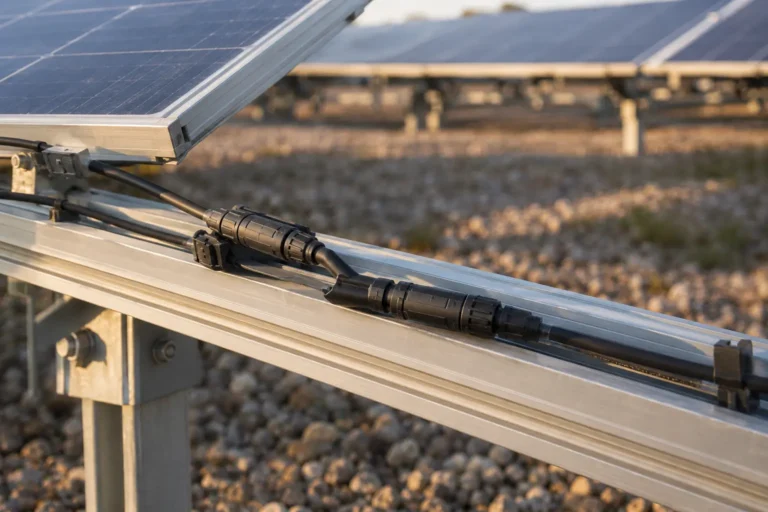
Screw-terminal connectors, push-in wire connectors and cable glands go into 8536 90 10 and enter at 0%. Anything joined by plugging goes into 8536 69 90 at 2.3%, an MC4 or a panel connector with its mating half among them. Parts from one production line sit on both sides of that line, as the screwless waterproof connectors and the plug-in series beside them show.
Four EU customs decisions settle most classification disputes for waterproof connectors:
Pluggable Cable Connectors → CN 8536 69 90 (2.3% Duty):Commission Implementing Regulation (EU) 2018/2041classified copper cable connectors featuring a plug or socket on one side and a clip contact on the other, joined by hand without tools, under 8536 69 90. It expressly excluded 8536 90 10, meaning any commercial invoice declaring a pluggable connector under the 0% terminal subheading can be corrected by customs directly from this text.
Uninsulated or Exposed-Contact Plugs → CN 8536 69 (2.3% Duty): CJEU Case C-423/10 ruled that a component is not excluded from subheading 8536 69 merely because it does not insulate the connection point, provided it mates by plugging without assembly work. Wet-location connectors with exposed contacts on the mating face follow this rule.
Plastic Connector Housings Without Metal Contacts → CN 8547 20 00 (3.7% Duty): Regulation (EU) No 277/2013 classified an empty plastic insulating connector body (shipped without metal pins or contacts) as an insulating fitting of plastics under 8547 20 00.
Junction Boxes Shipped With Attached Cables → CN 8544 42 90 (3.7% Duty): Regulation (EU) 2015/2315 assigned a photovoltaic junction box fitted with terminals, diodes, and pre-attached solar cables to 8544 42 90 (electric conductors fitted with connectors), because goods supplied with wire attached are no longer treated merely as connection apparatus.
All three decisions come back to the same items on a drawing: how the part connects, whether cable ships with it, and the rated voltage. A supplier who cannot put all three on paper is guessing at the code.
Start from the table below rather than from the invoice, and make any waterproof connector HS code you file match one of its rows. A part that straddles two rows needs the ruling described further down.
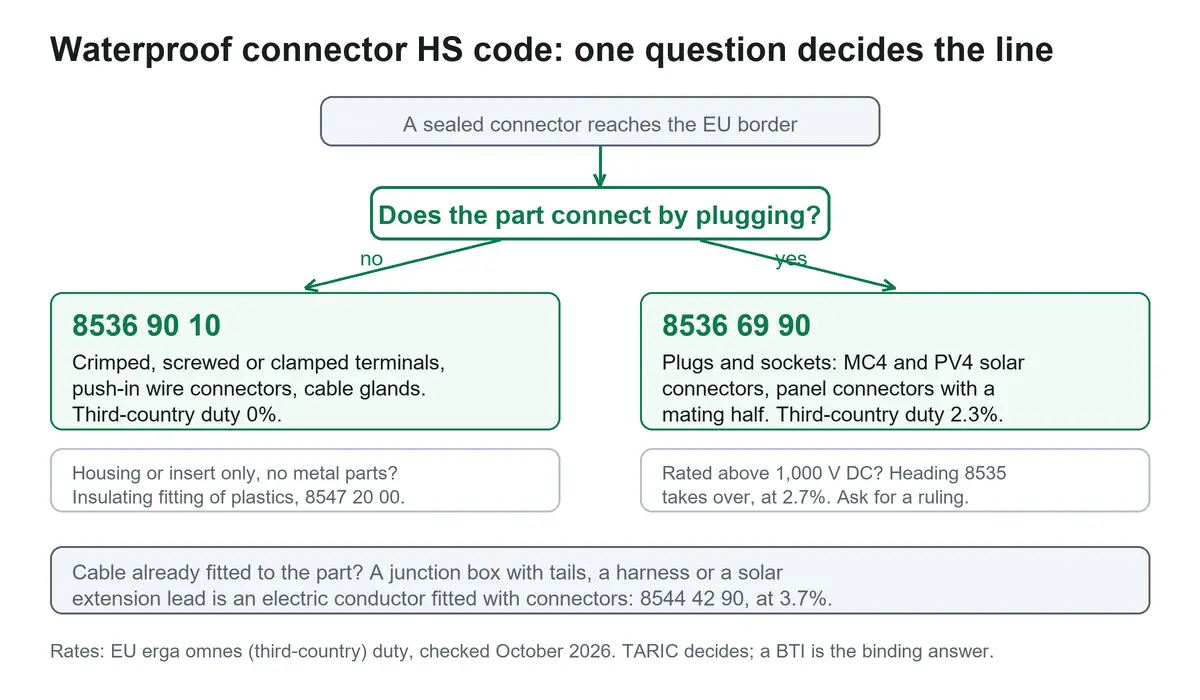
One question decides the code: plugging sends the part to 8536 69 90 at 2.3%, clamping, crimping or a screw connection to 8536 90 10 at 0%
| Part as it ships | How it connects | EU code to start from | Third-country duty |
|---|---|---|---|
| Panel waterproof connector with a mating half | Plugging by hand | 8536 69 90 | 2.3% |
| MC4 or PV4 solar connector rated 1,000 V DC | Plugging by hand | 8536 69 90 | 2.3% |
| Sealed connector rated above 1,000 V | Plugging by hand | 8535 90 00 may apply | 2.7% |
| Screw-terminal waterproof connector | Screw connection, no plugging | 8536 90 10 | 0% |
| Push-in or spring-clamp wire connector | Clamping | 8536 90 10 | 0% |
| Cable gland, brass or polyamide | Mechanical cable entry | 8536 90 10 in EU practice | 0% |
| Crimp terminal, ferrule, cable lug | Crimping | 8536 90 10 | 0% |
| Junction box with cable already fitted | Assembly of conductor and connector | 8544 42 90 | 3.7% |
| Cable assembly above 1,000 V with connectors | Fitted conductor | 8544 60 10 | 3.7% |
| Housing or insert with no metal contacts | No electrical function | 8547 20 00 | 3.7% |
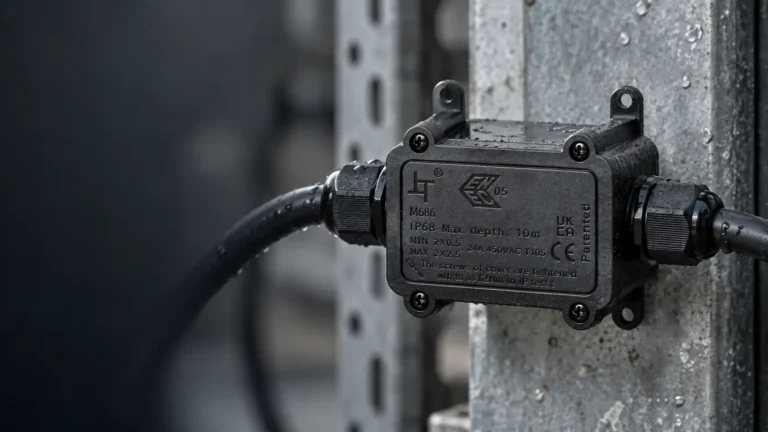
Most consignments of sealed connectors fall into the first two rows. The junction box is the item that moves: shipped empty it follows the code for connection apparatus, and with tails and connectors fitted it is declared as a fitted conductor, the same treatment the IP68 waterproof junction box range gets once it is assembled.
The eight-digit code sets the third-country duty, and the gap between the two main lines is real money. On a consignment valued at €10,000, 8536 90 10 collects nothing and 8536 69 90 collects €230. Duty stays a cost with the importer; the import VAT charged on the same duty-paid value is recovered through the return by a VAT-registered importer. Standard rates in the main destination markets:
| Member state | Standard VAT rate |
|---|---|
| Germany | 19% |
| France | 20% |
| Belgium | 21% |
| Netherlands | 21% |
| Spain | 21% |
| Italy | 22% |
| Poland | 23% |
Country of origin sits above all of this, so the waterproof connector HS code is only half of the calculation. China and the EU have no free trade agreement, so a Chinese-made connector pays the erga omnes rate with no preference available. Goods originating in Korea, Japan, Canada, Switzerland or the United Kingdom can enter at 0% under the agreements in force.
TARIC amends these rates through the year; the figures here were checked in October 2026. Duty suspensions, trade defense measures and sanctions appear per code and origin in the TARIC measures tab, the only list worth trusting when a declaration is filed. Search the code and origin in Access2Markets before the goods leave, and keep the printout.
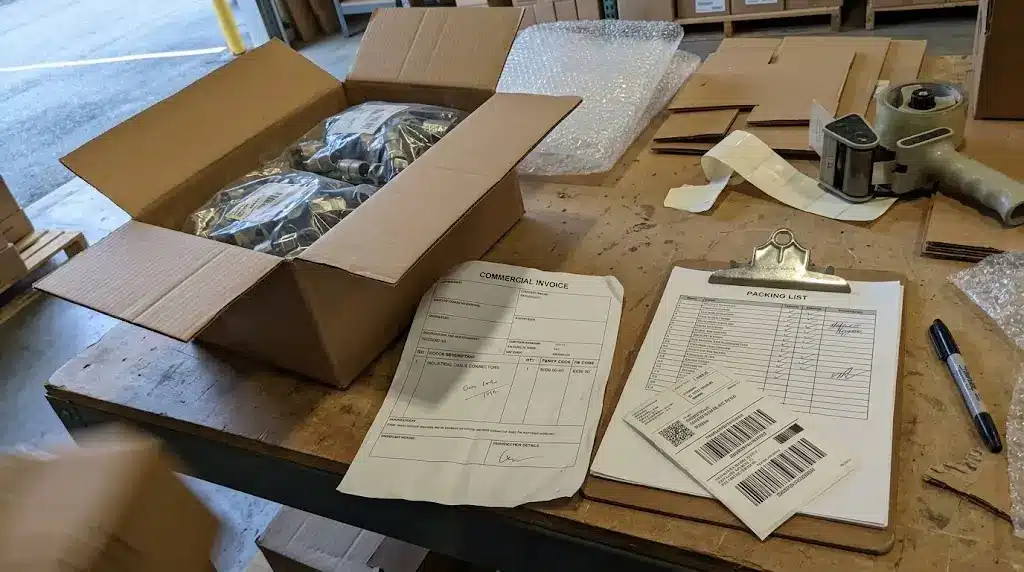
The exporter’s paperwork does not legally bind EU customs, but it starts the audit trail. Under the Union Customs Code, the EU importer of record (or their customs broker) bears legal liability for the declared tariff code—not the factory in China. To prevent clearance holds, include this complete document set in the broker’s folder before departure:
Why Your Chinese Supplier’s Export HS Code Differs from Your EU CN Code
Only the first six digits of an HS code (8536.69 or 8536.90) are harmonized globally by the World Customs Organization (WCO). Beyond the sixth digit, China uses a 10-digit export nomenclature while the EU uses an 8-digit Combined Nomenclature (CN). Do not copy the 10-digit Chinese export code from a Ningbo or Shenzhen invoice directly onto an EU entry:
| Connector Category | Global 6-Digit HS | China Export HS (10-Digit) | EU Import CN Code (8-Digit) | US Import HTS Code (10-Digit) |
| Pluggable Waterproof / MC4 Connectors (≤ 1,000 V) | 8536.69 | 8536.69.0000 | 8536 69 90 (2.3%) | 8536.69.8000 |
| Screw-Terminal / Push-In / Cable Glands (≤ 1,000 V) | 8536.90 | 8536.90.1100 / 8536.90.9000 | 8536 90 10 (0%) | 8536.90.4000 / 8536.90.8585 |
| Connectors Rated > 1,000 V (e.g., 1,500 V DC) | 8535.90 | 8535.90.0090 | 8535 90 00 (2.7%) | 8535.90.8040 |
| Pre-Wired Connector / Junction Box Assemblies | 8544.42 | 8544.42.2100 / 8544.42.2900 | 8544 42 90 (3.7%) | 8544.42.9090 |
The carrier files the entry summary declaration before the goods reach the border, so the commercial details are needed before departure and not on arrival. Where a shipment carries several part numbers, list them on separate lines with their own codes, not one generic description, because a mixed line is the fastest route to a question about the EU import customs code for a connector.
A sealed connector built into a luminaire, an inverter or a charger usually carries no CE mark of its own, and the European Commission’s guidance on the Low Voltage Directive (2014/35/EU) explains why. It covers equipment operating between 50 V and 1,000 V AC, or 75 V and 1,500 V DC. The guide lists electromechanical components such as connectors among the basic components whose safety can only be judged once integrated into the final product; they are not covered as such and must not be CE marked unless another piece of Union law requires it. The finished equipment carries the mark.
Instead, EU buyers work from a document set: a RoHS statement, a REACH declaration covering substances of very high concern, test reports naming the standard and the date, and the drawing revision the parts were produced to. Standards here are specific, with IEC 62852 covering connectors for DC photovoltaic systems, IEC 62444 covering cable glands for electrical installations and IEC 60529 setting the IP test an enclosure claims. PVLinkTech sets out what each document covers on its certificates and compliance page, and the reports themselves are issued against a model and a market, so name both when you ask.
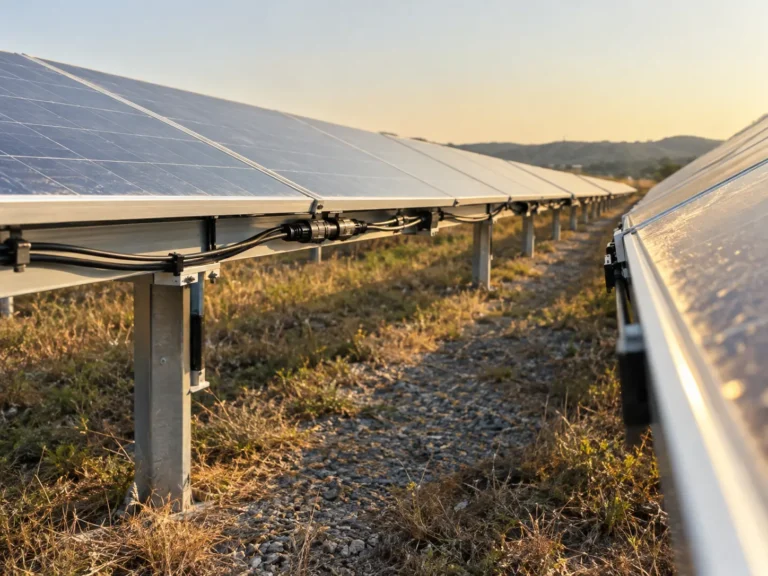
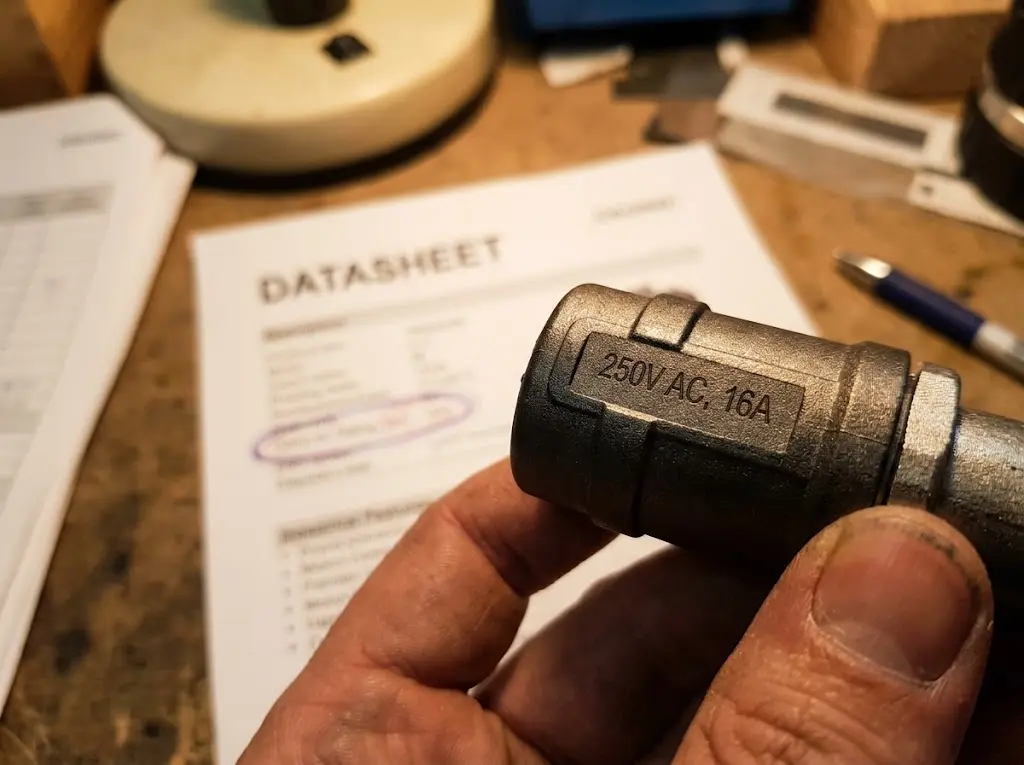
Heading 8536 stops at 1,000 V, and everything above it belongs to heading 8535, where the third-country rate is 2.7%. For 1,000 V DC photovoltaic connectors the answer is settled: the solar connector rulings in the European database place them in 8536 69 90, the subheading that covers the MC4 and PV4 solar connectors sold into rooftop and commercial PV systems. A 1,500 V DC part sits on the border, and the waterproof connector HS code that follows is written on its datasheet.
Before the first container leaves, settle this question, because it is the one in the family that customs can rule against you. A Binding Tariff Information decision is free, is issued by a member state customs authority, binds the customs offices of all 27 member states and holds for three years. Attach the datasheet, the drawing and a sample, file with the authority of the member state where your broker declares, and search the European Binding Tariff Information database for comparable rulings before you do. Decide the code before the purchase order rather than after it: a code picked because it makes an invoice look cheaper is the importer’s liability, not the factory’s. Arguing the point after clearance costs far more than the duty.
Meanwhile, keep the datasheet consistent with the code. A supplier document stating 1,500 V DC filed with a declaration in a subheading that stops at 1,000 V is the first mismatch an officer reads, and the second is a rated voltage that appears nowhere in the customs file.
Buyers and customs describe the same object in different words. Choosing an electrical connector HS code by product name rather than by connection method is the most common error on a first declaration. Purchasing teams write the left column; the declaration gets the other two.
| Buyer term | Customs vocabulary | Code to start from |
|---|---|---|
| Waterproof connector, sealed connector | Plug and socket | 8536 69 90 |
| MC4 connector, PV4 connector, solar connector | Plug and socket for a voltage not exceeding 1,000 V | 8536 69 90 |
| Cable gland, cable entry, strain relief | Connection and contact element for wire and cable | 8536 90 10 |
| Terminal, ferrule, cable lug | Connection and contact element for wire and cable | 8536 90 10 |
| Push-in connector, spring-clamp connector | Connection and contact element, clamping type | 8536 90 10 |
| Junction box with cable attached | Electric conductor fitted with connectors | 8544 42 90 |
| Connector shell, housing, contactless insert | Insulating fitting of plastics | 8547 20 00 |
To prevent customs delays caused by vague trade names, use these standardized descriptions on your commercial invoice:
Thermoplastic waterproof plug-and-socket electrical connector for solar PV systems, rated 1,000 V DC / 30 A, mating by hand plugging, shipped un-wired without cables — CN Code: 8536 69 90
CN 8536 69 90Polyamide IP68 waterproof wire connection element, rated 450 V AC, screw-clamp terminal connection without plugging, shipped un-wired without cables — CN Code: 8536 90 10
CN 8536 90 10IP68 photovoltaic junction box assembly fitted with insulated copper solar cables and plug connectors, rated 1,000 V DC — CN Code: 8544 42 90
CN 8544 42 90The six-digit HS code is 8536 69, and the EU splits it further into 8536 69 90, plugs and sockets other than those for coaxial cable or printed circuits. Published rulings on solar connectors and PV connectors rated 1,000 V DC sit in that subheading, and the third-country duty is 2.3%. If your part is rated above 1,000 V, treat the code as open and ask for a ruling before you ship.
The connection method decides it. 8536 90 10 covers terminal devices fitted to the ends of wires and cables that connect by means other than plugging, which means crimp, screw, soldered or clamp connections. 8536 69 90 covers plugs and sockets, the parts that connect by being pushed together. Regulation (EU) 2018/2041 excludes pluggable connectors from 8536 90 10 in those words, and the duty follows the same split at 0% against 2.3%.
No. IP grades come from IEC 60529, a test classification for enclosures, and the nomenclature does not contain them. The waterproof connector HS code turns on the connection method, the material and the rated voltage instead. The IP rating belongs in the specification you send the factory and in the test report you keep for the customer, not in the code you declare.
In EU practice cable glands are declared in 8536 90 10, and manufacturers hold that line in their customs documentation. A gland is a mechanical cable entry that may also earth, seal and retain, so where a product is purely a plastic mechanical part with no electrical function, some importers have argued chapter 39 instead. That argument is worth running only through a Binding Tariff Information decision.
Not as components. The Low Voltage Directive covers equipment rated 50 to 1,000 V AC or 75 to 1,500 V DC, and the Commission’s guide to it lists connectors among the basic components that are not covered as such and must not be CE marked unless another Union law requires it. The equipment a connector is built into carries the mark. What an importer collects for the connector is a RoHS statement, a REACH declaration and test reports against IEC 62852 or IEC 62444.
Either nothing or 2.3%, depending on the waterproof connector HS code the goods are declared under, plus import VAT at the standard rate of the member state of import. There is no EU free trade agreement with China, so the erga omnes rate applies and no preference is available on origin. On a consignment worth €10,000, the difference between the two lines is €230.

LET’S BUILD YOUR CONNECTION SOLUTION
Share your application, specifications, and estimated quantity. Our team will recommend a suitable connector solution and provide a quotation.
Low MOQ · OEM & ODM · Product Selection Support · Fast Quote Response