

Need waterproof connectors?Request a Quote →
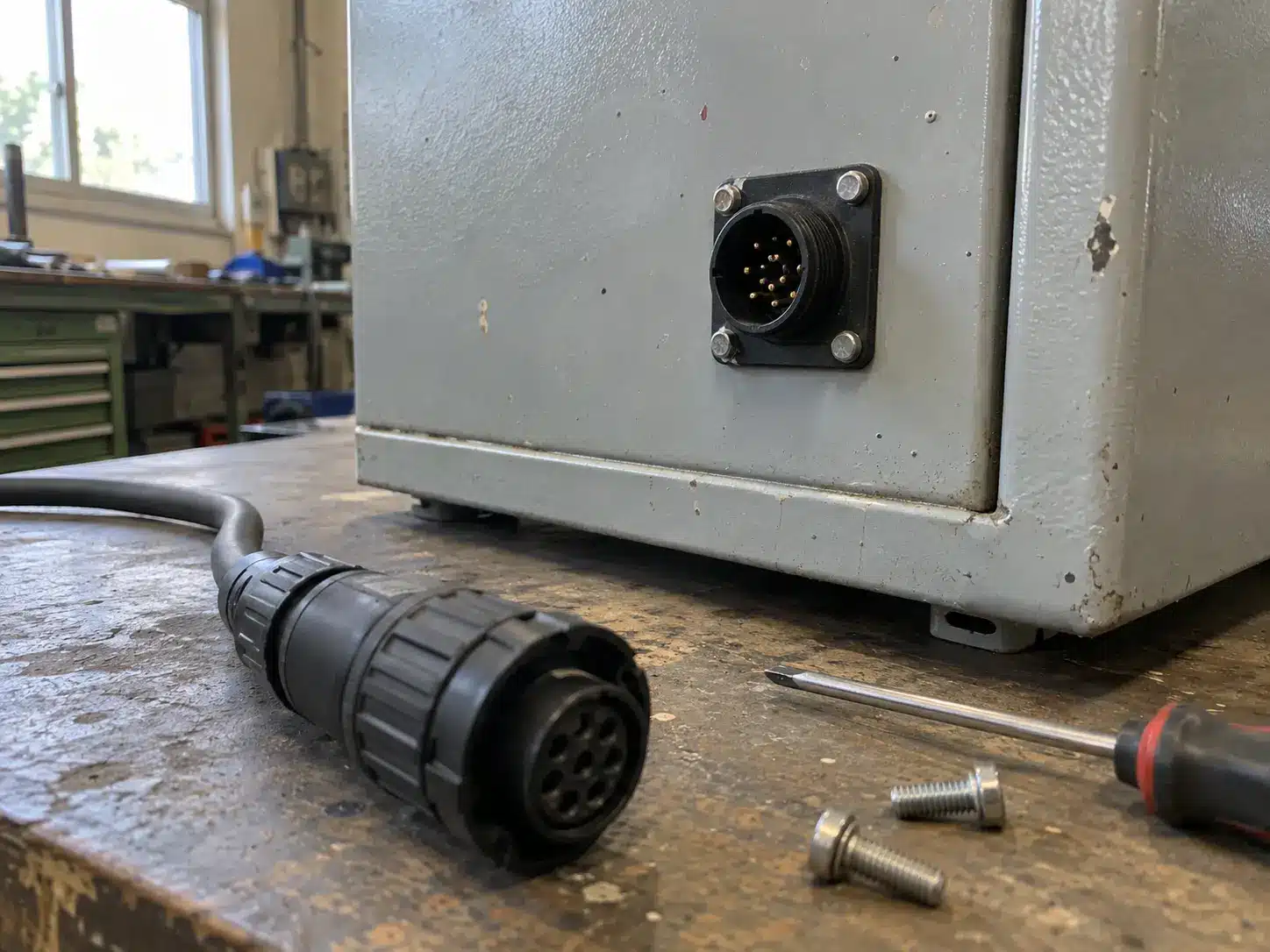
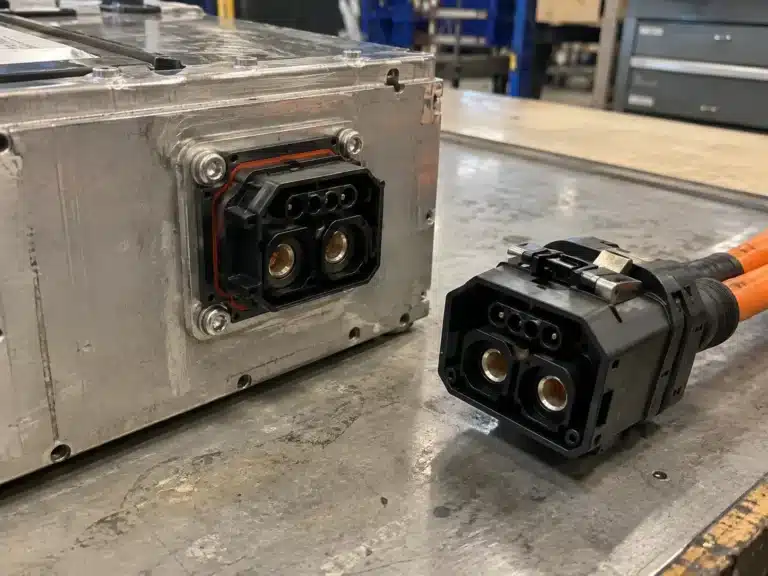
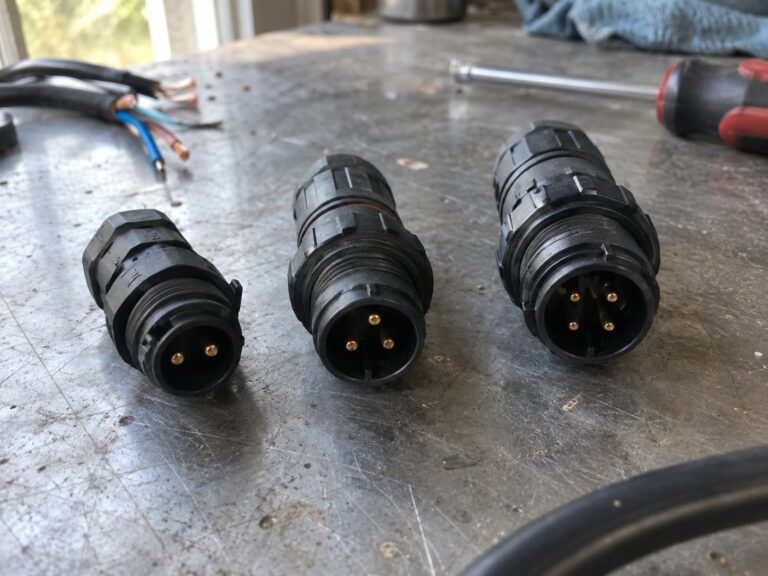
A waterproof bulkhead connector is fixed through a panel or wall, cable on one side and mating interface on the other, and it seals against that panel rather than against the cable. That is why most of the leaks we get asked to diagnose sit at the panel interface rather than inside the housing: a hole drilled a fraction oversize, a sealing face painted after the sheet was cut, a coupling nut tightened until the plastic flange lifted off the metal. The housing and its O-ring carry a test certificate. The joint between that housing and your enclosure carries nothing until someone fits it properly.
| Item | Detail |
|---|---|
| Panel socket hole, EW-LP12 | Φ12.00 mm, tolerance +0.2 / -0.00 |
| Panel socket hole, EW-LP16 | Φ18.50 mm and 16.50 mm, tolerance +0.2 / -0.00 |
| Panel socket hole, EW-LP20 | Φ22.50 mm and 20.00 mm, tolerance +0.2 / -0.00 |
| Four-hole flange bolt pattern | 4-Φ2.3 mm on EW-LP12, 4-Φ3.2 mm on EW-LP16 and EW-LP20 |
| Sealing on the EW-LP panel range | IP67 as standard, IP68 at 1 m for 2 hours on request |
| Sealing on the M682-M685 screw range | IP68 tested at 2 m for 120 hours |
| Contact life, EW-LP range | Gold or silver plated copper pins, at least 1,900 mating cycles |
| Temperature | -40°C to +85°C on EW-LP, -40°C to +105°C on M682-M685 |
Bulkhead is a mounting position, not a product family. A waterproof bulkhead connector is one of four mounting versions built on the same housing: a free plug, a docking socket, a panel socket or a flange seat, and only the last two pass through a wall. Panel mounting goes by several names, and they do not always describe the same part. Requesting a waterproof bulkhead connector in one place and a panel mount connector in another can produce the same part, or a flange version with a different bolt pattern.
| Term on the order | What it fixes |
|---|---|
| Bulkhead connector or bulkhead fitting | A connector fixed through a panel or wall, cable on one side, mating interface on the other |
| Panel mount connector | Our wording for the same position: the connector body is fixed to the panel |
| Panel socket or panel base | The half bolted through a single round hole, with the interface facing outward |
| Flange seat or four-hole flange socket | Panel-mounted version fixed with four bolts instead of one threaded nut |
| Docking socket | The free half a plug clicks into, usually not fixed to a panel |
| Cable gland | Passes a cable through a wall without cutting it. No contacts, nothing to unplug |
| Feed-through | Panel-fixed part that carries a signal or supply through an enclosure wall |
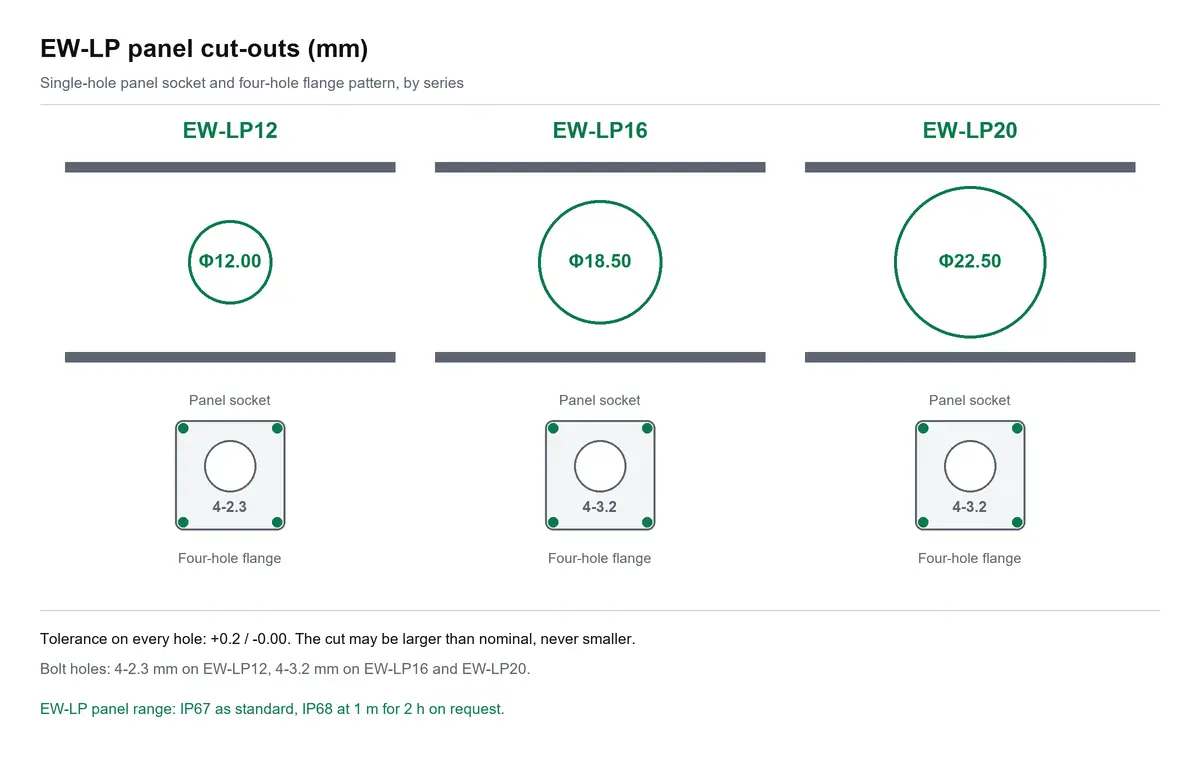
The distinction matters at the drill, not in the catalogue. The single-hole panel socket takes Φ12.00 mm on the EW-LP12 and Φ18.50 mm on the EW-LP16, while the four-hole flange version of the same housing is cut to a different centre hole and a 4-Φ2.3 mm or 4-Φ3.2 mm bolt pattern. Two parts from one series, two different cuts in the enclosure, and a waterproof bulkhead connector ordered against the wrong hole cannot be rescued later on site.
Panel builders usually pick the waterproof bulkhead connector first and cut the hole afterwards. Working the other way round, hole first and waterproof bulkhead connector second, saves the panel. Measure the hole that exists or that the punch tool can make, choose the series whose panel socket matches it, and treat the current rating as a later filter.
| Series | Panel socket hole | Four-hole flange pattern | Rear jacket range |
|---|---|---|---|
| EW-LP12 | Φ12.00 mm | Φ12.00 mm centre, 4-Φ2.3 mm | 5.0-7.0 mm |
| EW-LP16 | Φ18.50 mm / 16.50 mm | 4-Φ3.2 mm | 7-9 mm power, 4-6.5 mm signal |
| EW-LP20 | Φ22.50 mm / 20.00 mm | 4-Φ3.2 mm | 9-12 mm, single hole 12 mm |
The tolerance on those holes, +0.2 / -0.00, only allows the hole to be larger than nominal. An undersized hole will not let the seal ring sit flat, and forcing it in cracks the flange. A hole oversized by a few tenths of a millimetre leaves too little sealing face for the gasket to work against, and the joint weeps in the first hard rain. If the panel is already cut and the hole is wrong, a four-hole flange waterproof bulkhead connector is often the rescue: its seal sits on a wider face around the centre hole, and four bolts pull it down evenly.
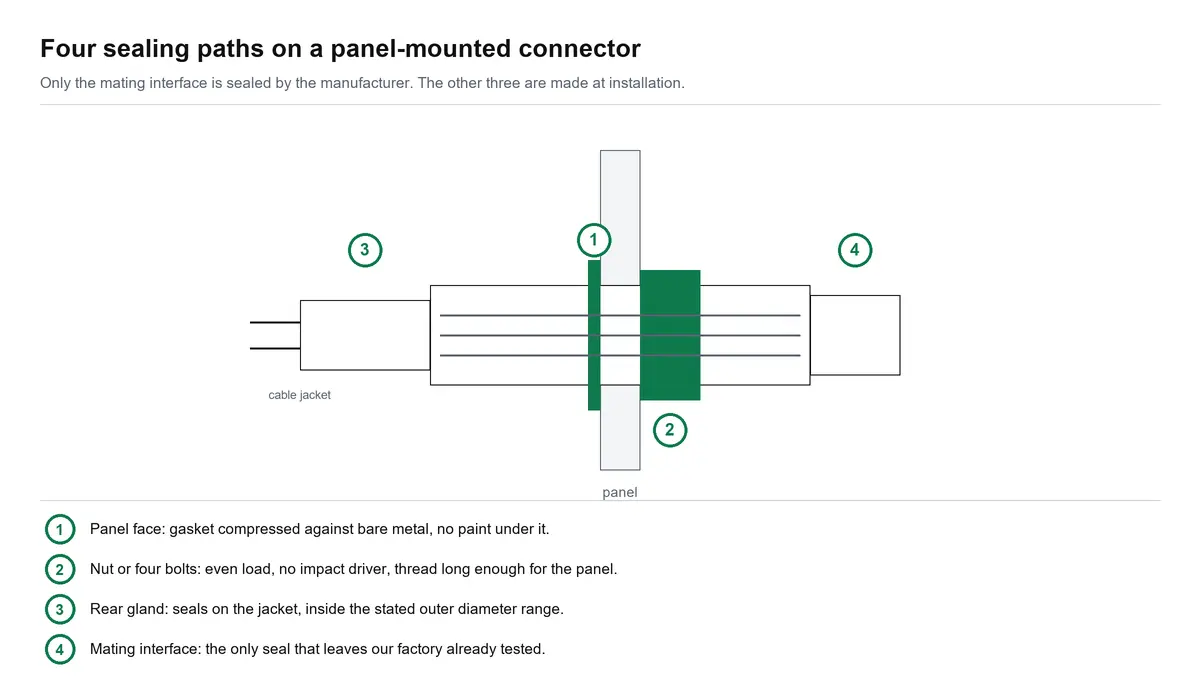
A waterproof bulkhead connector has four seals, and the leak almost always comes from the one nobody checked. The housing and the mating interface seals are ours and are tested by us. The other two are made by whoever fits the part.
| Path | What seals it | What breaks it |
|---|---|---|
| Housing to panel face | Flat gasket or O-ring compressed against the panel | Paint, powder coat, a burr or a weld spatter on the sealing face |
| Nut or bolts to panel | Gasket under the nut, even load across the flange | Over-torque, cross-threading, a nut bottoming out on a thick panel |
| Cable entry at the rear | Gland nut compressing the seal onto the jacket | Jacket outside the gland range, or a cable taking the load |
| Mating interface | Seals inside the coupling | A pair left unmated outdoors, grit in the interface |
The rating printed on the box describes tests we run on a waterproof bulkhead connector itself, not on the enclosure it goes into. PVLinkTech tests the screw waterproof connectors range (M682-M685) and the M686 junction box range at 2 m for 120 hours, the immersion condition we quote for outdoor lighting and underground work. The EW-LP panel range is IP67 as standard, with IP68 at 1 m for 2 hours available to order. Mixing those two figures inside one RFQ is an expensive mistake, because one part number cannot be quoted against both.
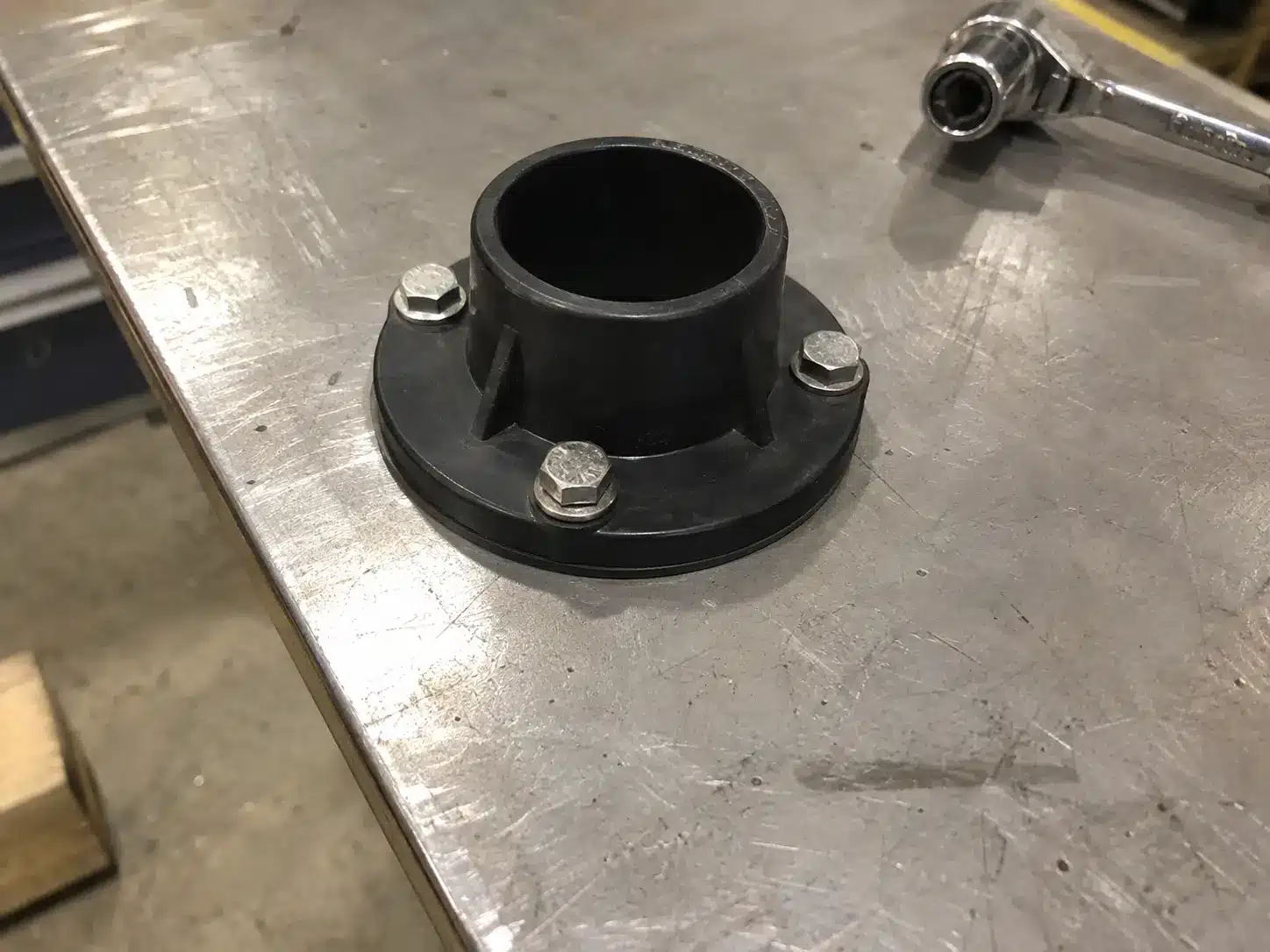
A thin plastic enclosure and a steel plate are not the same substrate. Plastic sheet flexes under the nut, the sealing face tilts, and water finds the gap. Steel and aluminium hold the load, but a painted or anodised surface can be worse than bare metal because the coating compresses and relaxes. Where the panel is thin, or the fixing has to survive vibration, the flange version of a waterproof bulkhead connector spreads the load over a wider area than a single nut.
Panel thickness also decides how much thread the nut of a waterproof bulkhead connector engages. Give the panel thickness in the RFQ rather than leaving the supplier to assume a value, and check the finished assembly before the enclosure goes out. On a thick panel, the nut can bottom out before the seal compresses, which looks tight and leaks. On thin sheet, the nut stops turning because the panel has already deformed, with the same result.
| Situation | Mounting style | Why it wins |
|---|---|---|
| Equipment is opened for service | Panel socket with a mating plug | Unplug at the wall, no cable to cut |
| One round hole already punched | Panel socket, single hole | Uses the cut you have, seal face is flat |
| Thin sheet, vibration present | Four-hole flange socket | Four bolts resist rotation and spreading |
| Nothing must be unplugged outside | Cable gland | Passes the cable, no contacts to protect |
| Data or signal through a wall | Panel data connector, RJ45, USB or Type-C in the EW-LP range | Keeps the protocol and seals the wall in one part |
| Several circuits need to branch | IP68 waterproof junction box | One sealed housing instead of several joints |
| Straight run with no panel | Inline screw or screwless connector | No panel face involved |
The choice between joint types, rather than how to mount one, is covered in junction box or connector.
Confirm these six details before machining the panel to reduce fitment problems, sealing issues and unnecessary rework during waterproof connector installation.
Decide which side of the wall stays fixed, because that choice determines the waterproof bulkhead connector configuration. The fixed half is typically the panel socket or flange seat, while the free half may be a plug, docking socket or cable assembly. If the enclosure ships as a unit and the harness is made later, the panel half normally belongs on the enclosure drawing and the cable half on the harness drawing.
Take the hole dimensions from the drawing for the exact connector series rather than from a visually similar sample. For example, an Ø18.50 mm hole and an Ø12.00 mm hole can both appear within the same waterproof connector family depending on the mounting version. Using the wrong sample dimension can create costly panel rework.
State both the panel thickness and material for every waterproof bulkhead connector position. These factors affect thread engagement, nut or bolt grip and how the sealing element is compressed or crushed when the assembly is tightened.
The mounting surface that the waterproof bulkhead connector seals against should be flat, clean and free from paint or contamination where required by the installation design. Masking the sealing area before coating, or cleaning it after coating, can prevent common sealing problems.
The rear seal grips the cable jacket and only performs correctly within its specified diameter range. A 9 mm cable jacket fitted into a 4–8 mm gland range will not seal reliably, regardless of how tightly the nut is turned.
Send the panel drawing with the hole size, panel thickness and material for every waterproof bulkhead connector. Include pin count and current per pin, voltage, required IP condition, mating depth and duration, cable jacket outer diameter, and whether the connector must be unplugged during service. For additional product and engineering information, visit PVLinkTech .
Send us your panel drawing, cable diameter, pin count and electrical requirements. Our team can help review the connector configuration before the enclosure is drilled.
Check the seals on every waterproof bulkhead connector before the panel work starts. The O-ring or gasket should be seated in its groove, the threads free of damage, and the panel socket should drop into a sample hole without force. Keep a sample hole at the inspection bench, because a part that will not sit flat on a 1:1 gauge will not sit flat in the enclosure either.
Dry fit the waterproof bulkhead connector before any cable is landed. Clean the sealing face, fit the gasket, start the nut or bolts by hand, then bring them down evenly. Impact drivers are the usual way a flange ends up cracked.
Write down what the rating covers. IP67 and IP68 are defined in IEC 60529, and IP68 depth and duration are declared by the manufacturer rather than fixed by the standard. Ask four questions about the waterproof bulkhead connector claim: the depth, the duration, the condition of the test, and whether the glands or the mating half were fitted at the time. A supplier who gives all four is describing a test.
Common questions about waterproof bulkhead connectors, panel-mount installation, sealing, and enclosure design.
In most purchase orders, they mean the same position: a waterproof bulkhead connector fixed through a panel, with the cable on one side and the interface on the other. The wording changes how a supplier picks the part. Panel mount usually points to a single-hole panel socket, while bulkhead can also mean a flange version or a feed-through with no mating half outside.
No. Only the mounting versions carry a sealing face and a fixing method, which on the EW-LP range means the panel socket, the panel base and the four-hole flange seat. Inline cable connectors such as the M682-M685 series seal along the cable and at the mating interface, and they have nothing to bolt down.
It depends on the series and the mounting version, so it has to come from the drawing. In our EW-LP range, the single-hole panel sockets use approximately Φ12.00 mm on LP12, Φ18.50 mm on LP16, and Φ22.50 mm or 20.00 mm on LP20, all cut to the specified tolerance. The four-hole flange versions use the bolt pattern shown in the corresponding technical drawing.
It is enough where rain runoff and the joint drains, which is what IP67 is written for: temporary immersion under defined test conditions. Where water can stand around the base of a pole, or the enclosure sits in a pit that fills, the position needs an immersion condition with a specified depth and duration. That is where an IP68-rated solution may be required.
It needs a clean sealing face, and paint is not one. Coating can compress under the gasket, then relax and leave a path that opens in service. Mask the sealing face before coating, or remove the coating back to bare metal around the hole and check the surface for burrs before the part goes in.
Yes, as long as the fixing load is kept under control. A single nut on thin plastic can bow the sheet and tilt the sealing face, while a four-hole flange version spreads the same load across a wider area. If the wall is very thin, add a backing plate or thicken the boss around the hole so the seal is compressed rather than the panel.
Send the panel drawing with the hole size and panel thickness, the number of pins and current per pin, the jacket outer diameter, and the immersion condition the position must meet. We will confirm the mounting style, series, and seal that fit that hole, and provide the recommended drawing.

LET’S BUILD YOUR CONNECTION SOLUTION
Share your application, specifications, and estimated quantity. Our team will recommend a suitable connector solution and provide a quotation.
Low MOQ · OEM & ODM · Product Selection Support · Fast Quote Response